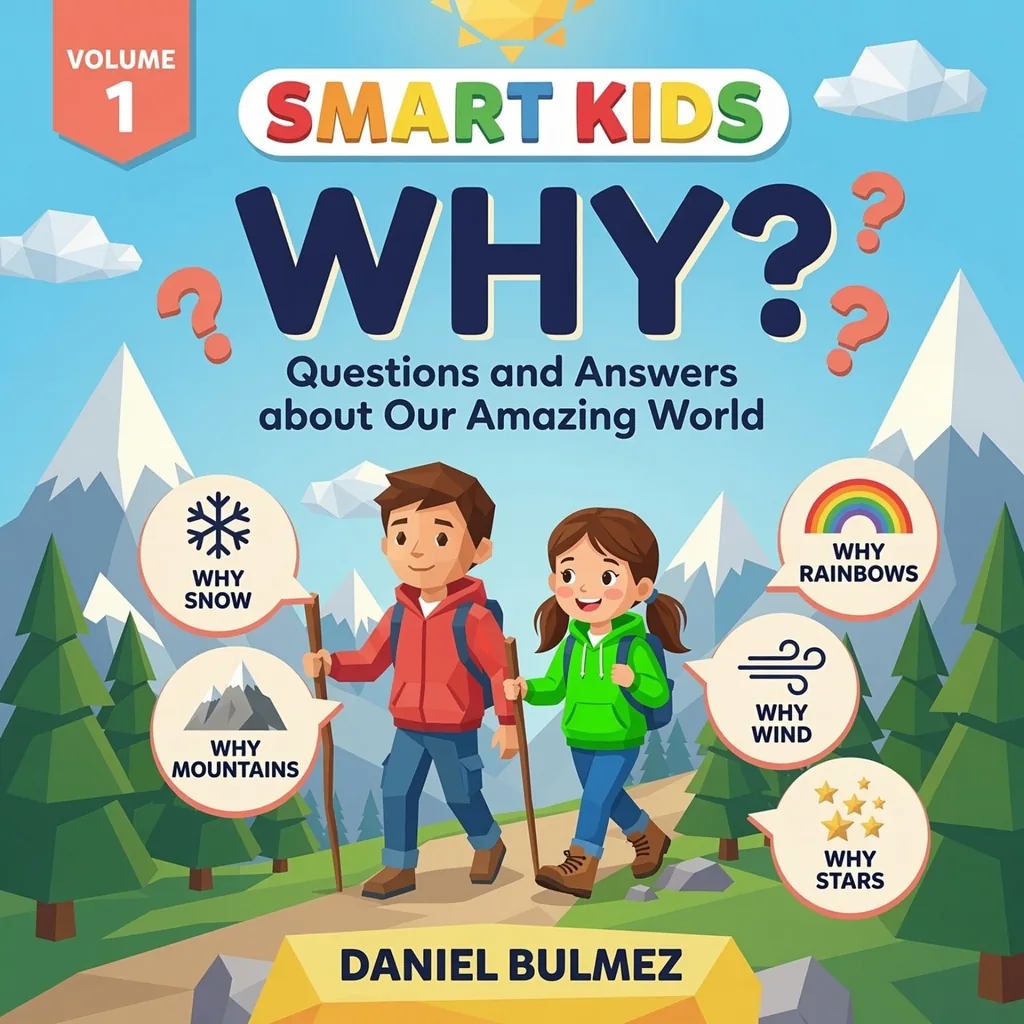
📘 Volume 1 • illustrated answers for curious kids
Smart Kids WHY BookTurn every “Why?”
into a wow.
A bright, kid-friendly question-and-answer book that explains the amazing world through bold pictures, simple science, and “I get it now!” moments.
From snow and rainbows to wind, stars, waterfalls, and mirages, Smart Kids WHY? helps children understand how the world works without feeling like they are reading a textbook.
👧 Ages 6–10
🎨 Full-color illustrated pages
🧠 Clear step-by-step explanations
🎁 Giftable, screen-free learning
🌈Why rainbows?
💨Why wind?
⭐Why stars?
Made for curiosityAnswers the questions kids naturally ask about the world.
Built for visual learnersDiagrams, labels, arrows, and scenes make abstract ideas easier to follow.
Easy to read aloudShort sections make it simple for parents, teachers, and kids to enjoy together.
Great gift choiceA fun educational book for birthdays, holidays, classrooms, and home libraries.
The problem with most “science for kids” books
Many books either oversimplify the answer until it feels empty, or explain too much at once and lose the child’s attention.
- Too much dense text
- Not enough visual explanation
- Answers that feel disconnected from real life
This book explains the answer the way kids actually learn
Each topic is presented like a mini adventure: a big question, a visual scene, simple steps, labels, and a fun fact that makes the idea stick.
- Big “why” question on every spread
- Clear cause-and-effect steps
- Memorable facts children can repeat later
Inside the book
A smarter way to answer big little questions
The page design keeps children moving from curiosity to understanding. The question pulls them in, the illustration gives context, and the explanation breaks the idea into manageable pieces.
Big questions first
Every topic starts with a question children already recognize, making the learning feel useful instead of random.
Step-by-step logic
Numbered callouts, arrows, and labels help children follow the sequence of what happens and why it happens.
Bright visual scenes
Colorful environments turn science and nature ideas into scenes kids can explore with their eyes.
Friendly language
The tone is clear, warm, and age-friendly, with simple wording that keeps the explanation moving.
Fun facts that stick
Each page adds an extra “wow” detail children can remember and share after reading.
Reusable learning
Children can dip into one question at a time, reread favorite pages, or explore the book cover to cover.
Preview the style
Open a page and the answer feels visible
Instead of hiding the explanation in long paragraphs, the sample pages use scenes, labels, and short answer blocks so kids can see the science unfolding.
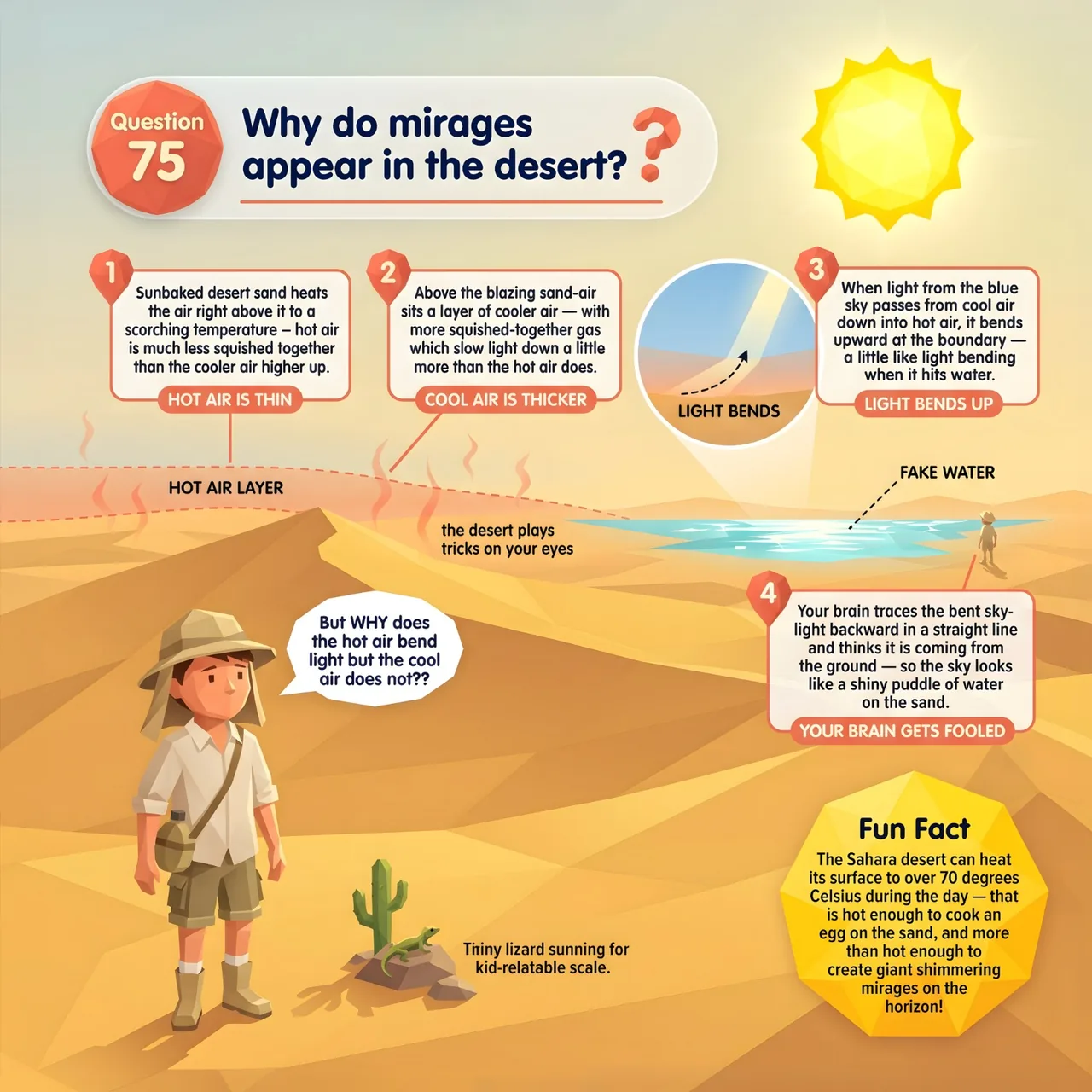
Why do mirages appear in the desert?
A desert scene explains hot air, cool air, bending light, and why the brain can mistake sky-light for water.
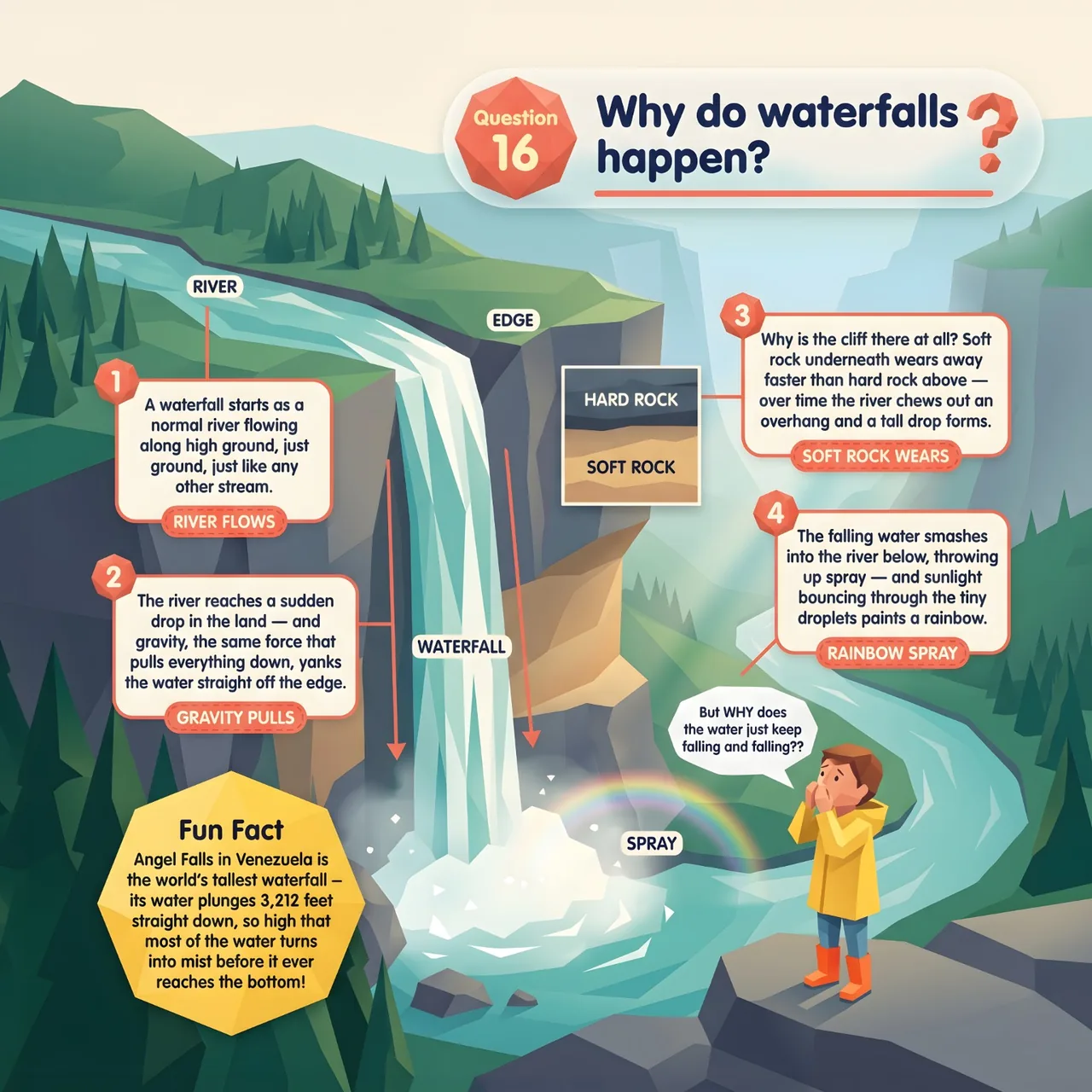
Why do waterfalls happen?
A river-and-cliff scene shows gravity, erosion, hard rock, soft rock, spray, and rainbow formation.
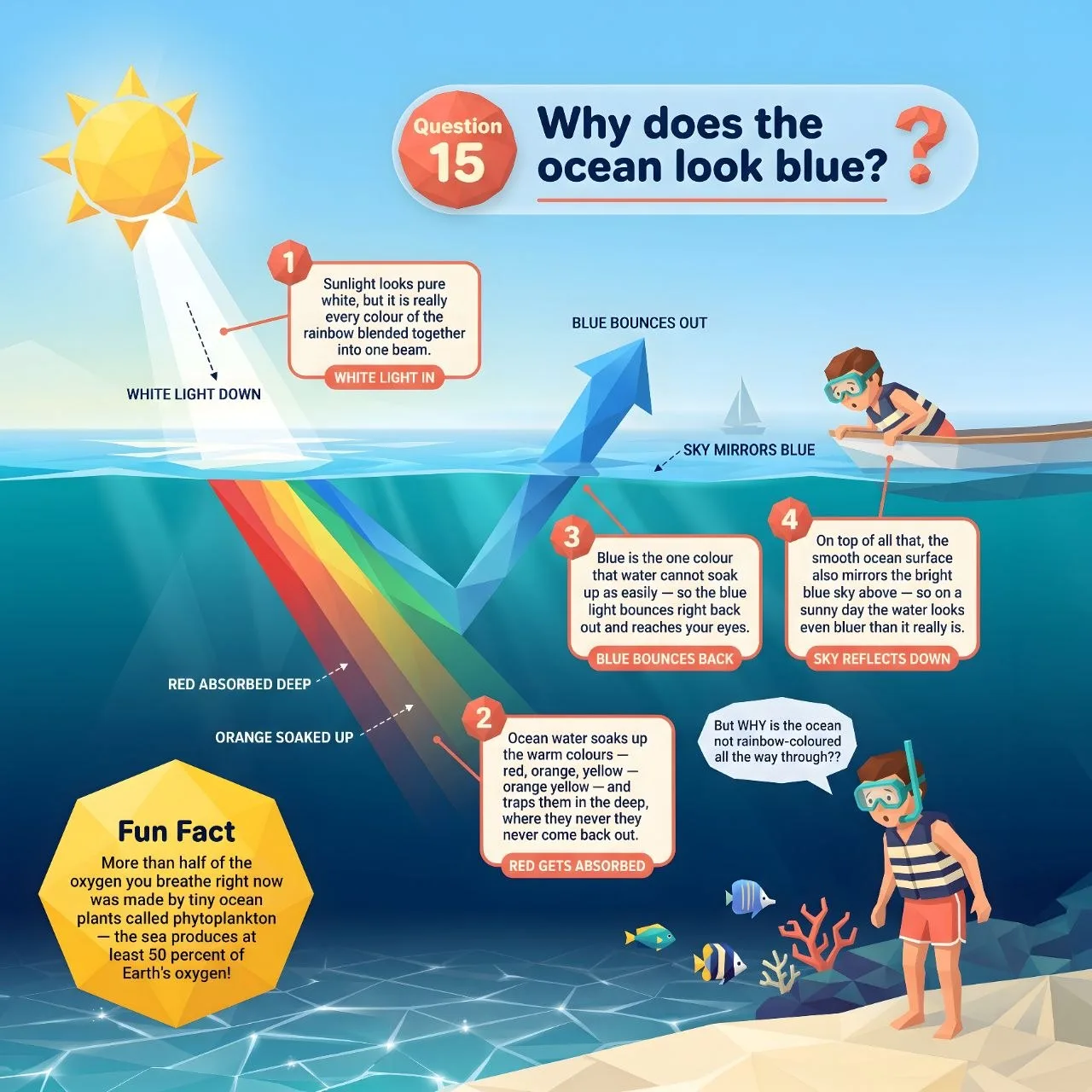
Why does the ocean look blue?
An above-and-below sea scene shows how water absorbs warm colors and bounces blue light back to your eyes.
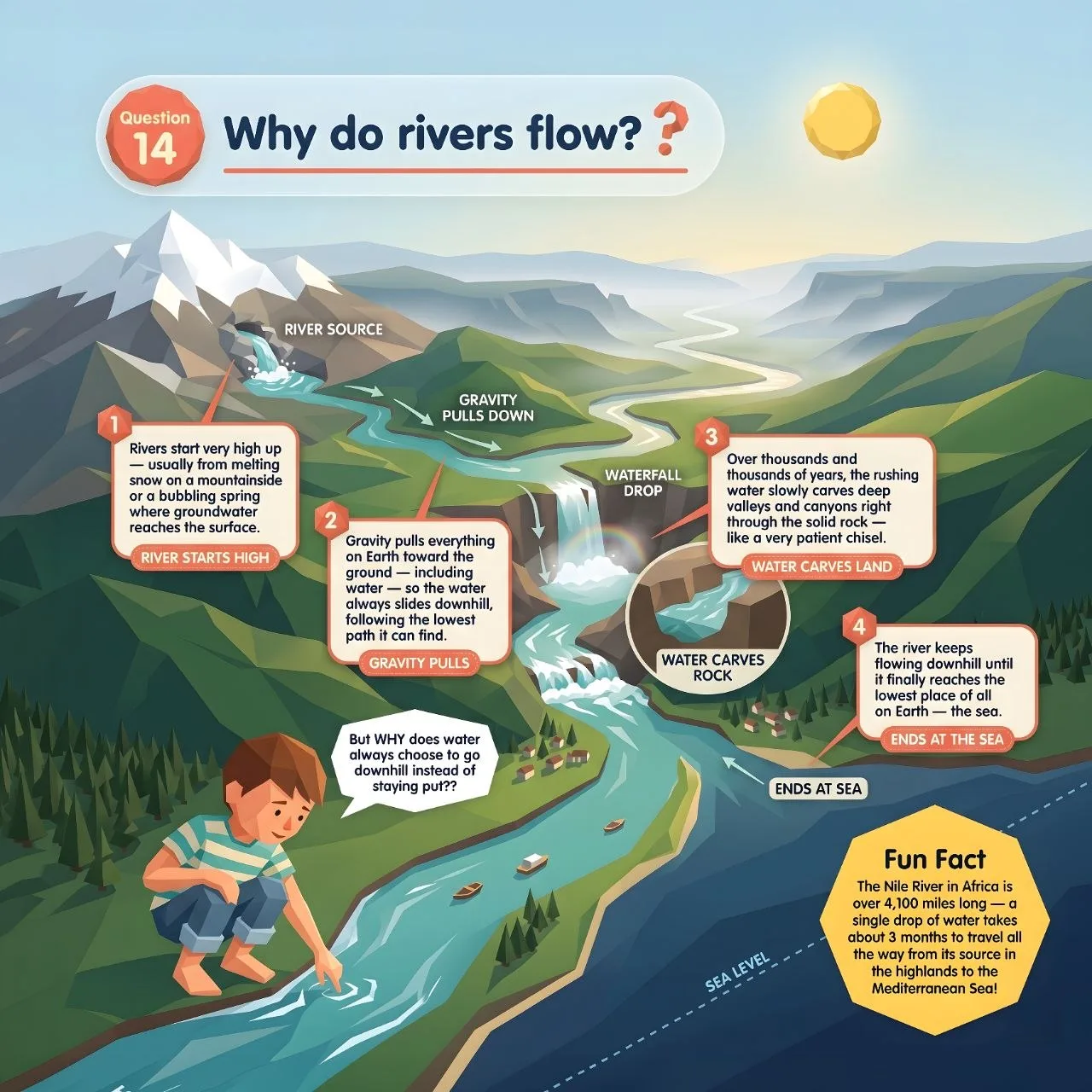
Why do rivers flow?
A mountain-to-sea scene follows water from its high source, pulled by gravity, carving land all the way to the ocean.
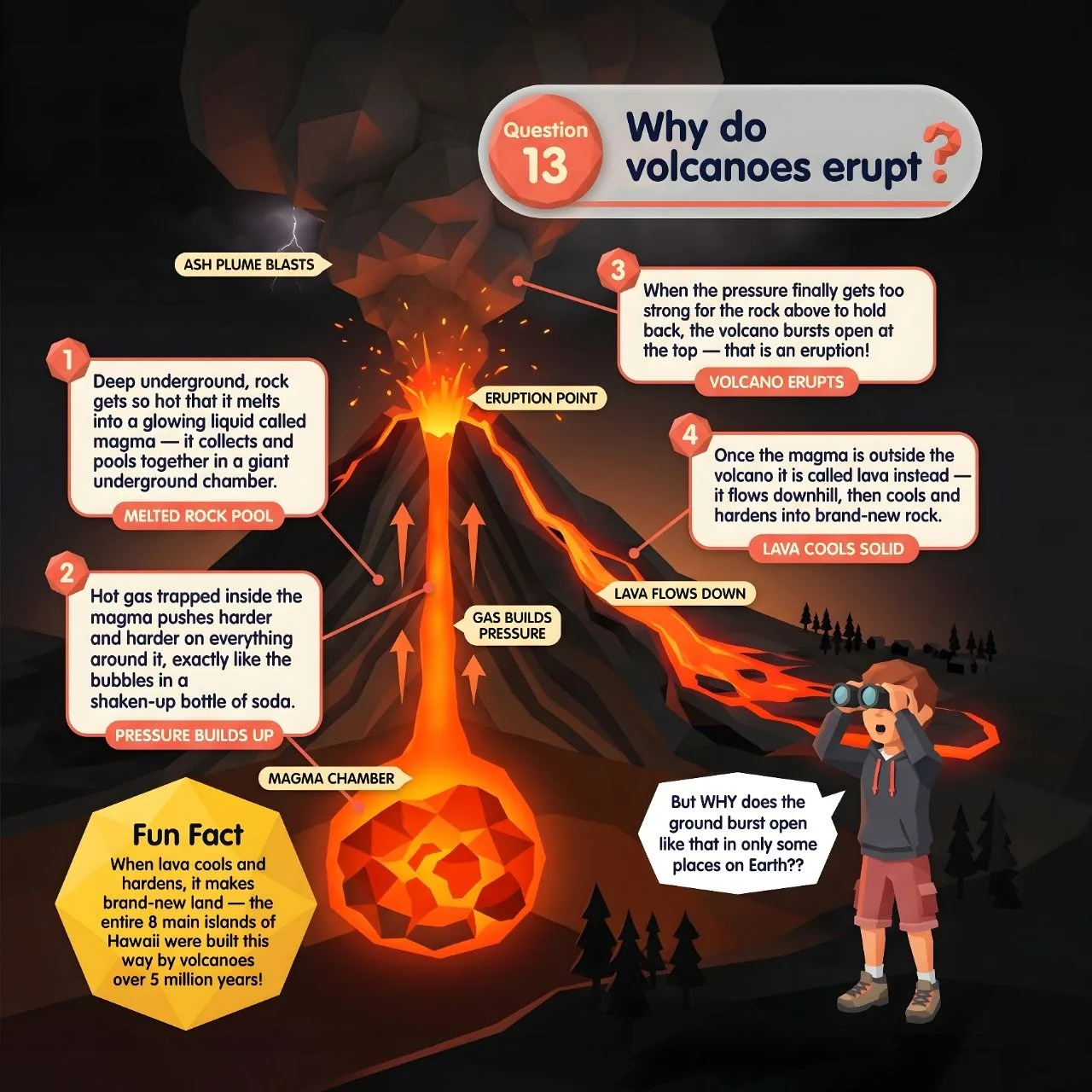
Why do volcanoes erupt?
A cutaway scene shows magma, trapped gas, building pressure, and the moment rock bursts open into an eruption.
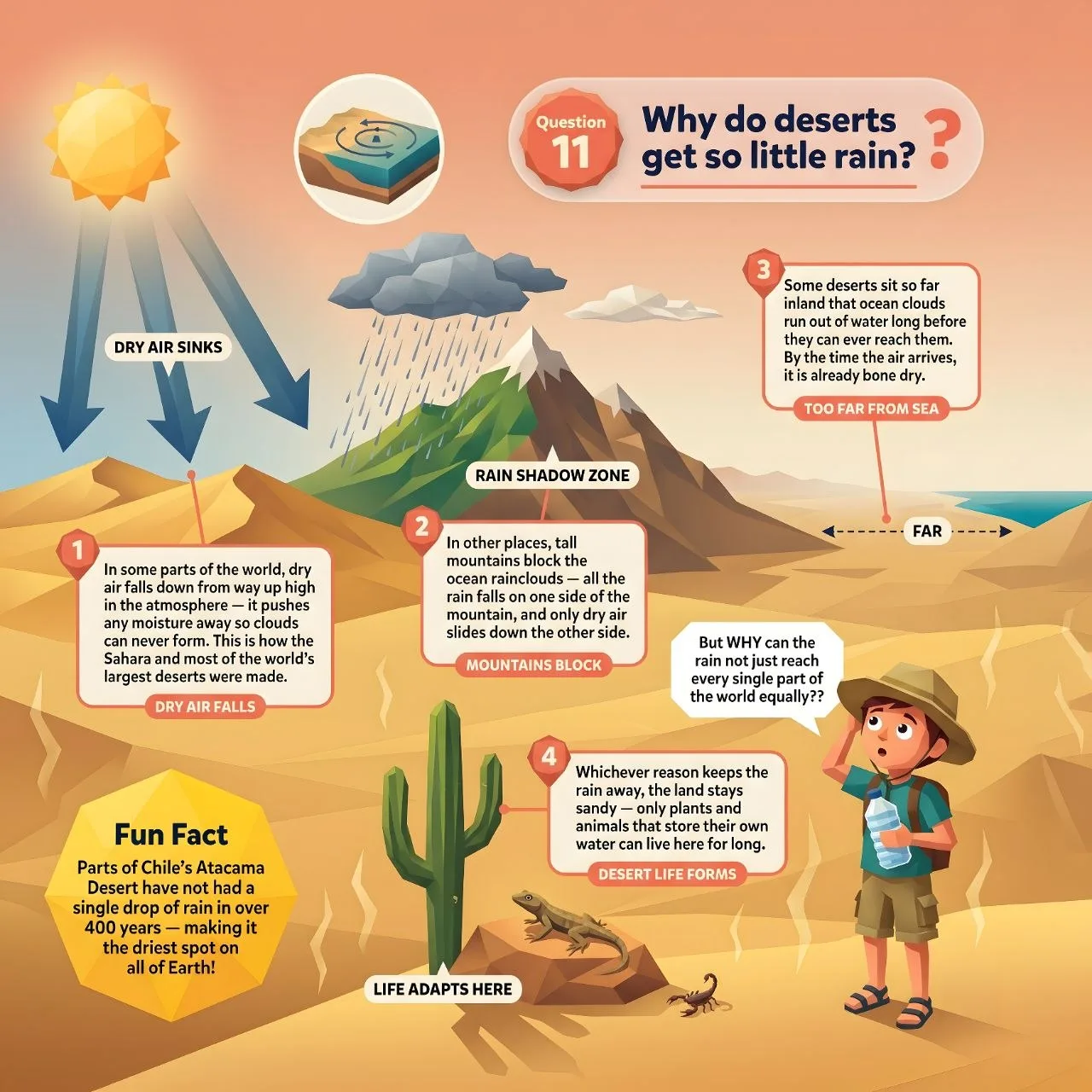
Why do deserts get so little rain?
A sun-and-mountain scene explains sinking dry air, rain-shadow zones, and why some lands stay bone dry.
Tap a sample page to view it larger. This is the visual promise of the book: bold scenes, short explanations, and clear science children can follow.
Question themes
Explore the world one “why” at a time
Perfect for children who ask questions about weather, nature, space, landforms, light, and the everyday mysteries around them.
❄️Snow
🌈Rainbows
💨Wind
⭐Stars
⛰️Mountains
🏜️Mirages
💧Waterfalls
☀️Sunlight
🌊Rivers
🌍Earth
🧊Ice
🔭Sky
Who it is for
For kids who ask questions before breakfast
Smart Kids WHY? is made for curious children, parents who want screen-free learning, teachers who need quick science conversation starters, and gift buyers looking for something fun and educational.
Bedtime reading
Classroom discussion
Homeschool science
Road trips & quiet time
Birthday gifts
Family reading shelves
A book kids can browse by themselves.
A book adults can read aloud in short sessions.
A book that turns “I don’t know” into “let’s find out.”
What readers say
Loved by curious kids and their grown-ups
★★★★★
"My 7-year-old asks 'why' about everything and I finally have backup. She read the waterfall and rainbow pages to her little brother without me even asking. The illustrations do the heavy lifting."
★★★★★
"Bought it for my grandson's birthday. He's not always into books but this one stuck — he keeps coming back to the stars and mountains pages. Great gift for a curious kid."
★★★★☆
"I use it as a science starter for my Grade 2 class. The question-per-page format is perfect for discussion. My only wish is that it were a bit longer — the kids wanted more topics!"
★★★★★
"We homeschool and this is our go-to for quick nature lessons. The explanations are simple but not dumbed-down. My daughter remembers the fun facts weeks later."
★★★★★
"Bedtime reading with my 8-year-old. Instead of one more cartoon he now wants 'one more why.' Colorful and easy to read aloud."
★★★★★
"Gave it as a birthday gift and the mom texted me a photo of her son reading it in the car on the way home. Screen-free win. Buying a second copy for my niece."
Why parents say yes
It feels educational without looking boring. The pages are colorful, approachable, and easy to understand quickly.
Why kids keep opening it
Every spread starts with a question and a scene, so the book feels like exploring rather than studying.
Why it works as a gift
It is broad enough for many children, useful enough for parents, and attractive enough to feel special when opened.
Now available
Add to Cart & Checkout
Smart Kids WHY? Questions and Answers about Our Amazing World
Give a curious child a book that makes science, nature, and the world around them feel exciting, clear, and worth asking about.
- For curious kids ages 6–10
- Full-color illustrated question-and-answer format
- Covers 12+ everyday topics — weather, nature, space, light & more
- Kid-friendly explanations with visual callouts and fun facts
- Written by Daniel Bulmez · Volume 1 in the Smart Kids WHY? series
Full price $39.99
$29.99
Sale ends soonQuick answers
Common questions
What age is this book best for?
It is written for curious kids ages 6–10. Younger children (4–5) love it read aloud, while stronger readers can explore the pages independently. The illustrated format means there is something to enjoy across the whole range.
Is it a textbook?
No. It is an illustrated question-and-answer book. The goal is to make real explanations feel clear, visual, and fun rather than formal or worksheet-like.
Can teachers or homeschool parents use it?
Yes. The question format makes it useful for science starters, discussion prompts, reading time, nature units, and quick curiosity-led lessons.
Does every page have illustrations?
The book is designed around colorful illustrated explanations, using scenes, callouts, labels, and fun facts to make each answer easier to understand.
Is this good as a gift?
Yes. It is a strong gift option for children who like facts, science, nature, weather, space, and asking questions about how things work.
Feed the curiosity before it fades.
When a child asks “why,” they are already ready to learn. Smart Kids WHY? gives them a colorful place to keep asking, keep noticing, and keep discovering.