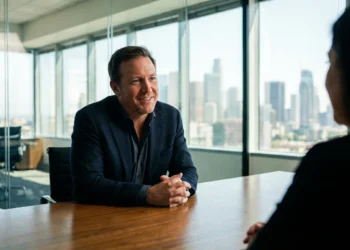


Why some leaders are instantly magnetic — and what they’re doing that nobody talks about.
Have you ever watched someone walk into a room and immediately own it?
Not with arrogance. Not with volume. With something harder to fake — presence.
I spent years studying how the world’s most powerful leaders communicate. Not the TED Talk version. The real version — boardrooms, high-stakes negotiations, moments where careers are made or destroyed in thirty seconds.
What I found surprised me.
The best communicators aren’t doing what you think they’re doing. They’re not “being confident.” They’re running a system — a set of deliberate, learnable techniques that most people never see.
Here are seven of them.
1. They Speak Last
Most people rush to fill silence. CEOs do the opposite.
In meetings, the most powerful person in the room almost always speaks last. Why? Because speaking first anchors you to incomplete information. Speaking last lets you absorb every perspective, identify the gap, and deliver the insight that reframes the entire conversation.
Try this: In your next meeting, wait. Let everyone else go first. When you finally speak, reference what others said, then add the angle nobody considered. Watch how the room shifts.
2. They Use Strategic Silence
Silence isn’t awkward for great communicators — it’s a weapon.
After making a point, they stop. They don’t rush to explain, qualify, or soften. They let the weight of their words settle into the room.
Most people panic in silence and start talking again, undermining everything they just said. CEOs let the silence do the heavy lifting.
3. They Master the “Power Bridge”
Great leaders never answer the question they’re asked — they answer the question they want to answer.
It’s called bridging: “That’s a great question. What’s really important here is…”
Politicians do it crudely. CEOs do it seamlessly. The difference? CEOs actually address the original question briefly, then bridge to their point. It feels respectful, not evasive.
4. They Name the Emotion in the Room
This is the one nobody talks about.
When tension is building, average communicators ignore it or get swept up in it. Exceptional communicators name it.
“I can feel we’re all frustrated with this timeline. Let’s put that on the table.”
Naming the emotion defuses it instantly. It signals emotional intelligence and gives you control of the room’s energy. It’s a technique from hostage negotiation — and it works in every meeting you’ll ever sit in.
5. They Tell Stories With a Point
Data tells. Stories sell.
But not just any story. CEOs use a specific structure: Situation → Complication → Resolution.
“We were losing 20% of our customers every quarter (situation). Our team discovered it wasn’t the product — it was the onboarding experience (complication). We redesigned the first 72 hours, and retention jumped 40% (resolution).”
That’s not a story. That’s a weapon. Three sentences. Total clarity. Instant buy-in.
6. They Match Energy, Then Redirect
Walk into a room where everyone is panicking and try to be calm. Nobody listens.
Great leaders match the room’s energy first — “I know this feels urgent. I feel it too.” — then slowly bring the temperature down.
It’s called pacing and leading. You can’t lead people somewhere emotionally unless you first meet them where they are.
7. They Ask Questions That Shift Perspective
The most powerful thing a CEO can say in a room isn’t a statement. It’s a question.
Not “What do you think?” — that’s lazy.
Questions like:
- “What would we do if we had to solve this by Friday?”
- “If we were the customer, would we buy this?”
- “What’s the one thing we’re afraid to say out loud?”
These questions reframe the problem, bypass groupthink, and unlock solutions that statements never could.
The Deeper Playbook
These seven secrets are the surface. Underneath them is a complete operating system — how elite leaders structure conversations, handle resistance, build instant trust, and influence without manipulation.
I broke down the full system in my book Communication Secrets of Great Leaders and CEOs. It’s everything I’ve learned studying how the most effective communicators in the world actually operate — not theory, but the real tactical frameworks you can use starting today.
If you’ve ever left a meeting thinking “I should have said that differently” — this book was written for you.
Daniel Bulmez is the author of Communication Secrets of Great Leaders and CEOs, available on Amazon.