

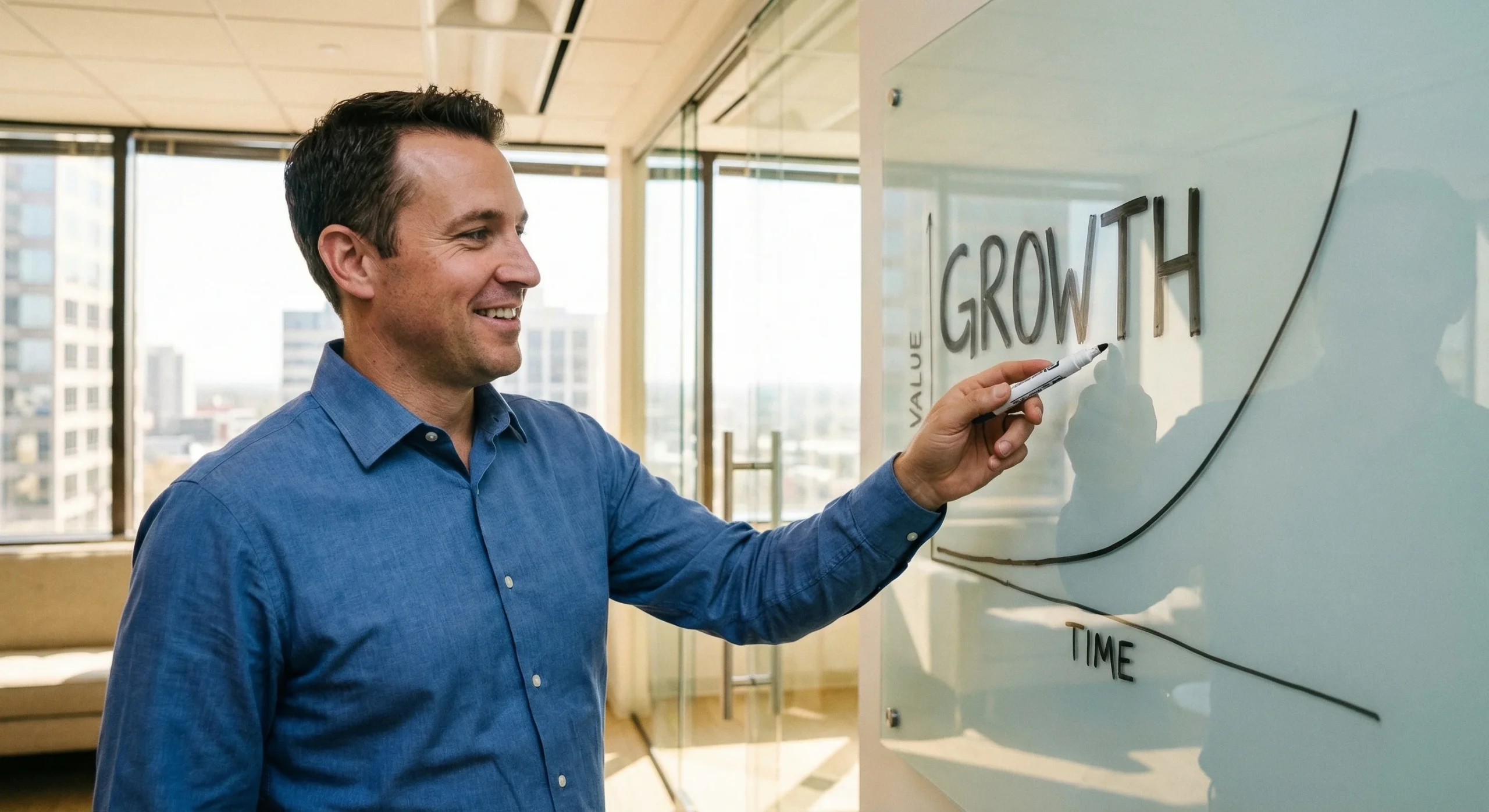
What separates the people who bounce back from failure from the ones who quietly give up?
It’s not talent. It’s not intelligence. And it’s definitely not luck. A 20-year study by Stanford psychologist Carol Dweck found that the single biggest predictor of long-term success isn’t raw ability, it’s whether you believe your abilities can grow in the first place. People with what Dweck calls a “growth mindset” outperform their equally talented peers by measurable margins across education, business, sports, and relationships. And the research shows that most people have it backwards: they think mindset is something you either have or you don’t. That belief, ironically, is the exact thing holding them back.
1. What a Growth Mindset Actually Is (and What It Isn’t)
A growth mindset is the belief that your intelligence, skills, and abilities can be developed through effort, learning, and persistence. It sounds simple, and it is. But simple doesn’t mean easy.
Carol Dweck introduced the concept in her 2006 book Mindset: The New Psychology of Success, drawing on decades of research with students, athletes, and executives. The core finding was striking: when people believe their qualities are fixed (“I’m just not a math person”), they avoid challenges, crumble under criticism, and plateau early. When they believe those same qualities can be developed, they lean into difficulty and treat failure as data rather than identity.
Here’s the part most people miss: this isn’t toxic positivity. It’s not “you can do anything if you try hard enough.” Dweck herself has pushed back on that oversimplification. The concept acknowledges real limitations while refusing to let those limitations define the ceiling. It’s the difference between “I can’t do this” and “I can’t do this yet.”
And it’s not just academic theory. Microsoft CEO Satya Nadella restructured the company’s entire culture around these principles when he took over in 2014. At the time, Microsoft was known internally for its stack-ranking system, where employees competed against each other and hoarded knowledge. Nadella replaced it with a “learn-it-all” culture instead of a “know-it-all” culture. Microsoft’s market cap went from $300 billion to over $3 trillion in the decade that followed. The product changes mattered, but Nadella credits the cultural shift as the foundation that made everything else possible.
2. Fixed Mindset vs Growth Mindset: The Real Difference
The contrast between these two orientations shows up in nearly every high-stakes moment, from job interviews to boardroom decisions.
Someone with a fixed mindset sees a challenging project and thinks: “If I fail at this, people will realize I’m not that smart.” So they either avoid the project entirely or play it safe enough to prevent visible failure. The goal isn’t to learn. It’s to protect a self-image.
Someone with the opposite orientation sees the same project and thinks: “This will be hard, and I’ll probably struggle in the middle, but that’s where the actual skill-building happens.” The goal is development, not performance theater.
Dweck’s research with fifth-graders made this vivid. When given a choice between an easy test that would make them look smart and a harder test they’d learn from, students with fixed mindsets overwhelmingly chose the easy test. Students with the opposite belief chose the hard one nearly every time. That pattern doesn’t change with age. It just gets better camouflaged. Adults with fixed mindsets don’t refuse challenges outright. They say things like “that’s not really my area” or “I don’t think the timing is right,” which are sophisticated versions of the same avoidance.
The most damaging part of a fixed mindset isn’t the limitations it creates. It’s the ones it prevents you from seeing. When you believe intelligence is static, you don’t invest in developing it. And when you don’t invest, you never discover what you were actually capable of. It becomes a self-fulfilling prophecy.
Howard Schultz, the Starbucks founder, grew up in public housing in Brooklyn. He’s talked openly about how his early failures (getting rejected by banks 242 times while trying to fund Starbucks) would have ended his entrepreneurial career if he’d interpreted those rejections as evidence of personal inadequacy rather than a problem that needed a different approach. That reframing isn’t wishful thinking. It’s the belief in development, in action.
3. The Neuroscience Behind Why This Works
This isn’t just psychology. Neuroscience backs it up.
Research from Columbia University’s Brain Imaging Center showed measurable differences in brain activity between the two groups. When fixed-mindset participants received negative feedback on a test, their brains essentially shut down. Attention shifted away from the corrective information. Participants who believed in their ability to develop showed increased activity in the anterior cingulate cortex, the region associated with error processing and adaptive responses. Their brains literally engaged more when they got something wrong.
The mechanism is neuroplasticity, the brain’s ability to form new neural connections throughout life. Every time you struggle with something difficult and push through, you’re physically strengthening the neural pathways associated with that skill. This isn’t metaphorical. Brain scans show measurable increases in gray matter density in people who engage in sustained deliberate practice.
A study published in Psychological Science found that teaching students about neuroplasticity (specifically, that the brain grows new connections when challenged) reversed declining math grades in 7th graders. The control group continued declining. The intervention group’s grades went up. The only variable was whether they understood that struggle was building their brains rather than exposing their limits.
Jamie Dimon, CEO of JPMorgan Chase, has described his approach to leadership development in similar terms. When asked in a 2019 shareholder letter why JPMorgan invests more in employee training than any other bank, he cited the compounding returns of building institutional capability over time. “You don’t hire finished products,” Dimon wrote. “You develop them.” That’s Dweck’s framework embedded into corporate strategy.
4. Growth Mindset Examples From the Real World
Theory is useful. Examples are better. Here’s what this looks like when the stakes are real.
Sara Blakely (Spanx). Blakely’s father used to ask his kids the same question at dinner every night: “What did you fail at today?” If they had nothing to report, he was disappointed. That ritual rewired her relationship with failure before she ever started a business. When she cold-called hosiery mills for two years and got rejected by every single one, she didn’t experience it as humiliation. She experienced it as iteration. Spanx became a billion-dollar company with zero outside investment.
Satya Nadella (Microsoft). Beyond the cultural overhaul mentioned earlier, Nadella’s personal orientation toward development was shaped by raising a son with severe cerebral palsy. He’s spoken about how that experience fundamentally changed his capacity for empathy and patience, two qualities he brought directly into how he leads. The connection between personal growth and professional leadership isn’t coincidental. It’s causal.
Reed Hastings (Netflix). When Hastings launched Netflix’s streaming service, the company was making $1.5 billion annually from DVD rentals. He chose to cannibalize his own cash cow because he believed the market was moving toward streaming. Blockbuster, operating from a fixed mindset of “our model works,” declined Netflix’s offer to be acquired for $50 million. Netflix is now worth over $250 billion. Blockbuster doesn’t exist.
James Dyson. Dyson built 5,127 failed prototypes of his vacuum cleaner before creating one that worked. That’s not a typo. Five thousand, one hundred and twenty-seven. Each failure taught him something specific about airflow dynamics. When asked about it, Dyson said: “I didn’t mind failure. Each one brought me closer. But there was nothing pleasant about it.” That last sentence matters. This way of thinking doesn’t make failure feel good. It makes failure useful.
5. The 7 Habits That Build a Growth Mindset
Knowing about the concept and actually developing it are different things. Here are the habits that bridge that gap.
1. Reframe “I can’t” to “I can’t yet.” This is Dweck’s signature insight, and it’s more powerful than it sounds. Adding “yet” to any limitation statement keeps the door open for development. “I don’t understand data analytics yet.” “I’m not a confident public speaker yet.” The word creates psychological space for growth.
2. Seek feedback actively, not passively. Most people wait for feedback and then get defensive when it arrives. Leaders like Ray Dalio, founder of Bridgewater Associates, built systems where radical transparency is the default. Dalio created a culture where anyone can challenge anyone’s ideas, regardless of seniority. That requires institutional commitment to development, not just individual.
3. Study your failures with the same rigor you celebrate wins. After Amazon’s Fire Phone bombed spectacularly in 2014, Jeff Bezos didn’t sweep it under the rug. He publicly discussed what went wrong and redirected the team’s learnings into developing Alexa and Echo, which became one of Amazon’s most successful product lines. The failure wasn’t wasted. It was composted.
4. Surround yourself with people who challenge you. Comfortable environments reinforce fixed thinking. Development-oriented environments feel uncomfortable. If everyone in your circle agrees with you all the time, you’re in the wrong circle. Deliberately seek people whose strengths complement your weaknesses.
5. Set learning goals, not just performance goals. Instead of “close 20 sales this quarter,” add “learn three new objection-handling techniques.” Performance goals measure output. Learning goals build capability. The best performers pursue both simultaneously.
6. Practice deliberate discomfort. Do one thing per week that makes you slightly uncomfortable. Take a leadership style quiz and sit with the results honestly. Volunteer for the presentation you’d normally avoid. Speak up in the meeting where you’d usually stay silent. Growth happens at the edge of your comfort zone — not inside it.
7. Track your growth, not just your results. Keep a simple log of what you’ve learned each week. Not achievements. Not wins. Learnings. Over time, that log becomes proof that you’re developing, which reinforces the entire cycle.
6. Why Most People Fail at Developing a Growth Mindset
Here’s the uncomfortable truth: most people who read about this concept don’t actually develop it. They understand the concept intellectually, agree with it, and then continue operating from a fixed mindset in practice.
The reason is what Dweck calls a “false growth mindset”: the belief that you already have one simply because you know what it is. It’s like reading about exercise and assuming you’re fit. Knowledge without practice changes nothing.
The most common trap is praise-based identity. If you were raised being told “you’re so smart” or “you’re naturally talented,” your identity is built on a fixed trait. Developing one requires you to dismantle that identity and rebuild it around effort and development instead. That’s psychologically difficult, which is why most people don’t do it.
Another trap is confusing optimism with genuine development. Saying “everything happens for a reason” after a failure isn’t growth mindset. It’s avoidance. A genuine response rooted in development is: “That failed. Here’s specifically what I’ll do differently next time.” It requires analysis, not affirmation.
If you want to honestly assess where you stand, take a confidence level quiz or a fear of failure test. These won’t tell you everything, but they can surface blind spots that are hard to see from the inside.
7. Growth Mindset in Leadership: Why It Multiplies
This belief in a single person changes one career. In a leader, it changes hundreds.
When leaders operate from a fixed mindset, they hire people who make them feel smart, avoid risks that could expose weakness, and create cultures where mistakes are hidden rather than examined. The result is an organization that optimizes for looking good rather than getting better.
When leaders believe in development, the opposite happens. They hire people who challenge them. They treat failures as institutional learning opportunities. They reward effort and experimentation, not just outcomes.
General Stanley McChrystal described this shift in his book Team of Teams. When he took command of Joint Special Operations in Iraq, the military’s rigid hierarchy was losing to a decentralized insurgency. McChrystal’s response was to flatten communication structures and empower lower-level teams to make decisions in real time. That required trusting that people would grow into expanded roles, a bet that only makes sense when you believe people can develop. The results were dramatic: the task force increased its raid capacity from 10 operations per month to 300.
The data from Google’s Project Aristotle reinforced this at a corporate scale. After studying 180 teams, Google found that the number one predictor of team performance wasn’t individual talent or experience. It was psychological safety, the belief that you could take risks, make mistakes, and ask questions without punishment. Psychological safety is the organizational expression of this principle.
If you lead a team, the most leveraged thing you can do isn’t developing your own abilities. It’s creating an environment where everyone else can develop theirs. That starts with how you respond to failure, how you give feedback, and whether your actions match the values you claim to hold.
FAQ
What is a growth mindset in simple terms?
A growth mindset is the belief that your intelligence, abilities, and talents can be developed through hard work, good strategies, and input from others. Coined by psychologist Carol Dweck, it contrasts with a fixed mindset, where people believe their qualities are set in stone. Research shows that people with a growth mindset achieve more because they focus on learning — not proving themselves.
What are the 5 key characteristics of a growth mindset?
The five core characteristics are: (1) embracing challenges instead of avoiding them, (2) persisting through setbacks rather than giving up, (3) viewing effort as a path to mastery, (4) learning from criticism instead of ignoring it, and (5) finding lessons and inspiration in others’ success rather than feeling threatened. These traits are developed through practice, not born.
What is the difference between a fixed mindset and a growth mindset?
A fixed mindset assumes your intelligence and abilities are static traits you’re born with. A growth mindset assumes those same qualities can be developed over time. The practical difference: fixed-mindset people avoid challenges to protect their self-image, while growth-mindset people seek challenges because they see struggle as where learning happens. Carol Dweck’s research shows this single belief shapes everything from academic performance to leadership effectiveness.
How do you develop a growth mindset?
Start by reframing limitations with “yet” (“I can’t do this yet”), actively seek honest feedback, study your failures with the same attention you give wins, and set learning goals alongside performance goals. Most importantly, practice deliberate discomfort. Regularly do things that challenge you. Growth mindset isn’t a personality trait you either have or don’t. It’s a skill you build through consistent practice.
Why is a growth mindset important in the workplace?
Companies led by development-oriented leaders consistently outperform their peers. Microsoft’s transformation under Satya Nadella, which grew the company from $300 billion to $3 trillion in market cap, was built on shifting from a “know-it-all” to a “learn-it-all” culture. Google’s research found that psychological safety, the organizational form of this belief, is the top predictor of team performance. When employees believe they can grow, they innovate more, collaborate better, and recover from setbacks faster.
Can adults really change their mindset?
Yes. Neuroscience research confirms that the brain remains plastic throughout life, forming new neural connections when challenged. Studies published in Psychological Science show that even brief interventions teaching people about neuroplasticity produce measurable changes in performance and motivation. The key is sustained practice, not one-time awareness. Adults who consistently apply growth mindset principles show brain changes visible on fMRI scans within weeks.
The irony is that growth mindset is often discussed in a fixed-mindset way, as if understanding the concept is the same as practicing it. It isn’t. It’s a daily discipline, one that requires you to choose discomfort over safety, feedback over flattery, and progress over perfection. The good news is that every CEO, athlete, and leader cited in this article started exactly where you are: knowing the theory but not yet living it.
The gap between knowing and doing is where the real growth happens.
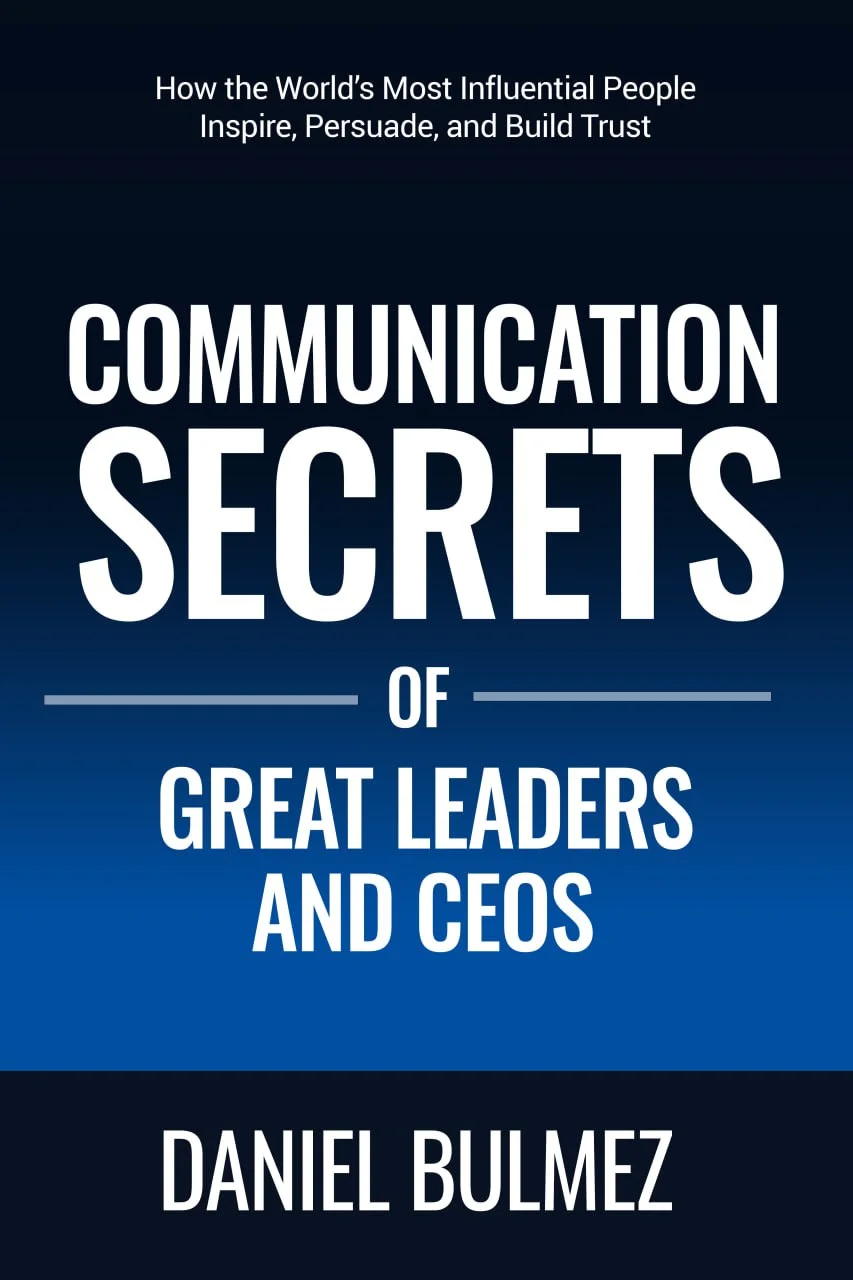
If you want to go deeper into how the world’s most effective leaders think, communicate, and build cultures that compound, Daniel Bulmez breaks down the specific communication patterns behind growth-minded leadership in Communication Secrets of Great Leaders and CEOs. It’s the system behind the surface.
Daniel Bulmez is the author of Communication Secrets of Great Leaders and CEOs, available on Amazon.