The Joseph Campbell Quote That Explains Why You’re Stuck (And Exactly How to Get Unstuck)
Joseph Campbell said the cave you fear to enter holds the treasure you seek. Here is exactly what he meant — and how to walk into your own cave.
 Daniel
May 9, 2026
5 min read
46 views
Daniel
May 9, 2026
5 min read
46 views
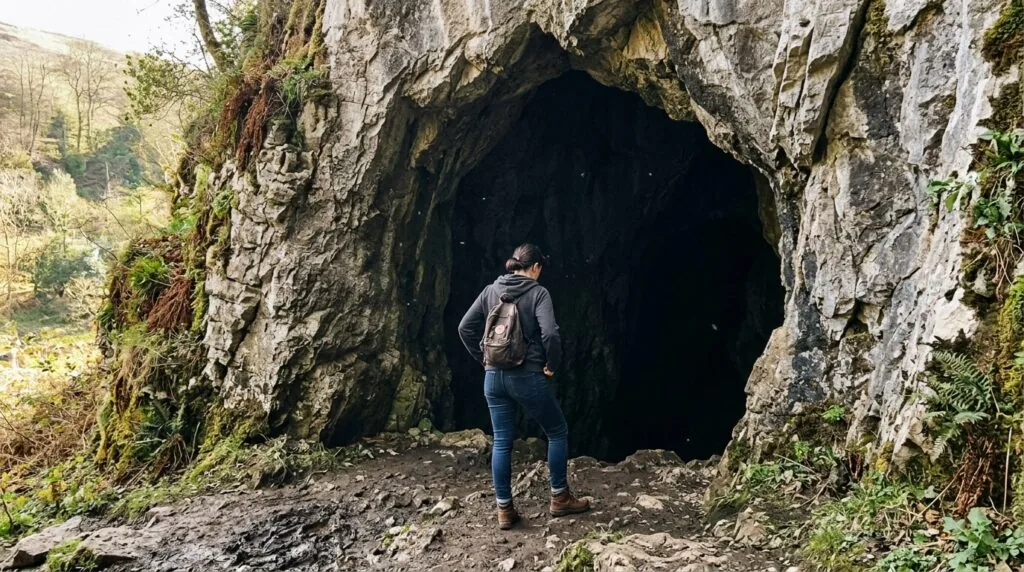
There’s a sentence the mythologist Joseph Campbell wrote that has quietly run through self-help books, therapy rooms, and screenwriting handbooks for half a century. Eleven words. Once you hear it, you start seeing it everywhere — in your career, your relationships, your health, your unfinished projects.
“The cave you fear to enter holds the treasure you seek.”
— Joseph Campbell
It sounds poetic. It is. But it’s also something colder and more useful: a precise diagnostic for why people stay stuck. If you’ve ever wondered why you keep circling the same problem in your life — the conversation you won’t have, the message you won’t send, the work you won’t ship, the truth you won’t say out loud — Campbell told you why in one line.
You’re avoiding the cave. The treasure is in the cave. That’s the whole problem.
What Campbell Actually Meant
Campbell spent decades studying myths from every culture on earth — Greek, Egyptian, Norse, Polynesian, Hindu, Indigenous American — and noticed something strange. Cultures that had never met each other were telling the same story.
He called it the Hero’s Journey. The hero leaves the ordinary world, crosses a threshold, descends into the underworld or cave or labyrinth, fights the dragon, recovers the treasure (or wisdom, or beloved), and returns transformed.
The cave isn’t decorative. It’s the structural turning point. Every version of the story — Star Wars, The Odyssey, The Lord of the Rings, Beauty and the Beast, the Buddha’s awakening, Christ in the wilderness — pivots on the moment the hero walks into the place they were most afraid to go.
Campbell’s claim wasn’t religious. It was psychological. The reason every culture tells this story is because every human life is this story. The thing you most don’t want to face is the thing that, faced, sets you free.
Why Avoidance Feels Like Safety (And Isn’t)
Your brain is wired to treat unfamiliar discomfort as threat. The amygdala doesn’t distinguish between a saber-toothed tiger and a difficult conversation with your boss — both register as danger, both trigger the avoidance circuitry, both flood you with reasons to do literally anything else.
Avoidance gives you immediate relief. That’s the trap. The relief is real, but it’s borrowed against compounding interest. Every time you don’t have the conversation, the conversation gets heavier. Every time you don’t ship the work, the work gets scarier. Every time you don’t face the symptom, the body turns up the volume.
This is the cruel architecture of avoidance: the longer you don’t enter the cave, the more terrifying the cave becomes — even though nothing inside it has changed.
The dragon you imagined at twenty is still the same dragon at forty. You just spent twenty years feeding it your attention.
The Five Caves Most People Refuse to Enter
Reading the quote is easy. Spotting your own cave is harder. Here are the five most common ones — see if any of them feel familiar enough to look away from.
1. The Conversation Cave
The thing you need to say to your partner, parent, business partner, or friend. The truth you’ve been editing for months. You know what it is. You’ve rehearsed it in the shower. The cave isn’t the conversation — it’s the version of yourself who finally has it.
2. The Identity Cave
The work you secretly want to do but won’t claim. The book, the business, the channel, the art. Not entering this cave looks like staying “realistic.” It’s actually the most expensive form of fear there is, because the price is paid in unlived life.
3. The Body Cave
The symptom you keep googling but won’t take to a real doctor. The blood test you keep rescheduling. The pain you’ve decided to live around. The body keeps the score, and the score keeps growing while you scroll.
4. The Money Cave
The bank balance you won’t open. The credit card statement you let pile up. The actual numbers behind your business. Money fear is rarely about the numbers — it’s about what the numbers will tell you about who you’ve been.
5. The Self Cave
The pattern you keep repeating. The way you sabotage right before things work. The reason you pick the same kind of partner. The shadow Carl Jung wrote about, the one Campbell’s hero has to face down in the dark before any treasure shows up.
This is the deepest cave. It’s also the one with the biggest treasure.
How to Actually Enter the Cave
Reading inspirational quotes is itself a form of cave-avoidance. So here’s the part nobody puts on a poster.
1. Name the cave out loud. Not vaguely. Specifically. “The cave is the conversation with my mother about money.” “The cave is admitting I want to leave my job.” Vague caves stay closed. Named caves can be entered.
2. Lower the entry cost to humiliating. Don’t enter the whole cave. Enter it for ninety seconds. Send the first sentence. Open the spreadsheet. Book the appointment. Your brain isn’t afraid of the cave — it’s afraid of the imagined entire experience of the cave. Ninety seconds disarms it.
3. Expect the dragon to be smaller than your story. It almost always is. The actual conversation takes seven minutes. The actual blood test takes two. The cave you’ve been circling for a year often takes an afternoon to walk through. The fear is bigger than the cave.
4. Notice what changes on the other side. Energy you didn’t know you had returns. Sleep deepens. Decisions get easier. The treasure isn’t always what you went in for — sometimes it’s just the proof that you can enter caves now.
The Quote Beneath the Quote
The reason Campbell’s line keeps showing up in therapy rooms is because it works in reverse, too. Anywhere you feel stuck, ask: what cave am I refusing to enter? The stuckness is the map. Follow the avoidance and you’ll find the door.
Most of what people call a “life crisis” is just an unentered cave aging poorly.
You already know which cave is yours. You’ve known for a while. The treasure is exactly where Campbell said it would be — behind the door you keep walking past.
The only question left is when.
Daniel Bulmez is the author of Communication Secrets of Great Leaders and CEOs, available on Amazon.