


Most managers think they’re good communicators. The data says otherwise.
A landmark study by the Workforce Institute at UKG found that 86% of employees and executives cite poor communication as the primary cause of workplace failures. Even more striking: a Harvard Business Review survey revealed that managers spend nearly 80% of their workday communicating, yet only 26% of employees feel their manager communicates expectations clearly. That gap between effort and impact isn’t about talking more. It’s about communicating differently.
The managers who build high-performing teams aren’t necessarily the most charismatic speakers in the room. They’ve developed specific manager communication skills that create clarity, build trust, and make people actually want to follow them. And the good news is that these skills aren’t innate talent. They’re learnable habits.
Here are the communication strategies for managers that separate the good from the genuinely great.
1. Radical Clarity: Say What You Mean Without the Corporate Filter
The single biggest communication failure in management isn’t rudeness or insensitivity. It’s vagueness.
When Ed Catmull ran Pixar, he noticed that most creative disagreements weren’t real disagreements at all. They were miscommunications dressed up as conflict. People were using the same words to mean different things. His solution was what he called “candor,” a commitment to saying exactly what you mean, stripped of corporate euphemism.
This is a core manager communication skill that most training programs skip entirely. Instead of saying “Let’s circle back on the deliverables,” effective managers say “The report needs three changes. Here they are.” Instead of “We should probably think about adjusting timelines,” they say “The deadline is moving to March 15. Here’s why.”
Vague communication feels safer, but it creates more work. Your team spends hours decoding what you actually meant instead of doing the work itself.
Practical takeaway: Before any important message, ask yourself: “Could someone misunderstand this?” If yes, rewrite it. Clarity isn’t bluntness. It’s respect for your team’s time.
2. The Listening Ratio: Why the Best Managers Talk Less Than You’d Expect
Google’s Project Oxygen, one of the most comprehensive management studies ever conducted, identified the top behaviors of the company’s highest-rated managers. The number one behavior wasn’t strategic thinking or technical expertise. It was being a good coach, and coaching starts with listening.
Effective communication for managers is counterintuitive: the best communicators spend more time listening than speaking. Research from the International Listening Association shows that people retain only about 25% of what they hear. That means if you’re doing all the talking in your one-on-ones, three-quarters of your message is evaporating before it reaches the parking lot.
Microsoft CEO Satya Nadella made listening a centerpiece of the company’s cultural transformation after 2014. He replaced the “know-it-all” culture with a “learn-it-all” culture, and that started with managers who asked more questions than they answered. The result was a company that went from stagnation to a $3 trillion market cap.
Practical takeaway: In your next five meetings, track your talking-to-listening ratio. Aim for 30/70. Ask one more question before offering your opinion. You’ll be surprised how much more you learn about what’s actually happening on your team.
3. Context Over Commands: The Communication Skill That Builds Autonomy
There’s a reason micromanagers create dependent teams. They communicate the “what” without the “why.”
Netflix’s famous culture deck, which has been viewed over 20 million times, is built on a single communication principle: give people context, not control. Reed Hastings believed that if you hire talented people and then tell them exactly what to do, you’ve wasted both their talent and your time.
This is workplace communication skills at the highest level. When a manager says “Finish this report by Friday,” they get compliance. When a manager says “This report goes to the board on Monday and will determine our Q3 budget, so I need your best analysis by Friday,” they get ownership. Same deadline. Completely different motivation.
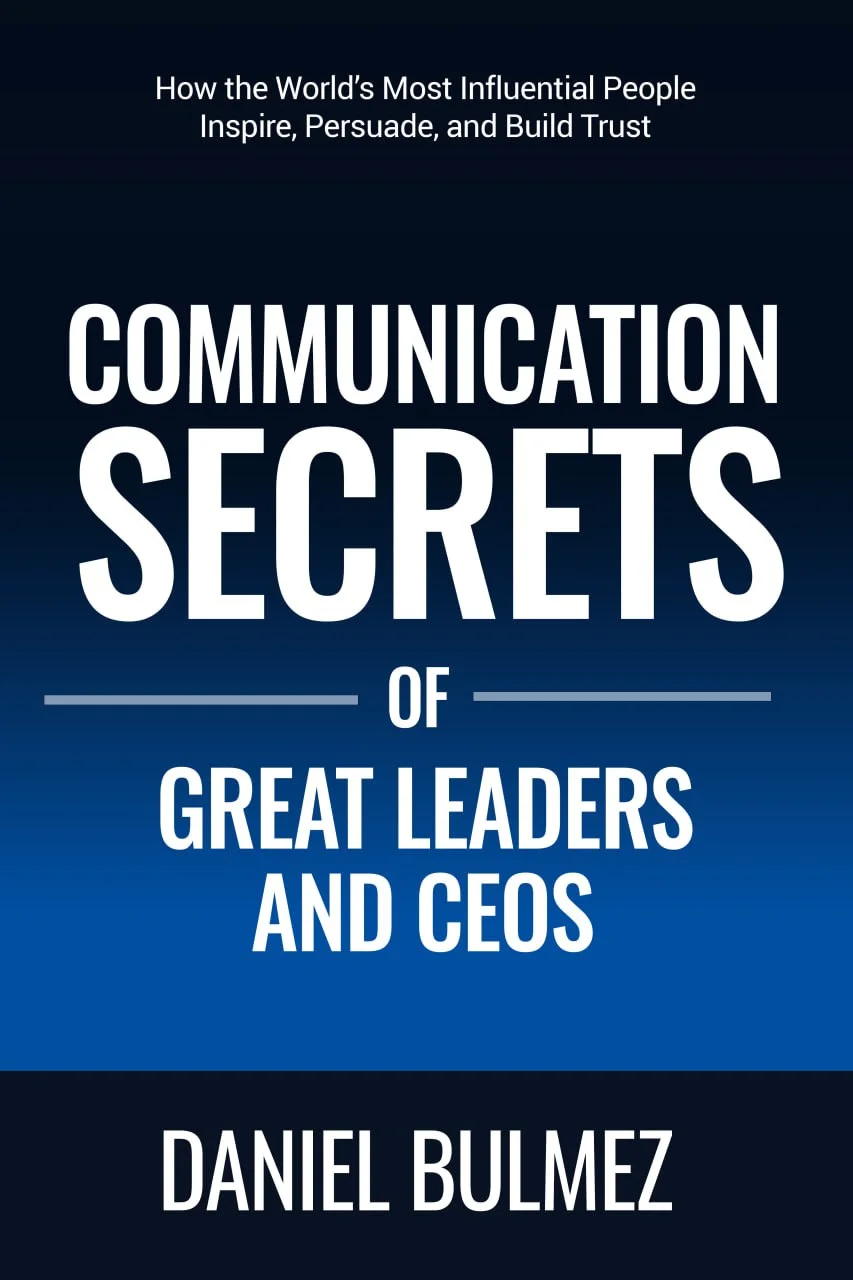
In his book Communication Secrets of Great Leaders and CEOs, Daniel Bulmez explores why the most influential communicators share decision-making context generously. They don’t hoard information as a power move. They distribute it as a leadership tool.
Practical takeaway: Every time you assign a task, add one sentence about why it matters. Not a paragraph. One sentence of context transforms compliance into commitment.
4. Feedback That Actually Lands: The Manager’s Hardest Conversation Made Simple
Kim Scott’s “Radical Candor” framework became a management phenomenon because it solved a problem every manager recognizes: most feedback is either too soft to be useful or too harsh to be heard.
Communication skills training for managers often focuses on giving negative feedback, but the real gap is in how feedback is structured. The most effective managers at companies like Bridgewater Associates use what psychologists call “situation-behavior-impact” feedback. Instead of “Your presentations need work,” they say “In Tuesday’s client meeting, when you skipped the data summary, the client asked three follow-up questions that added 20 minutes. Next time, lead with the numbers.”
The first version triggers defensiveness. The second gives someone something they can actually act on. That’s the difference between managerial communication that develops people and communication that just makes them anxious.
Ray Dalio built Bridgewater into the world’s largest hedge fund partly by creating a culture where feedback flowed in every direction, including upward. Managers who only give feedback but never receive it create a communication bottleneck that poisons team trust.
Practical takeaway: Use the SBI framework (Situation, Behavior, Impact) for every piece of feedback this week. It takes 30 seconds longer to prepare and makes the conversation 10 times more productive.
5. Written Communication: The Silent Skill Most Managers Neglect
Jeff Bezos banned PowerPoint at Amazon in 2004 and replaced it with six-page narrative memos. His reasoning was simple: bullet points hide fuzzy thinking. Complete sentences force clarity.
Most managers dramatically underestimate how much their written communication affects their team’s performance. A Grammarly study found that teams with managers who communicate clearly in writing are 20% more productive than those with managers who rely on verbal communication alone.
This matters more than ever in hybrid and remote work environments. When your team is distributed across time zones, your Slack messages, emails, and project briefs become your primary leadership tool. Sloppy written communication doesn’t just cause confusion; it signals that you don’t value precision.
Amazon’s writing culture has produced some of the most effective team communication skills in corporate America. The six-page memo format forces managers to think through their logic completely before presenting it. If you can’t explain something clearly in writing, you probably don’t understand it well enough.
Practical takeaway: Before sending your next important email or Slack message, read it aloud. If any sentence requires a second reading, simplify it. Your team shouldn’t need to decode your messages.
6. Emotional Regulation: The Communication Skill Nobody Talks About
Here’s something communication skills for managers programs rarely cover: it’s not just what you say, it’s the emotional state you’re in when you say it.
Research from the Yale Center for Emotional Intelligence shows that a manager’s mood is contagious. When a manager communicates while stressed or frustrated, the team’s cortisol levels rise measurably within minutes, even if the words themselves are perfectly reasonable. The phenomenon is called “emotional contagion,” and it’s one of the most powerful forces in workplace dynamics.
Indra Nooyi, during her tenure as PepsiCo CEO, was known for a practice she called “assuming positive intent.” Before responding to any frustrating message or situation, she would pause and consciously assume the other person had good intentions. That small mental reset changed her entire communication approach, from reactive to responsive.
Practical takeaway: Create a personal rule: never respond to a frustrating message within 10 minutes. Use that time to shift from reaction to response. Your team will notice the difference immediately.
7. The Cascade Problem: Making Sure Your Message Survives Three Levels Down
Here’s a communication challenge most new managers don’t anticipate: your message degrades every time it passes through another person.
A study published in the Journal of Experimental Social Psychology demonstrated that messages lose approximately 40% of their original meaning after being relayed through just two intermediaries. In a five-level organization, the message that reaches the front line barely resembles what the CEO said.
The most effective communication strategies for managers account for this distortion. At Shopify, Tobi Lütke insisted on “minimal viable bureaucracy,” which included reducing communication layers wherever possible. He encouraged managers to communicate directly with anyone in the organization, regardless of hierarchy.
This doesn’t mean bypassing your direct reports. It means supplementing cascade communication with direct touchpoints. Town halls, skip-level meetings, written summaries that travel unchanged through the organization. Effective managers don’t just broadcast a message once and hope it arrives intact.
Practical takeaway: For any critical message, communicate it through at least two channels. Say it in the meeting AND send a written summary. Repetition isn’t redundancy when clarity is the goal.
Why These Skills Matter More Now Than Ever
The shift to hybrid work has made team communication skills the single most important management competency. McKinsey’s 2023 State of Organizations report found that organizations with strong communication practices were 3.5 times more likely to outperform their peers.
But here’s what makes this genuinely exciting: unlike technical skills that require years of study, communication skills for managers improve rapidly with deliberate practice. Most managers see measurable improvement within 30 days of consciously applying even two or three of these strategies.
The managers who thrive in the next decade won’t be the ones with the best strategies or the biggest budgets. They’ll be the ones whose teams actually understand what they’re saying, and feel respected in the process.
If you want to go deeper into the communication frameworks that the world’s most effective leaders use daily, Daniel Bulmez’s Communication Secrets of Great Leaders and CEOs breaks down the specific patterns and habits that separate average communicators from truly influential ones. It’s the playbook behind the principles in this article.
FAQ
What are the most important team communication skills for new managers?
The most critical team communication skills for new managers are active listening, providing clear and specific feedback, and giving context with every assignment. New managers often over-communicate directives while under-communicating the reasoning behind decisions. Start by mastering the listening ratio: spend 70% of conversations listening and 30% talking. This alone will transform your effectiveness.
How can managers improve workplace communication skills in remote teams?
Improving workplace communication skills in remote settings requires intentional written communication habits. Write clear, complete messages rather than fragmented Slack pings. Use video for nuanced conversations and text for factual updates. Establish communication norms with your team, including expected response times, preferred channels for different types of messages, and regular synchronous check-ins.
What is the difference between managerial communication and leadership communication?
Managerial communication focuses on operational clarity: assigning tasks, providing feedback, setting expectations, and resolving problems. Leadership communication goes further by creating meaning, articulating vision, and building emotional connection with the team. The best managers do both. They handle the operational details precisely while also connecting daily work to a larger purpose.
How often should managers communicate with their teams?
Research suggests that effective communication for managers isn’t about frequency but about consistency and quality. Weekly one-on-ones, a brief daily standup for project teams, and immediate communication for urgent matters form a solid baseline. The key is predictability: your team should never wonder when they’ll next hear from you.
Can communication skills training for managers actually improve team performance?
Yes, measurably. A study from the Center for Creative Leadership found that managers who completed communication skills training for managers programs saw a 25% improvement in team engagement scores within six months. The most effective training combines frameworks like SBI feedback with real-time practice and coaching, not just theory.
What are common communication mistakes managers make?
The most damaging mistakes are assuming your message was understood without checking, giving vague feedback that people can’t act on, communicating important decisions only once through a single channel, and letting emotional reactions drive conversations. Most of these mistakes stem from the same root cause: prioritizing speed over clarity.