Conflict Resolution at Work: How Great Leaders Defuse Tension Without Picking Sides
The conflict resolution tactics great leaders use to defuse workplace tension, keep relationships intact, and get real outcomes — not HR platitudes.
 Daniel
July 15, 2026
4 min read
13 views
Daniel
July 15, 2026
4 min read
13 views

Two people on your team disagree. One says the deadline was clear. The other swears it was never communicated. Both are looking at you, waiting for you to decide who’s right.
Most managers treat this as a referee job — pick a side, hand down a ruling, move on. Great leaders don’t. They treat conflict as a communication problem to be solved, not a dispute to be judged. That single shift changes everything about how the conversation goes.
Why “Who’s Right” Is the Wrong Question
The moment you frame conflict as a verdict, you create a winner and a loser — and a loser who now resents you, the other person, or both. Skilled leaders resist the pull to judge and instead ask a different question: what does each person actually need to move forward?
Almost every workplace conflict is really two unmet needs colliding — clarity, recognition, control, fairness — dressed up as a disagreement about facts. Address the need and the “who’s right” argument usually dissolves on its own.
The Language That Defuses Tension
- Name what you see, not what you assume. “I’m noticing this project has stalled twice this month” lands very differently than “You two keep fighting.” One is an observation; the other is an accusation.
- Separate the person from the position. “Help me understand why the deadline felt unclear” invites explanation. “Why didn’t you just ask?” invites defense. Same question, opposite outcome.
- Reflect before you respond. Repeating back what you heard — “So from your side, the ask changed after the kickoff” — costs you five seconds and buys enormous trust. People stop escalating once they feel accurately heard.
- Ask for the outcome, not the story. Conflicts spiral when people relitigate the past. Leaders pull the conversation forward: “What does a good resolution look like from here?” That question moves both sides from blame to a shared target.
- Use silence on purpose. After a tense statement, most people rush to fill the gap. Skilled communicators let it sit for two or three seconds. It signals control, and it often prompts the other person to soften their own position without being asked.
Don’t Rush to Fairness — Rush to Clarity
There’s a well-meaning instinct to split the difference so nobody feels slighted. It backfires more often than it helps, because manufactured fairness rarely maps onto what actually happened. The better move is transparency: state what you observed, state the standard being applied, and explain the reasoning behind the call. People can accept a decision they disagree with far more easily than one they don’t understand.
The Setting Matters More Than People Think
Conflict conversations held in the wrong place escalate faster than the words themselves. A hallway confrontation puts people on the defensive because it feels public and unplanned. A scheduled, private conversation — even a short one — signals that this is being handled with intention, not emotion. If tension is rising in a group setting, the strongest move is often a calm “let’s take this offline,” followed immediately by scheduling the follow-up. Delayed without a plan reads as avoidance; delayed with a specific time reads as leadership.
When to Step In vs. When to Let It Play Out
Not every disagreement needs a manager. Healthy teams argue about ideas constantly — that’s a sign of engagement, not dysfunction. The signal to intervene isn’t disagreement; it’s when the disagreement stops being about the work and starts being about the people. If the conversation shifts from “this plan has a flaw” to “you never listen to me,” that’s the moment to step in — before it hardens into something personal that outlasts the original issue.
Building the Skill Before You Need It
The leaders who handle conflict well aren’t naturally calmer than everyone else. They’ve simply rehearsed the moves — the reflective language, the pause before reacting, the questions that redirect toward solutions — until those responses became automatic under pressure. That’s a communication skill, not a personality trait, and it’s trainable the same way negotiation or public speaking is.
Most of what makes this hard isn’t knowing the right words — it’s assertiveness at work: saying the hard thing plainly, without either attacking the person or softening it into nothing.
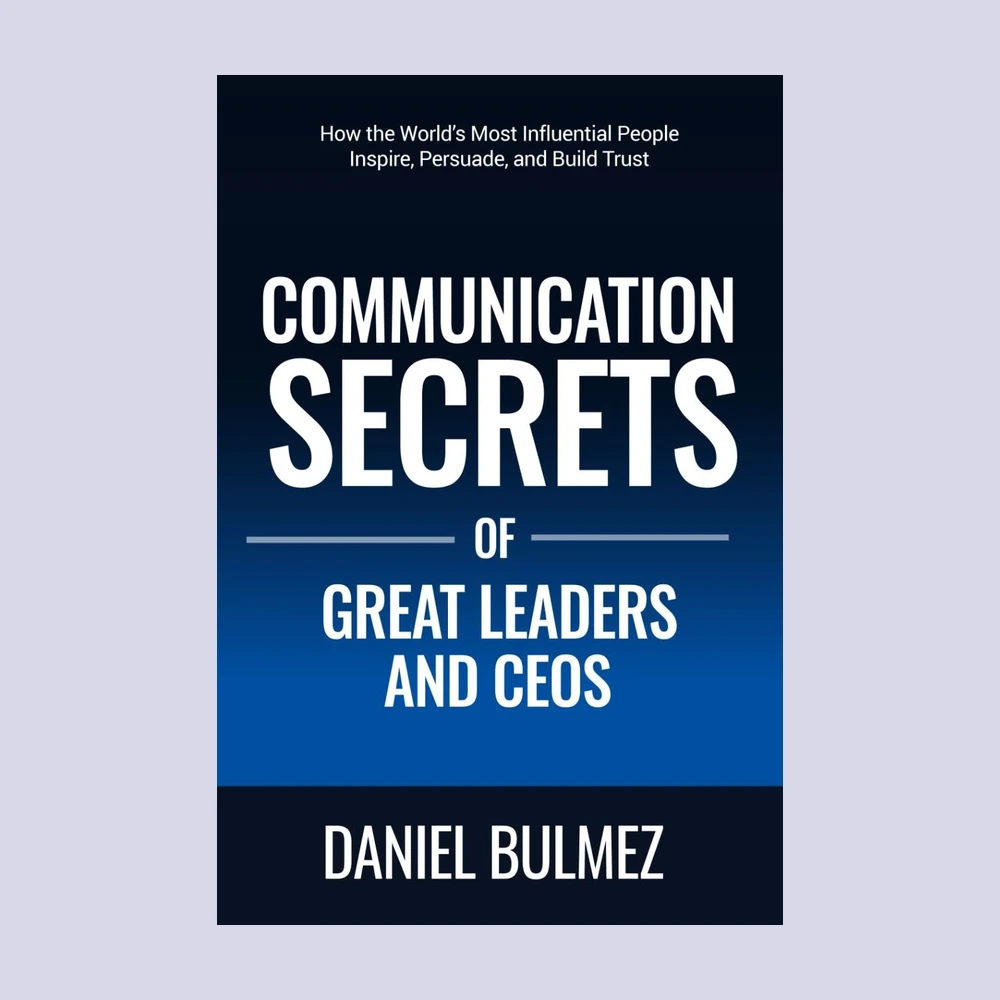
Communication Secrets of Great Leaders and CEOs goes deeper into exactly this: the leaders profiled in the book treat conflict as a communication problem, not a personality one, and they solve it with words, not authority. If you want the full breakdown of how top operators de-escalate high-stakes disagreements — line by line — Communication Secrets of Great Leaders and CEOs is worth the read.
—
Daniel Bulmez is the author of Communication Secrets of Great Leaders and CEOs, available on Amazon.