The Best Question-and-Answer Books for Kids, by Age
The best Q&A books for kids, sorted by age — from lift-the-flap toddler books to full encyclopedias, picked by a children's author who's tested them all.
 Daniel
July 13, 2026
4 min read
30 views
Daniel
July 13, 2026
4 min read
30 views
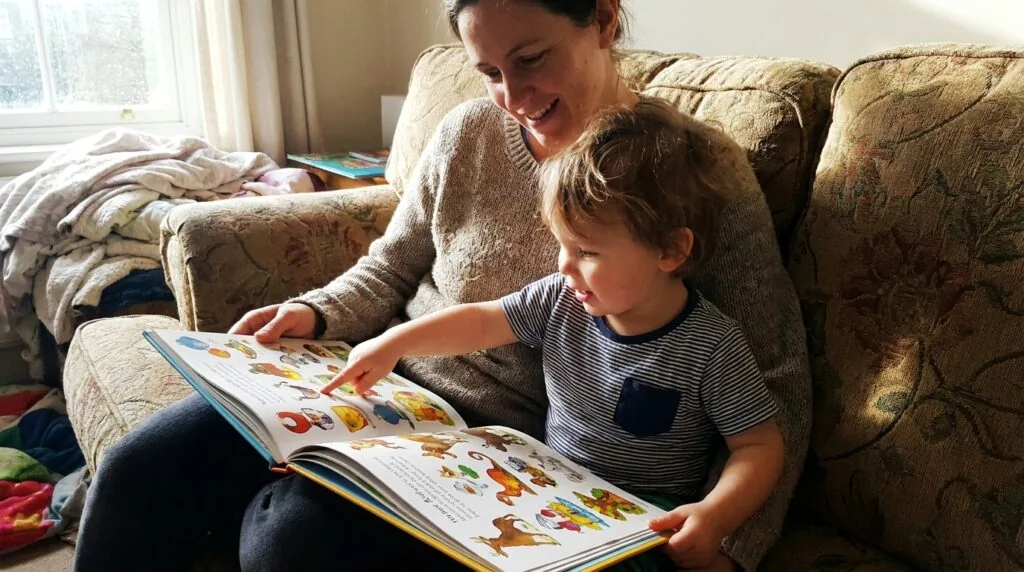
Every parent hits the same wall eventually: a four-year-old (or a nine-year-old) who asks “why” so many times a day it stops being a question and starts being a lifestyle. Question-and-answer books exist for exactly this reason — they’re built around how kids actually think, not how a curriculum is organized. Nobody wonders “unit three: the water cycle.” They wonder why it rains.
The trap is picking the wrong one for your kid’s age. A book that’s perfect for a curious 4-year-old will bore a 9-year-old to tears, and a book built for a 9-year-old will overwhelm a preschooler with too many words per page. Here’s the best Q&A book for every stage, tested against real kids who ask real questions.
Ages 4-6: Usborne Lift-the-Flap Questions and Answers
For kids who aren’t reading fluently yet, the physical act of lifting a flap turns “answer the question” into a game. The question sits on the flap, the answer’s underneath, and the series covers everything from the human body to space to how machines work. It’s less a book than an interactive toy that happens to teach — which is exactly what pre-readers need.
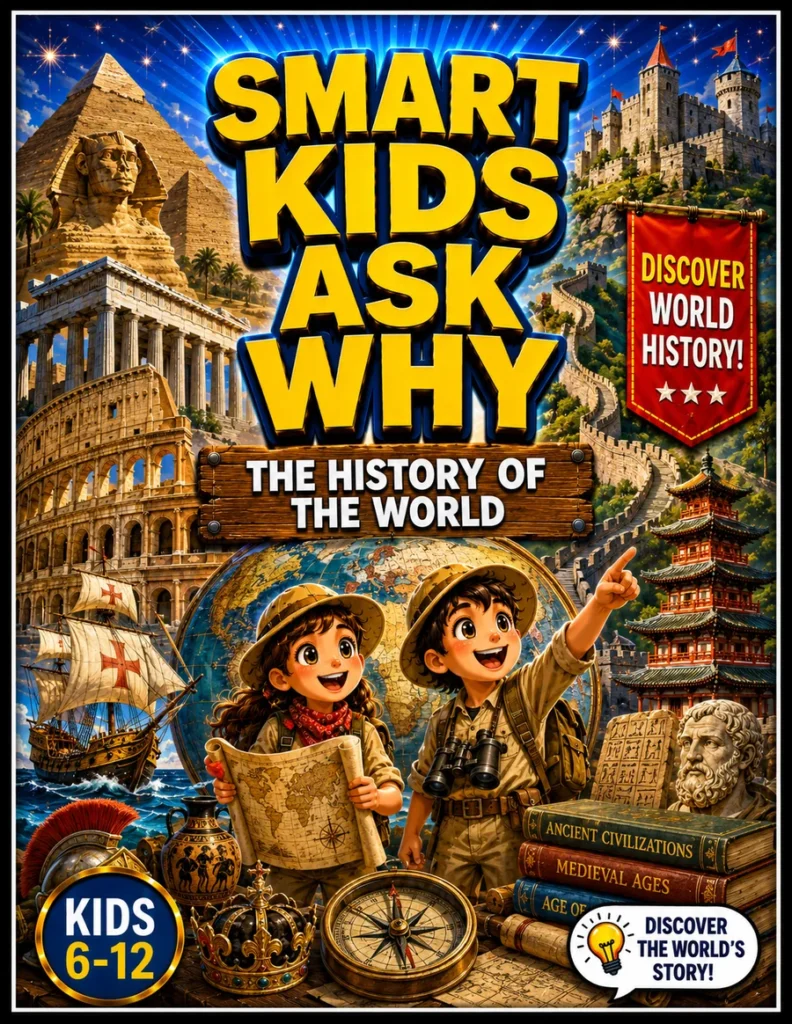
Ages 6-9: Smart Kids Ask Why: The History of the World
This is the sweet spot age range for full-color, one-question-per-page books, and it’s where our own series lives. Smart Kids Ask Why: The History of the World runs 101 full-color pages from the first ice-age campfires to the moon landing, and every page is built around one big moment: a full-page illustration, four bite-sized facts, and a fun fact that usually surprises the adult reading along too.
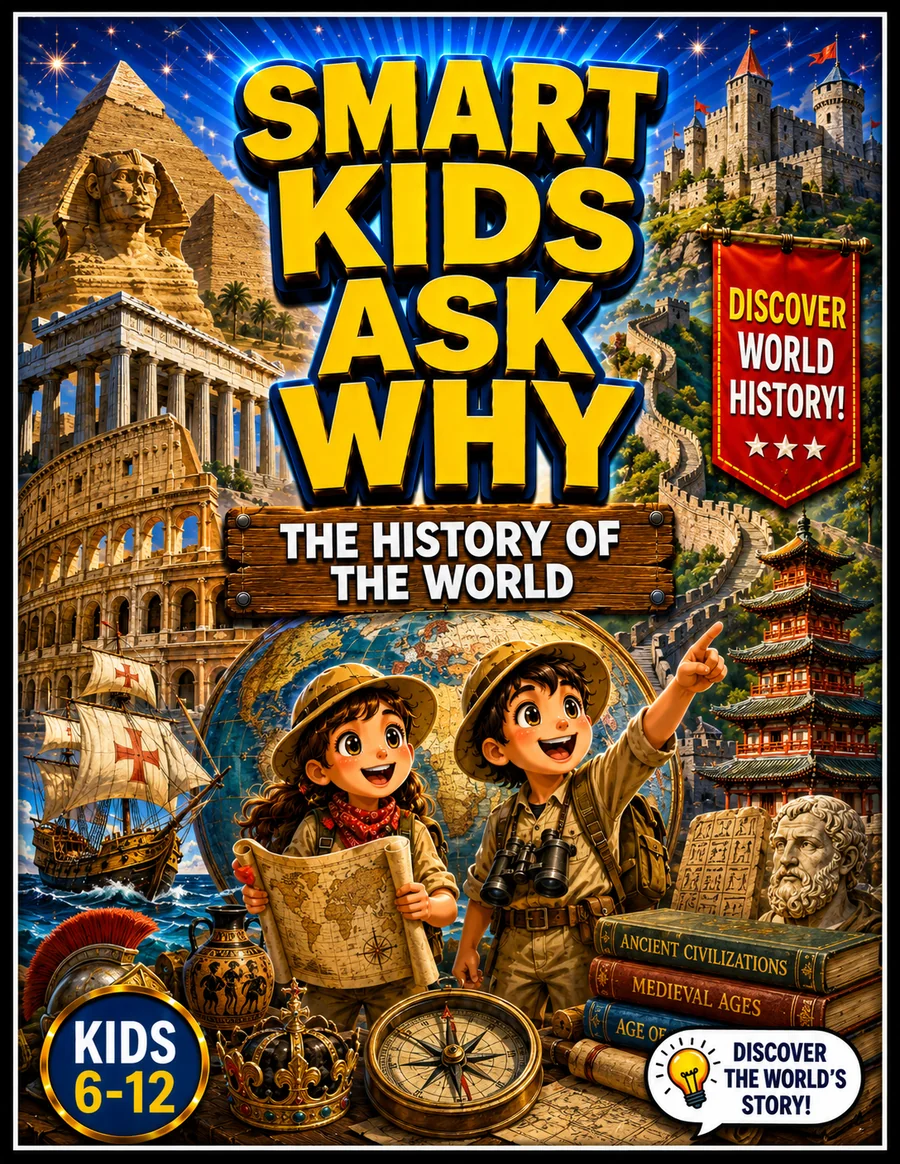
A recurring kid-explorer character asks the same questions your child would, which keeps the “why” format honest instead of turning into a lecture. Best for ages 7 and up — find it here on our store.
Ages 6-9 (Dinosaur-Obsessed): Smart Kids Ask Why: Dinosaurs!
If your 6-to-9-year-old is in the dinosaur years — and most of them are, at some point — this is the one built for it. 112 full-color pages, and every single page opens with a “why”: why did T. rex have such tiny arms, why did some dinosaurs have feathers, why did they disappear. Profile-card spreads cover about twenty famous dinosaurs, including T. rex and Giganotosaurus, the predator that may have out-sized T. rex — a debate kids love settling for themselves.
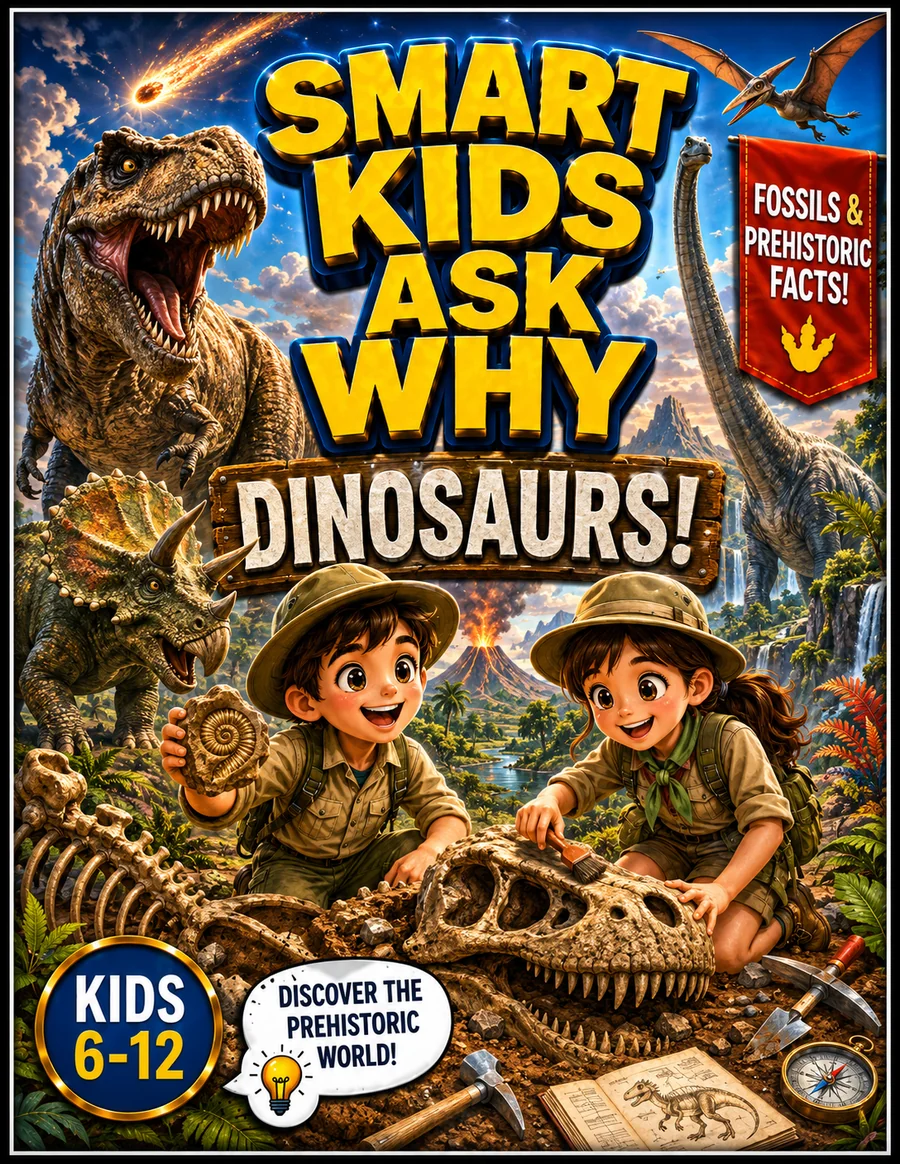
Available here.
Ages 7-10: Why? Over 1,111 Answers to Everything (National Geographic Kids)
Once a kid has outgrown the picture-book pacing but still wants short answers, National Geographic’s Why? is the natural next step. Real photography instead of illustrations, a huge range of topics, and enough volume to survive years of bedtime browsing. It works better as a dip-in book than a cover-to-cover read — some entries run a little wordy for the younger end of this range — but it’s the closest thing to an encyclopedia dressed up as a Q&A book.
Ages 8-11: The Big Book of Why (TIME for Kids)
A genuine classic, and still one of the best question selections in the genre — “Why do I get brain freeze?” is exactly the kind of question kids actually ask, not the kind an adult thinks they should ask. The design reads a little dated next to newer full-color books, but the content holds up, and the loose organization lets kids flip around instead of reading in order.
Ages 9-12: Tell Me Why by Arkady Leokum
This is the book that arguably started the whole genre, and generations of curious kids grew up on it. It’s text-heavy and mostly black-and-white, which makes it a poor fit for a picture-book-aged kid but a genuinely good one for a strong 9-to-12-year-old reader who wants answers with more depth than the one-paragraph format usually allows.
Ages 8-12: Britannica All New Kids’ Encyclopedia
Not strictly a question-and-answer book, but it earns a spot here because it’s built on the same instinct — it leads with what we don’t know almost as much as what we do, and kids find that honesty irresistible. Beautifully produced, and heavy enough that it doubles as a workout to carry around.
Ages 10+: DK Knowledge Encyclopedia
For the kid who has graduated past one-question-per-page and wants the whole picture: cutaway diagrams, cross-sections, and dense visual spreads instead of single facts. Less “why is the sky blue” and more “here is the entire atmosphere, labeled and sliced open.” A natural finishing point once the Q&A format has done its job of building the appetite.
How to Actually Pick One
- Match the format to the age before the topic. A book with the right topic but the wrong reading level gets abandoned by page three.
- Full color and one-question-per-page matter more than content depth under age 9. Kids that age read with their eyes first.
- Let obsession override “reading level.” A dinosaur-obsessed 6-year-old will push through a book aimed at 9-year-olds if the topic is right, and skip an easy book about anything else.
Age bands are a starting point, not a rule — the real signal is whether your kid picks the book back up on their own the next day.
Daniel Bulmez is the author of the Smart Kids Ask Why book series, available on this store and on Amazon.