

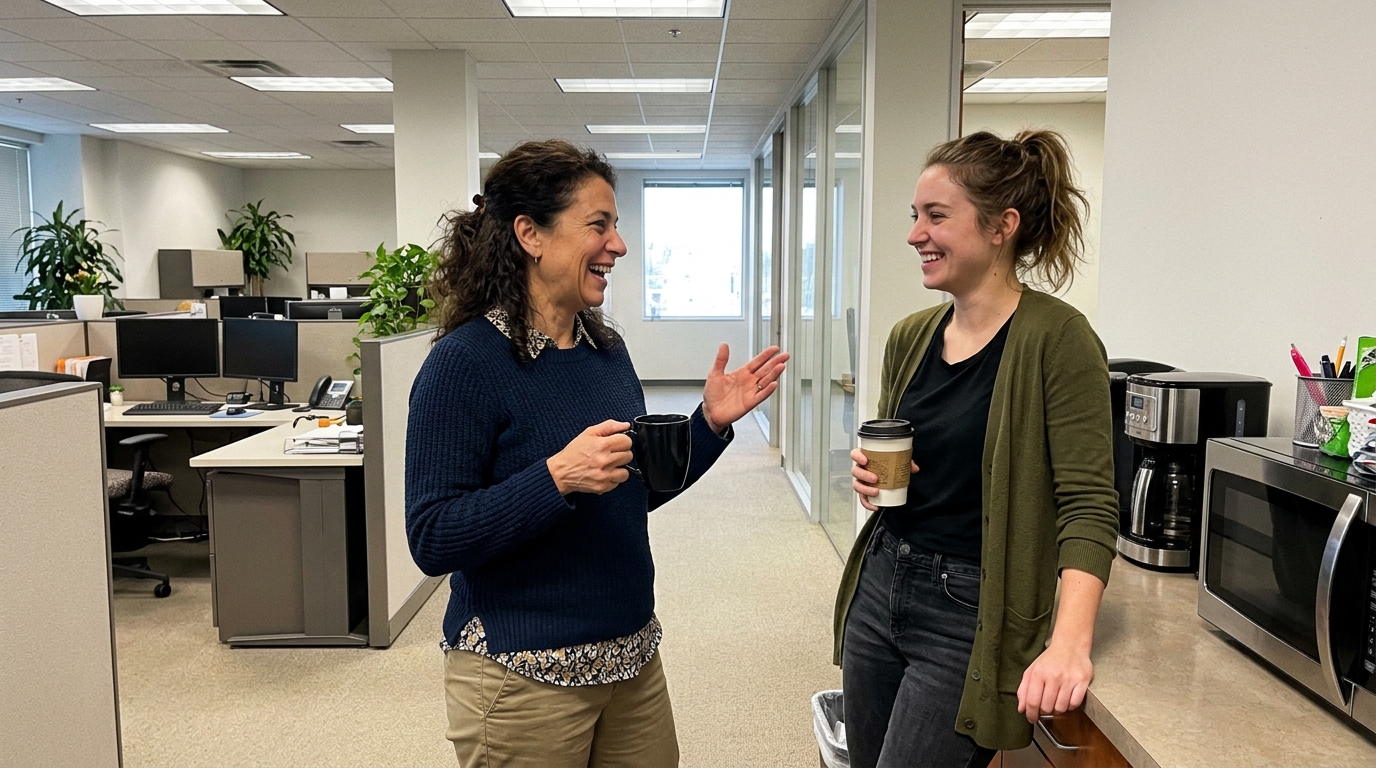
Two people wait for the same elevator with the same executive. One says “Crazy weather, right?” and gets a polite nod back. The other says “How’d the board meeting go — did the Q3 numbers land the way you’d hoped?” and gets a real answer, followed by an invite to grab coffee next week. Same thirty seconds, same audience. One of them spent the time. The other invested it. That’s the entire gap between small talk that goes nowhere and small talk that becomes influence — and almost nobody was ever taught how to tell the two apart.
Most people treat small talk as a tax paid before the “real” conversation starts — filler to get through before business begins. People who build real influence treat it as the real conversation. The elevator ride, the two minutes before a meeting starts, the walk to the parking lot — that’s where trust actually gets built, because it’s low-stakes enough that people let their guard down. Waste it on the weather and you waste the only unscripted access you’ll get all week.
1. Trade Generic Topics for Specific Questions
“How’s it going?” gets “fine” — a dead end disguised as an opener. “How’s the Peterson account going, is it still a mess?” gets an actual answer, because it proves you were paying attention and gives the other person something concrete to respond to. The upgrade isn’t being more talkative. It’s swapping a generic topic for a specific question that only makes sense if you’d actually noticed them.
2. Give Something Before You Ask for Something
Most small talk is a string of questions aimed at the other person, which starts to feel like an interview after the third one. Leading with a specific, genuine observation — “That was a sharp point you made about the timeline” — gives before it takes. It signals you weren’t just waiting for your turn to talk. People open up faster to someone who’s already shown them something than to someone who’s only extracting.
3. Remember the Detail, Then Bring It Back Later
Anyone can ask a question once. Almost nobody follows up on the answer weeks later. “Did your daughter end up choosing that university?” lands harder in month two than anything you could say in month one, because it proves you actually listened instead of just performing interest for thirty seconds. This single habit — the callback — is the fastest way to be remembered as someone people trust.
4. Use the First Thirty Seconds to Actually Gather Information
Small talk isn’t only for rapport — it’s free intelligence, if you’re listening instead of waiting to talk. Who’s stressed, who just got good news, what’s actually happening on a project before the status update sanitizes it. The people who read a room fastest aren’t smarter. They’re paying attention during the two minutes everyone else writes off as nothing.
5. Know Your Exit Line Before You Start Talking
People remember how a conversation ended more than how it began, and most people let small talk trail off into an awkward silence instead of closing it on purpose. “I’ll let you get back to it — good luck with the board meeting” ends things on your terms, leaves them with something specific, and reads as confidence instead of an interaction fizzling out. Plan the exit with the same care as the opener.
6. Match Their Energy Instead of Importing Yours
Walking up high-energy to someone visibly rushed or stressed doesn’t read as friendly — it reads as tone-deaf. Reading the room means matching their pace: quick and useful if they’re moving fast, slower and warmer if they’ve actually got a minute. The goal isn’t to perform a personality. It’s to make the interaction feel easy for the other person, on their terms.
7. Use Their Name and Something True About Them, Not a Script
“Nice weather” works on anyone, which is exactly the problem — it proves nothing about whether you see the person in front of you. Naming something specific and true — their name, a detail from the last conversation, a fact about their actual week — signals recognition instead of a script running on autopilot. People can feel the difference between being talked at and being talked to, even in five seconds.
Why Small Talk Is a Leadership Skill, Not a Personality Trait
The people who seem naturally good at small talk aren’t working from more charm — they’re working from more attention. They ask sharper questions, remember the answers, and close conversations instead of letting them evaporate. None of that requires being an extrovert. It requires treating the two minutes before the “real” meeting as seriously as the meeting itself, because for the people paying attention, it already is the real meeting.
Communication Secrets of Great Leaders and CEOs shows how the smallest conversations compound into the biggest relationships — the exact instincts that turn a hallway exchange into a connection that pays off months later. If you want the deeper playbook instead of the highlight reel, Communication Secrets of Great Leaders and CEOs breaks it down conversation by conversation.
Daniel Bulmez is the author of Communication Secrets of Great Leaders and CEOs, available on Amazon.