People Will Never Forget How You Made Them Feel: The Leadership Lesson Behind Maya Angelou’s Most Famous Quote
Maya Angelou's famous quote is backed by real psychology. Here's why emotional memory outlasts words — and 4 ways leaders can use it.
 Daniel
August 8, 2026
4 min read
20 views
Daniel
August 8, 2026
4 min read
20 views

“I’ve learned that people will forget what you said, people will forget what you did, but people will never forget how you made them feel.” — Maya Angelou
Think about the last time someone made you feel genuinely respected — really heard, not just tolerated. Now try to remember their exact words. You probably can’t. What you remember is the feeling: the sense that you mattered in that room.
That’s the whole idea packed into Maya Angelou’s most quoted line, and it’s also one of the most misunderstood pieces of leadership advice in circulation. Most people treat it as a nice sentiment for a coffee mug. It’s actually a precise, testable claim about how human memory works — and it has direct consequences for anyone who leads, manages, sells, or simply wants to be remembered well.
Why Feelings Outlast Facts
Memory isn’t a recording. It’s a reconstruction, and the brain doesn’t weight every input equally. The amygdala — the part of the brain that tags experiences with emotional significance — plays a direct role in how strongly a memory gets consolidated. Emotionally charged moments get flagged as important and get preferential treatment during storage. Neutral information, like the specific words someone used in a meeting, doesn’t get that flag. It fades fast.
This is why you can forget a person’s name five minutes after meeting them, but you’ll remember for years whether they made you feel small or made you feel capable. The content evaporates. The emotional residue stays.
The Leadership Blind Spot
Most leaders optimize for the wrong layer. They rehearse what to say. They polish the deck, tighten the messaging, perfect the talking points. All useful — but it’s optimizing for the part of the interaction that people are guaranteed to forget.
Meanwhile, the part that actually determines whether someone will follow you, trust you, or recommend you — how the interaction felt — often runs on autopilot. Tone, pacing, whether you looked up from your phone, whether you let someone finish a sentence. Nobody rehearses that. And it’s the only part that sticks.
Four Ways People “Feel” You in Any Interaction
You don’t need a personality overhaul to shift this. Emotional residue gets created in a handful of concrete, observable moments:
- Presence. Did you seem like you wanted to be there, or like you were waiting for it to end? People read distraction instantly, even when you think you’re hiding it well.
- Tone, not just words. The same sentence — “we need to talk about this” — lands completely differently depending on pace and warmth. People remember the register long after they forget the sentence.
- Validation. Did you acknowledge what someone said before responding, or did you jump straight to your point? Being heard first is what makes people feel safe enough to actually listen back.
- Follow-through. Did the thing you said would happen, happen? Reliability is an emotion too — it produces a feeling of safety that compounds every time it’s confirmed.
None of these require charisma. They require attention.
The Compounding Effect
Here’s the part that matters for anyone building a team, a client base, or a reputation: nobody remembers you because of one great meeting. They remember you because of the pattern — dozens of small interactions that all left the same emotional signature. One warm exchange is nice. Fifty consistent ones is a reputation. That reputation is what people repeat about you when you’re not in the room, and it’s what actually drives referrals, retention, and loyalty — far more than any single well-crafted message ever will.
The Action Protocol
Try this for one week: at the end of each significant conversation, ask yourself one question — not “did I say what I meant to say,” but “how did the other person likely feel when we finished talking?” If the honest answer is “rushed,” “dismissed,” or “unsure,” that’s the fix to make — not a better script, but more attention in the next one.
Want the Full Playbook?
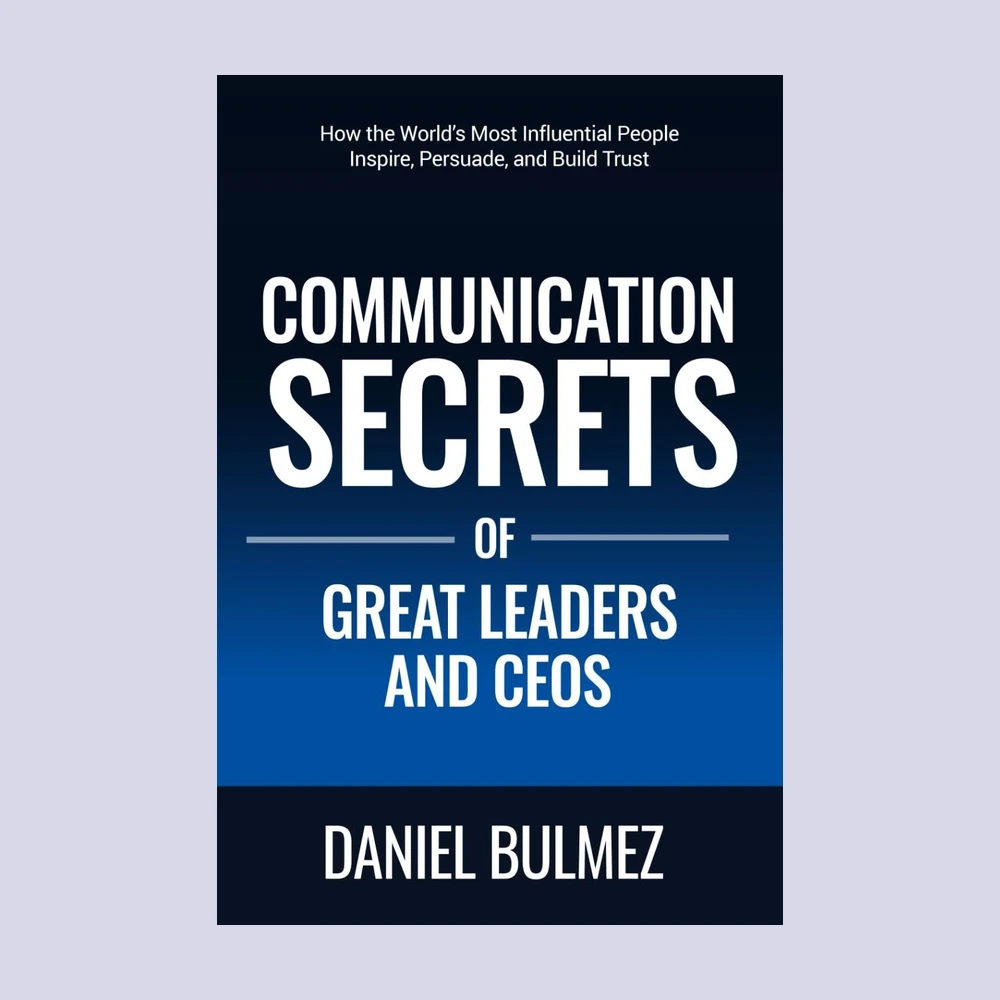
This is one piece of a much bigger system. In Communication Secrets of Great Leaders and CEOs, you’ll find the deeper playbook the most effective leaders use to build trust, presence, and influence in every conversation — the specific habits that turn “how you made them feel” from an accident into a discipline.
Daniel Bulmez is the author of Communication Secrets of Great Leaders and CEOs, available on Amazon.