How to Make a Great First Impression in the First 30 Seconds
How to make a good first impression: what people judge in the first 30 seconds, six habits that shape it, and how to recover when it goes badly.
 Daniel
November 3, 2026
7 min read

In 1993, psychologists Nalini Ambady and Robert Rosenthal showed students short, silent video clips of teachers they had never met. No sound. Thirty seconds each. The students rated the teachers on things like warmth, confidence and enthusiasm.
Those quick ratings tracked the evaluations the teachers’ own students gave them at the end of a full semester. Shorter clips, down to a few seconds, still predicted the outcome.
Thirty silent seconds said something real about a person, or at least something that matched what other people eventually concluded. That’s both the good news and the bad news about first impressions. They form fast, and they’re hard to overwrite. You can’t stop people from forming one. You can only decide what they have to work with.
Here’s what actually shapes it, and six habits that make it work in your favor.
What People Are Judging in the First Few Seconds
Researchers who study first impressions keep landing on the same two questions the listener is asking, mostly without realizing it:
- Can I trust you? Are your intentions good?
- Can you do the job? Are you capable?
Psychologists Amy Cuddy, Susan Fiske and Peter Glick call these warmth and competence, and they’ve found that people use them to size up others across many settings. Warmth tends to get judged first. If someone doesn’t feel safe around you, they discount everything else you show them.
Speed is the other piece. Princeton researchers Janine Willis and Alexander Todorov found that people’s judgments of a stranger’s trustworthiness after seeing a face for one-tenth of a second were strongly related to their judgments after longer looks. More time mostly made people more confident in the first reaction, not different from it.
None of this means a first impression is permanent. People do revise their views when they get enough evidence. But revising takes effort and time you may not get, which is why the opening matters so much.
1. Prepare Before You Walk In
Most bad first impressions start with a scattered person arriving late and flustered. The fix is mostly logistics:
- Arrive early. Ten minutes early lets you settle, check the room and be the calm one when the other person walks in.
- Know one thing about them. Look up their role, a recent project or something you have in common. A single specific detail is enough.
- Decide your opening line. Not a speech. One sentence, such as “Thanks for making the time, I’ve been looking forward to this.”
When you’re calm, everything else on this list gets easier.
2. Win the First Five Seconds (Without Saying Anything)
Before you’ve said a word, they’ve already seen how you walk in. What to focus on:
- Stand and walk like you belong there. Shoulders back, steady pace, no rushing.
- Smile when you make eye contact. A real one, which means starting it when you actually see them, not holding it for ten seconds beforehand.
- Give a handshake that’s firm without being a contest. Dry hand, full palm contact, a couple of pumps, then let go. If handshakes aren’t the norm for you or the other person, a nod and open posture do the same job.
- Put the phone away. Not face-down on the table. Away.
If you want a deeper read on what those signals communicate once you’re in the room, our guide to body language at work covers it.
3. Say Their Name and Mean It
A name is the one word people react to automatically. Use it early and use it correctly.
When you’re introduced, repeat it once: “Priya, good to meet you.” That small repetition helps you remember it, and it signals that you were paying attention.
If you didn’t catch it, ask right away: “Sorry, I missed your name.” Nobody is offended by this. They’re far more bothered by being called the wrong name ten minutes later.
Dale Carnegie made the same point in How to Win Friends and Influence People: a person’s name is, to that person, the sweetest sound in any language. It’s a cliché partly because it keeps proving true.
4. Lead With Warmth, Then Show Competence
Since warmth gets judged first, open with it. That doesn’t mean gushing. It means giving the other person something before you ask for anything:
- Acknowledge their time. (“I know your week is packed.”)
- Offer a genuine, specific compliment or observation. (“I read your piece on the Q3 changes. The point about onboarding stuck with me.”)
- Ask a question about them and listen to the answer.
Competence then comes through naturally in how you answer questions, how clearly you explain things and how well you’ve prepared. If you open with credentials and a list of achievements, you risk landing as impressive but cold, which is a combination people respect and then avoid.
5. Ask One Good Question and Actually Listen
The people who leave the best impression are often the ones who talked least. Most of us spend a conversation waiting for our turn to speak. When someone really listens, it stands out.
Pick a question that’s open and easy to answer:
- “How did you end up in this field?”
- “What’s the part of this project you’re most excited about?”
- “What’s keeping you busy right now?”
Then follow up on what they said, not on what you planned to ask next. A follow-up like “You mentioned the move to Calgary. How was that?” proves you heard them. If this is a weak spot, how to make people like you and how to build rapport both go deeper, and small talk at work has ready-to-use openers.
6. Keep Your Own Introduction Short and Specific
When it’s your turn to say who you are, skip the résumé. Give them something they can picture and remember. The formula is simple:
Who you are + what you do for people + one hook that invites a question.
“I’m Sam. I help small clinics get their scheduling under control. Mostly I untangle spreadsheets.” It’s short, concrete and slightly funny, and it gives the other person an easy thing to ask about.
If you want a fuller version, our guide to the elevator pitch walks through building one that doesn’t sound like a pitch.
First Impressions Online and on Video
A lot of first meetings now happen on a screen, and the same rules apply with a few adjustments:
- Camera at eye level. Looking down at a laptop camera reads as distant. Stack some books under it.
- Look at the camera when you speak. It feels odd, but to the other person it looks like eye contact.
- Light your face from the front. A window in front of you beats a lamp behind you.
- Start with the same warm opening you would use in person, and do it before the first agenda item.
- For email, the subject line and first sentence are your handshake. Be specific and be brief.
What to Do When It Goes Badly
You’ll have a few of these. You forgot a name, you were late, you said something clumsy. What matters is the next sixty seconds.
- Acknowledge it simply. “Sorry I’m late, I should have left earlier.” One sentence, no drama.
- Don’t over-apologize. A long apology makes the moment about you and makes the other person manage your feelings.
- Move to something useful. Get back to the conversation and give them your full attention.
- Follow up. A short note that day (“Thanks for your time, I enjoyed our conversation about X”) often does more to reset the impression than the original stumble did to damage it.
Over the next few interactions, consistency does the repair work. People adjust their view of you based on what keeps happening.
What a First Impression Actually Is
A first impression isn’t a performance or a personality test. It’s a short preview of how it feels to deal with you. Be on time, be warm, be curious and be clear, and people form a good preview. Do it again the second and third time, and the preview turns out to be accurate, which is what builds a reputation.
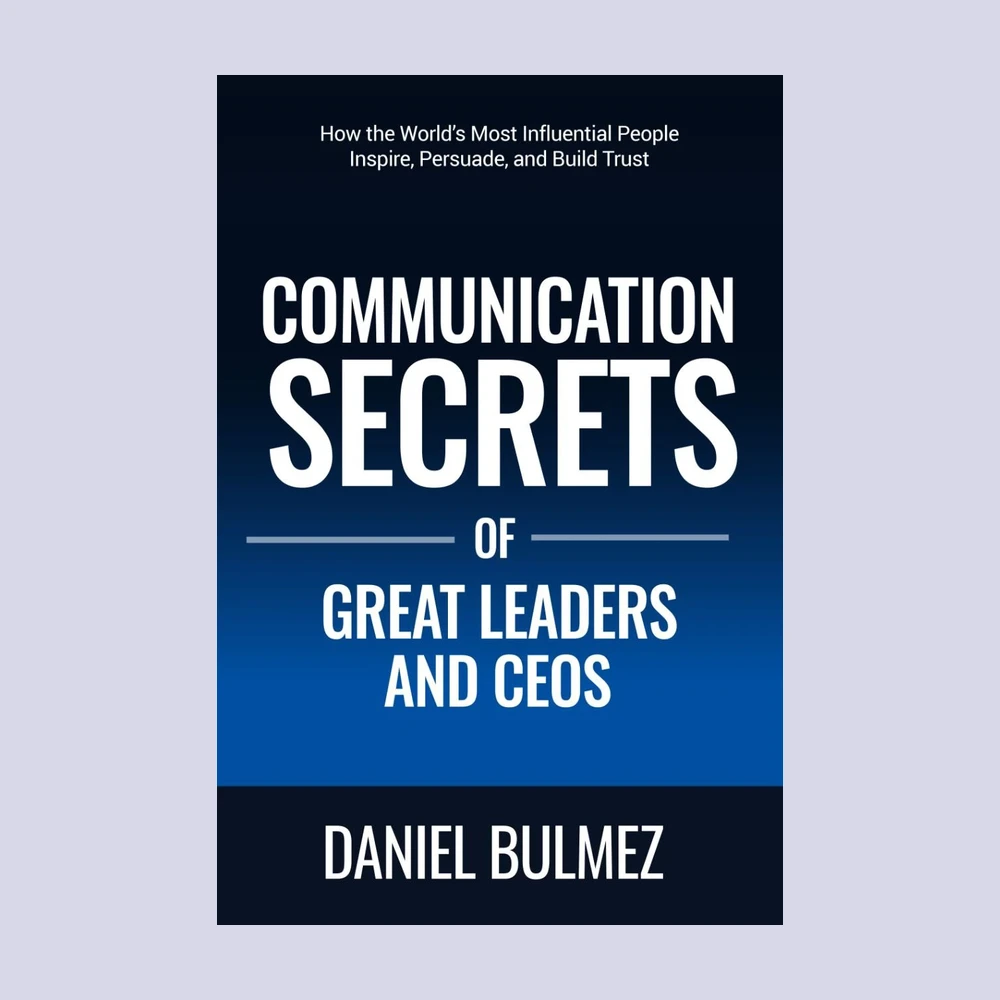
The leaders profiled in Communication Secrets of Great Leaders and CEOs treat the first minute of any meeting as part of the work. They put people at ease before they put the agenda on the table. If you want the deeper playbook, including the openings top leaders use to set the tone in a room, Communication Secrets of Great Leaders and CEOs is where to go next. And if you want to turn good first meetings into steady habits, start with how to be a better communicator.
Daniel Bulmez is the author of Communication Secrets of Great Leaders and CEOs, available on Amazon.