How to Build Rapport Fast Without Faking It
Learn how to build rapport fast without faking it: 7 practical habits for the first five minutes and beyond, from attention to follow-through.
 Daniel
October 15, 2026
6 min read
Daniel
October 15, 2026
6 min read

You’ve met people who make you feel at ease within a minute. The conversation just moves. You say something slightly off and it doesn’t matter. You leave thinking, “I like that person,” and you couldn’t say exactly why.
That’s rapport, and it looks like a gift some people are born with. It isn’t. It’s a set of small behaviors, and most of them are about where you put your attention, not what you say. The trap is that many “rapport tips” teach you to imitate the behaviors without the attention behind them, and people can tell. Here’s how to build it quickly without turning into a salesperson.
What Rapport Actually Is
Psychologists Linda Tickle-Degnen and Robert Rosenthal described rapport in 1990 as having three ingredients: mutual attentiveness, positivity, and coordination, the sense that two people are moving in sync. You can’t script that. You can only create the conditions for it, which is why the shortcuts that sound clever tend to backfire.
It also helps to be clear about what rapport is not. It isn’t being liked by everyone, it isn’t agreeing with everything, and it isn’t charm. It’s a feeling in the other person that it’s safe and easy to talk to you. Everything below is a way of producing that feeling honestly.
1. Give Your Full Attention for the First Two Minutes
Phones face down. Laptop half-closed. Eyes on the person, not on the room behind them. Most people are partly elsewhere in a conversation, and the other person feels it. Giving someone two minutes of real attention is rare enough that it stands out.
You don’t need to do this for the whole meeting to change how it starts. The opening sets the tone, and a calm, undivided start tells the other person they matter.
2. Use Their Name, Lightly
Dale Carnegie wrote that a person’s name is, to that person, the sweetest and most important sound in any language. Whether or not you agree with the poetry, people do notice when you remember it. Use it once when you meet, once or twice in the conversation, and once when you say goodbye. Overdo it and it sounds like a sales script.
If you’re bad with names, repeat it back as you hear it (“Priya, good to meet you”) and look at the person while you do. Hearing it and saying it at the same moment helps it stick.
3. Ask a Question That Isn’t “What Do You Do?”
“What do you do?” gets a rehearsed answer. Try questions that invite a real one:
- “What are you working on that you’re excited about right now?”
- “How did you end up in this field?”
- “What’s the part of your week you’d keep if you could drop everything else?”
Then do the hard part: listen to the answer and ask about that, not the next question on your list. This is the difference between an interview and a conversation. If you want the full method, active listening is the skill that makes this work.
4. Find the Real Common Ground
People trust people who feel familiar. You don’t have to invent similarities, because you almost always already share something: a city, an industry, a problem, a frustration with the same software, a child at the same age. Listen for it, and when you hear it, say so plainly: “I had the same experience with that vendor.”
What you’re after is a real overlap, not a performance of one. Pretending to love someone’s favorite band is how you get caught out three questions later. If you honestly share nothing yet, shared curiosity works too. “I don’t know much about that, tell me more” is a perfectly good bridge.
5. Match Their Pace, Not Their Mannerisms
You may have heard that you should mirror people’s body language. There’s some research suggesting people naturally mimic those they like, but copying someone’s gestures on purpose is a different thing, and it’s easy to get wrong and look odd.
A safer version is to match their energy and tempo. If they speak quietly and slowly, don’t arrive loud and fast. If they’re brisk and direct, get to the point. You’re not copying; you’re showing that you’ve noticed how they operate. For the signals worth watching, see how to read body language at work.
6. Be Slightly Open First
Rapport grows when information flows both ways. If you only ask questions and share nothing, you come across as guarded, even a little like you’re gathering information. A small, honest disclosure invites one back: a minor frustration, a mistake you made, something you’re unsure about.
Keep it proportionate. Telling a new colleague about your divorce is too much; telling them you’re still working out the new reporting system is just right. The goal is to give the other person something easy to respond to. Small talk at work covers how to use this in the thin moments before and after meetings.
7. Follow Through on the Small Things
Here’s the part most rapport advice skips. The first conversation opens the door; what you do afterward decides whether it stays open. If you said you’d send the article, send it that day. If they mentioned a daughter’s recital, ask about it next time. Remembering one detail and acting on it tells someone you were actually listening, which is the whole point.
This is also why rapport can’t be faked for long. It rests on reliability. A warm first meeting followed by silence and missed promises doesn’t build trust; it spends it.
Common Mistakes That Kill Rapport
- Talking about yourself too much. Nervous people fill silence with their own story. Aim to have the other person speak for roughly half the time or more.
- Forced enthusiasm. Over-the-top energy sounds false. Calm and interested beats loud and delighted.
- Fixing instead of understanding. If someone mentions a problem, resist the urge to solve it straight away. “That sounds frustrating” usually lands better than a five-point plan.
- Interrupting. Even to agree. It signals that your thought matters more than theirs.
- Checking the time or your phone. Even once. People notice.
What to Do When You Have Almost No Time
Sometimes you get ninety seconds in a lift or a hallway. A short version that works:
- Say their name and something specific you noticed or remember.
- Ask one open question.
- Listen to the answer and respond to it directly.
- Close warmly: “Good to talk to you. I’ll send that over today.”
That’s enough. Depth comes from repetition, and each small, honest interaction adds to the last one.
Rapport Is Where Trust Starts
Everything else you want in your working life, whether it’s influence without authority, a hard conversation that goes well, or a negotiation where both sides feel respected, is easier if the relationship comes first. A few minutes of genuine attention before the real topic changes how the real topic is received. Even a tough conversation goes better with someone who already feels you’re on their side; see difficult conversations at work for how that plays out. And if you want people to like you without it feeling like a technique, how to make people like you goes deeper on the same instinct.
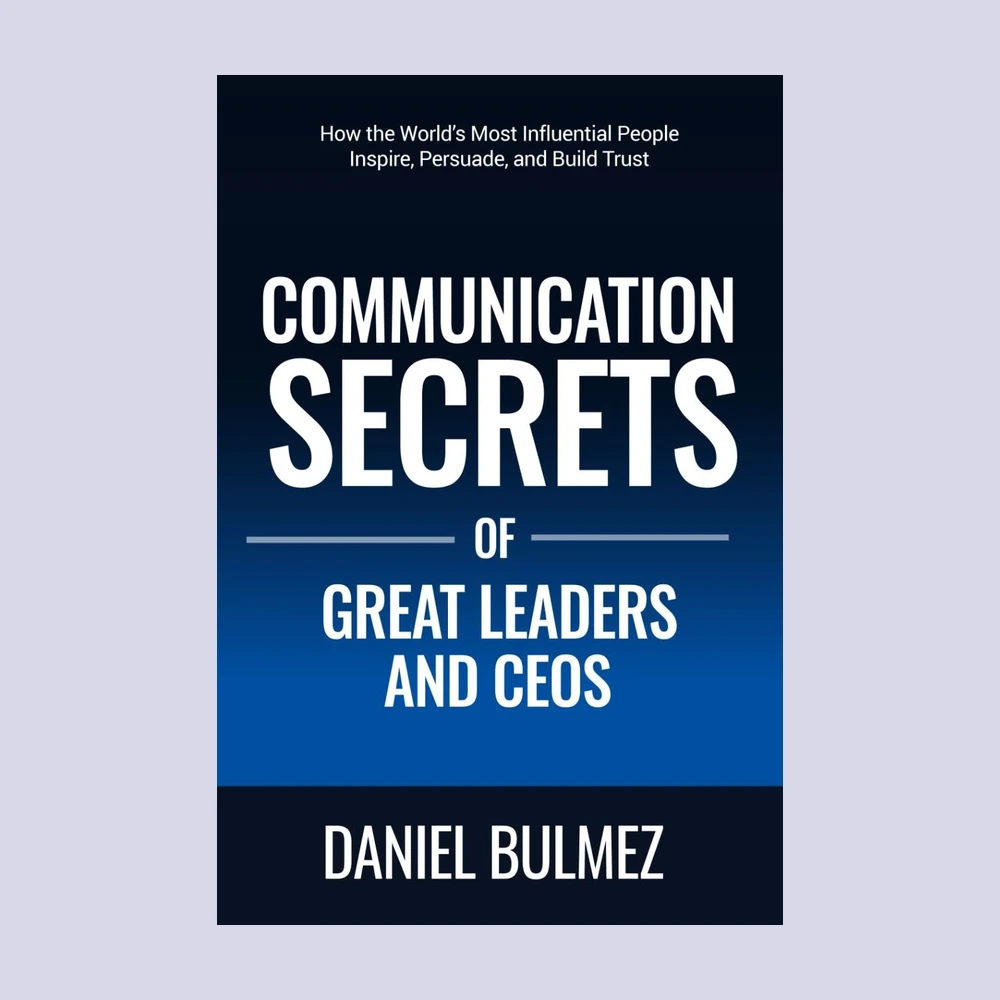
Great leaders understand that rapport isn’t a warm-up act before the serious business. It’s what makes the serious business possible. Communication Secrets of Great Leaders and CEOs looks at how some of the most effective leaders connect with people quickly and keep that trust over years, through the way they listen, question, and follow through. If you want the deeper playbook, Communication Secrets of Great Leaders and CEOs breaks it down in full.
Daniel Bulmez is the author of Communication Secrets of Great Leaders and CEOs, available on Amazon.