How to Read Body Language at Work (What the Best Communicators Notice)
Most body language advice is pop-psychology noise. Here's what real communicators actually watch for in meetings, negotiations, and presentations.
 Daniel
August 20, 2026
5 min read
5 views
Daniel
August 20, 2026
5 min read
5 views

Two people sit across the table in the same negotiation. One is watching for crossed arms — the textbook “sign of defensiveness” every listicle warns about. The other is watching for the moment the crossed arms appeared — right after a number was mentioned, not before. One of them is collecting trivia. The other just found out exactly which line item the room actually cares about. That’s the real gap between people who’ve memorized a body language cheat sheet and a genuine body language expert: it was never about the gesture. It’s about what changed, and when.
Most workplace advice on this topic treats body language like a dictionary — arms crossed means closed off, avoiding eye contact means lying, a firm handshake means confidence. It’s tidy, it’s shareable, and it’s mostly wrong. Real non-verbal reading is comparative, not literal. It’s built on noticing someone’s baseline and then catching the moments they move off it — which means the single biggest skill isn’t spotting a gesture. It’s paying enough attention to know what “normal” looks like on that specific person, in that specific room, before anything unusual can register at all.
1. Set the Baseline Before You Read Anything
Someone’s resting posture, default eye contact, and normal fidgeting are meaningless in isolation — they only become data once you know what’s typical for them. The first two minutes of any meeting aren’t for making a point. They’re for calibration: how does this person sit when nothing is at stake? Skip that step and every “signal” you read afterward is just a guess dressed up as insight.
2. Watch for Change, Not for Symbols
A crossed-arm stance means nothing on its own — plenty of people fold their arms because the room is cold or the chair has no armrests. What matters is a shift: someone who’s been open and relaxed suddenly closing off, going still, or leaning back the instant a specific topic comes up. The gesture isn’t the signal. The transition is. Train yourself to ask “what just changed?” instead of “what does this pose mean?” and the whole skill gets sharper overnight.
3. Clusters Beat Single Cues Every Time
One raised eyebrow proves nothing. A raised eyebrow, a half-second pause, and a subtly quieter voice — together, in the same three seconds — is a cluster, and clusters are where the real information lives. Anyone confident enough about a single gesture to act on it alone is guessing. The best readers wait for two or three signals to line up before they trust what they’re seeing, which is also why they’re rarely wrong in a way that embarrasses them later.
4. Your Own Body Language Is Half the Data You’re Missing
Reading a room is only half the skill — the other half is controlling what you’re broadcasting while you do it. Open posture, steady (not unblinking) eye contact, and hands visible on the table signal that you’re engaged and have nothing to hide. This matters more than most people think in negotiations and presentations, where executive presence is being assessed constantly, whether or not anyone says so out loud. People are reading you exactly as hard as you’re reading them.
5. In Negotiations, Watch the Pause Before the Word
The most useful body-language tell in any negotiation isn’t a gesture at all — it’s timing. A beat of hesitation before answering a direct question, a sudden slowdown in speech right before a number, a pen that stops tapping the instant the real topic arrives. These micro-pauses are harder to fake than posture because they’re tied to processing speed, not performance. Combined with the tactics in any real negotiation playbook, they tell you when you’ve actually touched the thing that matters.
6. Voice Carries as Much Signal as the Face Does
Pitch rising at the end of a statement that should be a fact. A pace that speeds up right when someone should be slowing down to sound certain. These are body language too — they’re just delivered through the voice instead of the hands. Leaders who read a room well are listening for tone and tempo shifts exactly as closely as they’re watching posture, because in a video call where half the visual cues disappear, the voice is often the only channel left.
7. Skip the Pop-Psychology Shortcuts
Forget “crossed arms mean defensive” or “avoiding eye contact means lying” — both are true often enough to sound credible and wrong often enough to burn you. Someone avoiding eye contact might be lying, or they might be someone who thinks better looking at the ceiling, or they might just be in a culture where direct eye contact reads as confrontational. A real body language expert never diagnoses off one cue. They build a baseline, watch for clusters and transitions, and hold every read loosely enough to revise it the second new information shows up.
What Actually Separates a Body Language Expert From a Guesser
The people who read a room well aren’t running through a mental dictionary of gestures. They’re doing something closer to pattern recognition built on attention — noticing a baseline, catching a shift, waiting for a cluster to confirm it, and staying humble enough to be wrong. It’s a skill built from reps, not a cheat sheet memorized once and applied forever.
Reading the room is only half of it — pair this with active listening and you’re not just watching what someone’s body says, you’re catching what their words actually mean underneath the polite version.
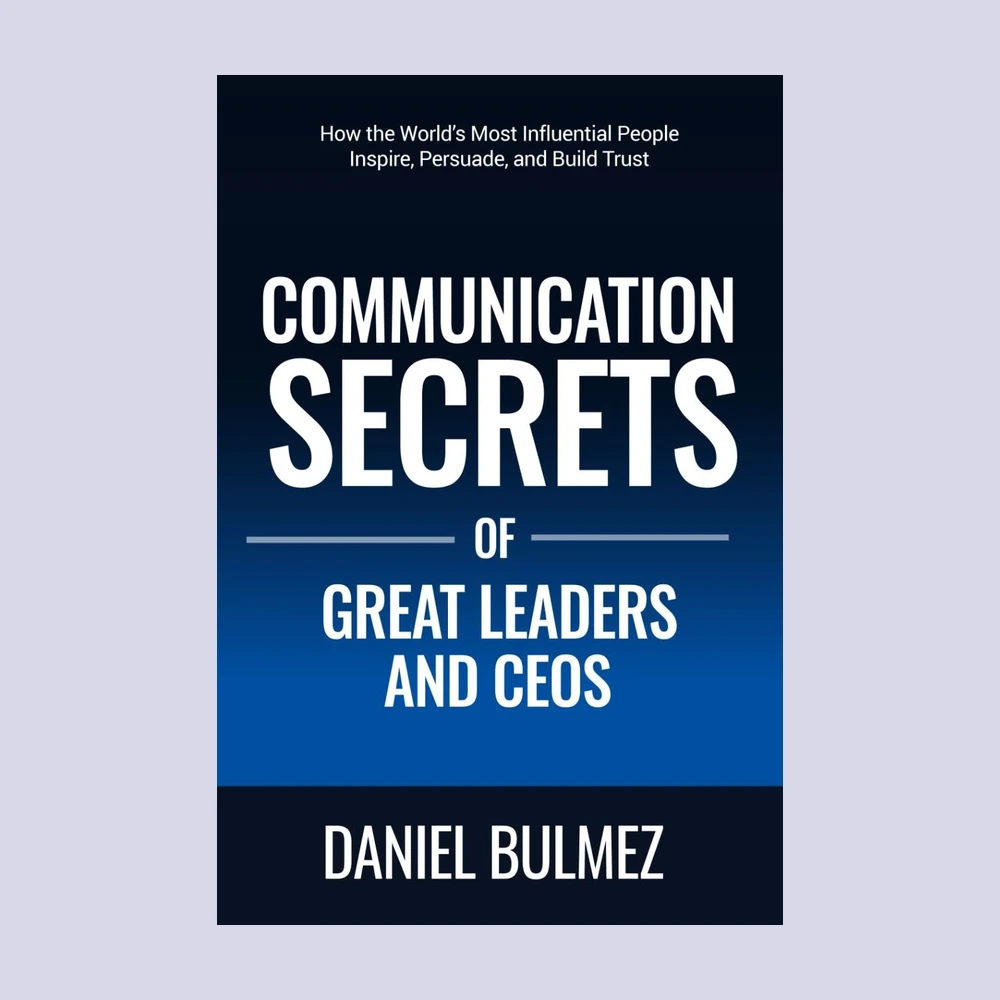
Communication Secrets of Great Leaders and CEOs covers the non-verbal signals leaders read and send — often the difference between being believed and being doubted, in a negotiation, a pitch, or a room where the words alone were never going to be enough. If you want to build this instinct instead of guessing at it, Communication Secrets of Great Leaders and CEOs breaks down exactly what to watch for and why it works.
Daniel Bulmez is the author of Communication Secrets of Great Leaders and CEOs, available on Amazon.