Negotiation Skills: How to Get What You Want Without Burning the Relationship
Master negotiation skills the way great leaders do — tactical empathy, calibrated questions, and the silent moves that win without breaking trust.
 Daniel
May 25, 2026
5 min read
32 views
Daniel
May 25, 2026
5 min read
32 views

Most people think negotiation is about pushing harder. It’s not. The best negotiators in the world — hostage commanders, M&A lawyers, billion-dollar founders — barely raise their voice. They use a quieter set of negotiation skills: empathy you can measure, questions that pull the other side toward your outcome, and the discipline to say less than feels comfortable.
This is the real playbook. Not the one in business school case studies. The one that actually moves people.
1. Start by Understanding, Not Persuading
Most negotiations fail in the first three minutes. Someone shows up with a pitch, an offer, a position — and the other side immediately starts defending theirs. By the time anyone listens, the trenches are already dug.
Great negotiators flip this. Before they ask for anything, they make the other person feel completely understood. Chris Voss calls it tactical empathy — proving you know how the other side sees the situation, including the parts they haven’t said yet.
A simple way to do it: name what they’re probably feeling.
- “It sounds like you’ve been burned by vendors before.”
- “It seems like the timeline is more important to your team than the price.”
- “It feels like there’s pressure on you from above to close this fast.”
When people feel understood, they stop defending and start collaborating. You haven’t asked for anything yet — and you’ve already shifted the dynamic.
2. Ask Calibrated Questions Instead of Making Demands
The fastest way to push someone into a corner is to tell them what to do. The fastest way to get them to think your way is to ask a question they have to solve.
Calibrated questions usually start with how or what. They sound soft. They land hard.
- “How am I supposed to do that?”
- “What about this is important to you?”
- “How would you like me to proceed?”
- “What’s the biggest challenge you’re facing here?”
Notice none of these are accusations. None of them are ultimatums. They hand the problem back to the other side and let them solve it — usually in your favor, because they’re now invested in finding a path forward.
3. Use Silence as a Tool
Most people are terrified of silence in a negotiation. They fill it. With explanations. With concessions. With apologies. With offers nobody asked for.
Elite negotiators sit in the silence. They make an offer or ask a question — and they wait. Three seconds. Five. Ten if needed.
Silence creates pressure without aggression. The other side starts to talk. And when people are uncomfortable, they reveal what they actually want, what they’re worried about, and where their real limits are.
The hardest negotiation skill to learn is the one that requires nothing at all: shut your mouth and let the room work for you.
4. Anchor First — But Anchor Smart
There’s an old myth that the first number loses. It’s wrong. The first credible number usually wins, because it sets the gravitational pull for everything that follows.
But “credible” is the key word. A wild anchor backfires — it signals you’re not serious. A justified anchor, supported by reasoning the other side can’t easily dismiss, becomes the reference point of the whole conversation.
The best anchors include:
- A specific number (not a round one — $11,450 lands harder than $11,000)
- A short reason (“based on three comparable deals last quarter”)
- A pause, so they have to respond to it instead of skipping past it
5. Protect the Relationship — Always
The amateur negotiator wins the deal and loses the future. They squeeze the last 3% and create a counterparty who quietly looks for a replacement the next morning.
The professional negotiator wins the deal and leaves the other side feeling respected — sometimes even grateful. They protect the relationship because they know the next conversation, the next contract, the next referral is worth more than the marginal win.
This isn’t soft. It’s strategic. A reputation for being tough and fair is one of the most valuable career assets you can build. People will keep coming back. They’ll send opportunities your way. They’ll work harder to find a path with you than against you.
6. Know Your BATNA — and Hide It
Your Best Alternative To a Negotiated Agreement is your real source of power. If you have a strong alternative, you can walk. If you don’t, the other side controls the room.
The work is in two parts:
- Build your BATNA before you sit down. Have other vendors lined up. Have other buyers in motion. Have a fallback plan that costs you nothing to activate.
- Don’t show it. A strong BATNA loses its leverage the moment it becomes a threat. Hold it quietly. Let your calm posture do the talking. People can feel when you don’t need the deal.
7. Close With a Clear Yes — Not a Vague Maybe
A vague agreement is not an agreement. It’s a future fight.
When you sense alignment, lock it down:
- “Just to make sure we’re on the same page — we’re agreeing to X, Y, and Z, by [date], at [price]. Correct?”
- “Is there anything that would stop you from saying yes today?”
- “What would need to be true for us to sign this by Friday?”
These are not high-pressure closes. They’re clarity closes. They surface the last objections while there’s still time to handle them, instead of after everyone leaves the room.
The Deeper Playbook
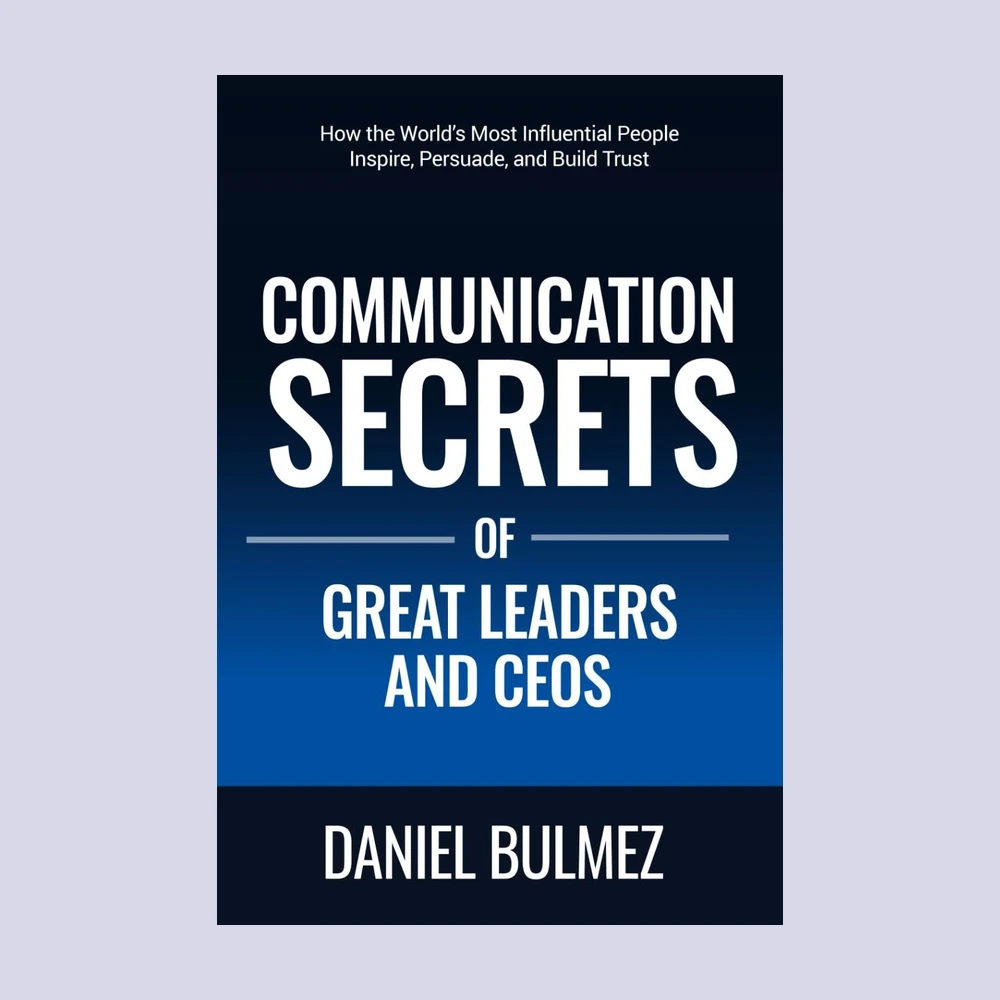
These are the same negotiation patterns covered in Communication Secrets of Great Leaders and CEOs — the conversations where billions get won or lost on tone, timing, and silence. If you want to see how the world’s best operators actually run a high-stakes room — the words they use, the questions they ask, the moments they choose to say nothing — that’s the book.
Negotiation isn’t a contest. It’s a craft. Get the craft right and you stop fighting for what you want — you start being handed it.
Daniel Bulmez is the author of Communication Secrets of Great Leaders and CEOs, available on Amazon.