The Best Educational Books for 7-Year-Olds That Don’t Feel Like School
Nine real educational books for 7-year-olds that read like fun, not homework — from Smart Kids Ask Why to Who Would Win?, Basher Science, and I Survived.
 Daniel
September 3, 2026
5 min read
Daniel
September 3, 2026
5 min read

Seven is a strange, wonderful age for reading. Most kids can handle real chapters and real facts now, but the second a book feels like a textbook, it gets shut. The best educational books for 7-year-olds solve that by hiding the learning inside something a kid actually wants to pick up — a joke, a gross-out fact, a “who would win” argument, a cutaway diagram they can stare at for ten minutes.
Here are nine books and series that do exactly that, roughly in the order most 7-year-olds discover them.
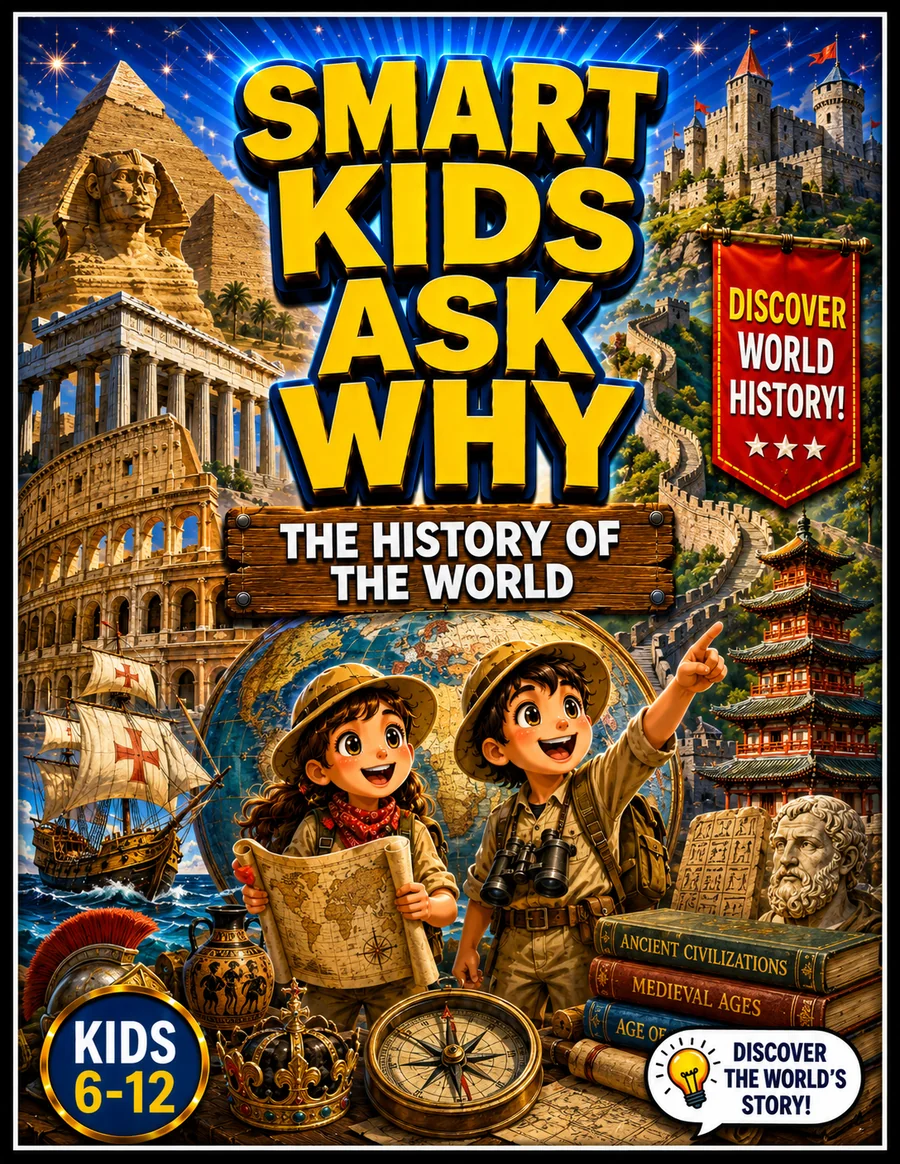
1. Smart Kids Ask Why: The History of the World
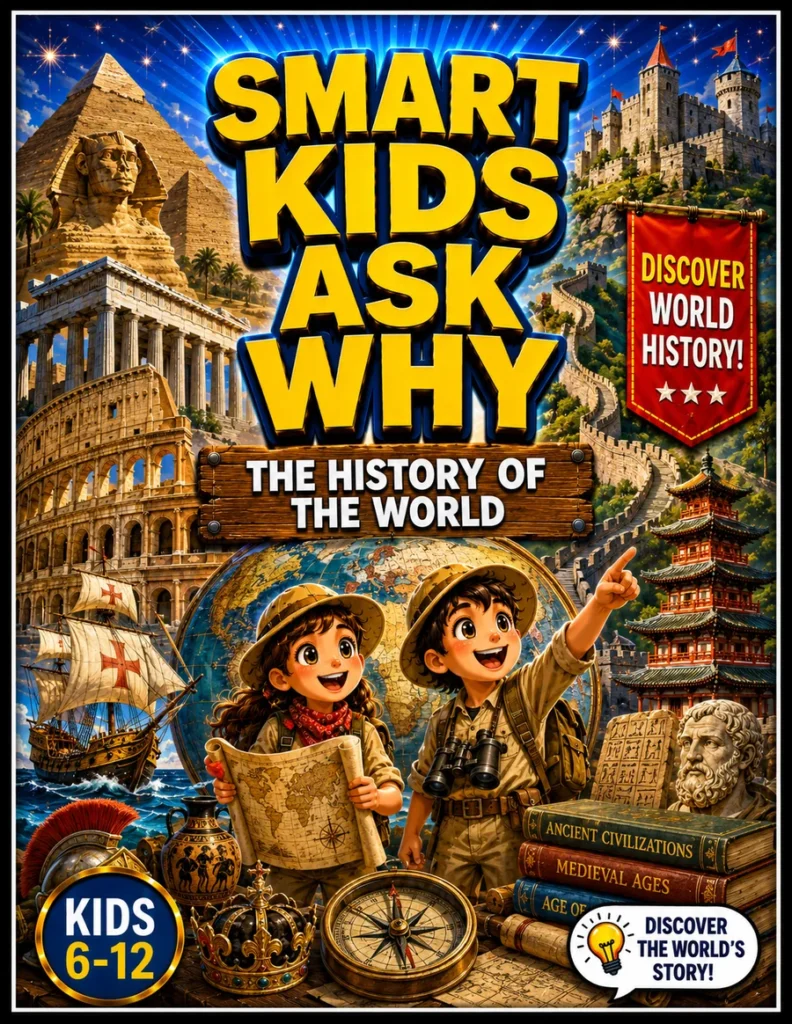
This is where we’d send a 7-year-old first if they’ve never had a nonfiction book that felt like “theirs.” It runs 17 chapters and 101 full-color pages, moving from ice-age campfires all the way to the moon landing, and every page follows the same simple shape: one big moment, a full-page illustration, four bite-sized facts, and a fun fact tucked at the bottom. A recurring kid-explorer character asks the same kind of questions a real 7-year-old would ask, so it reads less like “here is history” and more like “here’s what this other kid found out.” Built for ages 7 and up.
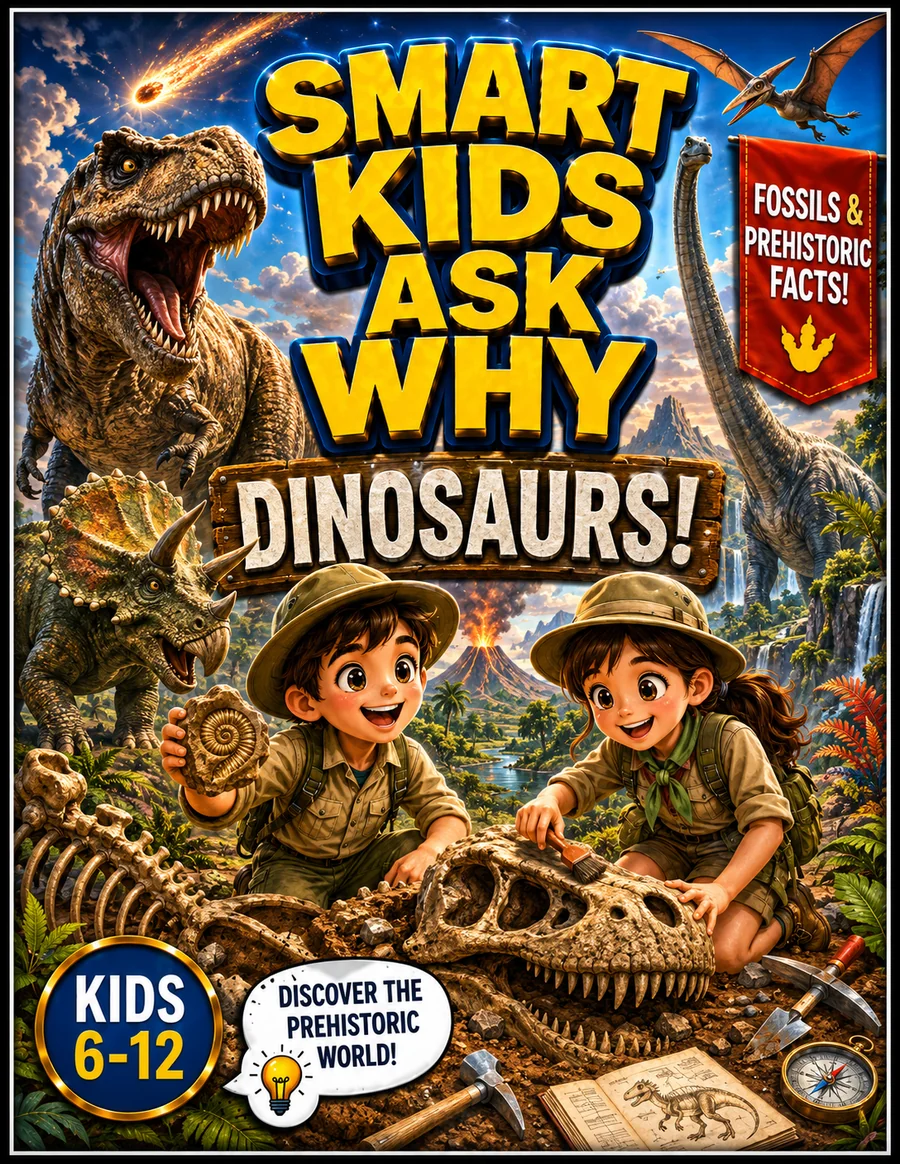
2. Smart Kids Ask Why: Dinosaurs!
For the kid whose 7-year-old brain is currently 90% dinosaur facts, this is the companion book. It’s 112 full-color pages, and every single page opens with a “why” — why did some dinosaurs have feathers, why did T. rex have such small arms — before answering it in a couple of kid-sized paragraphs. Profile-card spreads dig into roughly 20 famous dinosaurs, T. rex and Giganotosaurus included, so it works both as a straight-through read and a book to flip open at any page.
3. The Way Things Work Now, by David Macaulay
This one’s a step up in density, but it earns it. Macaulay explains how machines and technology actually work — levers, engines, computers, the internet — through huge, detailed cutaway illustrations, with a running cast of woolly mammoths wandering through the diagrams for comic relief. It rewards a kid who likes to stare at a picture and slowly figure out what’s going on, rather than one who wants a fast fact and a page turn.
4. Who Would Win? series, by Jerry Pallotta
Every book in this series pits two real animals against each other — Komodo dragon vs. king cobra, great white shark vs. killer whale — and works through their actual size, speed, and survival adaptations before landing on an answer. It’s built entirely around real zoology, but it’s structured like an argument a 7-year-old would already be having on the playground, which is exactly why it doesn’t feel like schoolwork.
5. You Wouldn’t Want to Be… series, by various authors (Scholastic/Franklin Watts)
Each title drops the reader into a real historical situation — an Egyptian mummy, a Titanic passenger, a knight’s squire — and narrates it in blunt, funny second person (“you wouldn’t want to…”), backed by cartoon illustrations and genuine historical detail. It’s the series that tends to win over a kid who insists they “hate history books,” because the humor arrives before the lesson does.
6. Basher Science series, by Simon Basher and Dan Green
The Basher books turn scientific concepts — the periodic table, physics, the human body — into cartoon characters with personalities and speech bubbles, one tiny fact-file per element or idea. It’s a genuinely odd format, but it’s proven itself with reluctant readers who won’t touch a straight science textbook and will happily read a comic about sodium having beef with chlorine.
7. I Survived series, by Lauren Tarshis
Technically historical fiction, not nonfiction, but it earns its spot here: each short chapter book puts a fictional kid inside a real historical disaster — the Titanic, the San Francisco earthquake, Pompeii — and every one ends with a nonfiction section explaining what actually happened. It’s often the book that gets a 7-year-old asking for MORE facts afterward, which is the whole goal.
8. Magic School Bus Science Chapter Books, by Scholastic
Built on the same “Ms. Frizzle” premise as the original picture books and TV show, these chapter books send a class on an impossible field trip — inside a volcano, through the human body — and use the adventure as a frame for real science content along the way. It’s a gentle bridge for a kid who’s used to being told stories and is just starting to tolerate straight facts.
9. National Geographic Kids Beginner’s World Atlas
Less about “why” and more about “where” — this one hands a 7-year-old actual maps, flags, and country facts, with National Geographic’s photography doing the heavy lifting. It’s the book that turns “where is Japan” into a five-minute rabbit hole instead of a shrug, and it’s one most kids keep coming back to for years, not weeks.
How to Pick
If your 7-year-old already loves museums and asks “why” more than any other word, start with Smart Kids Ask Why: The History of the World or Dinosaurs!, depending on which obsession is currently winning. If they’re a reluctant reader who needs a joke or a gross-out fact to get hooked, start with You Wouldn’t Want to Be… or Basher Science. If they’re already deep into a specific interest — animals, machines, geography — Who Would Win?, The Way Things Work Now, or the World Atlas will meet them exactly there.
None of these need to be read cover to cover in order. The kids who stick with nonfiction longest are usually the ones who were handed a stack and allowed to pick.
Daniel Bulmez is the author of the Smart Kids Ask Why book series, available on this store and on Amazon.