Additional information
| Daily lessons | 136 |
|---|---|
| Pages | 308 |
| Page size | 6 × 9 in |
| Format | Paperback |
| Translation | Richard Gummere, unmodernized |
| ISBN | 978-1-997718-77-2 |
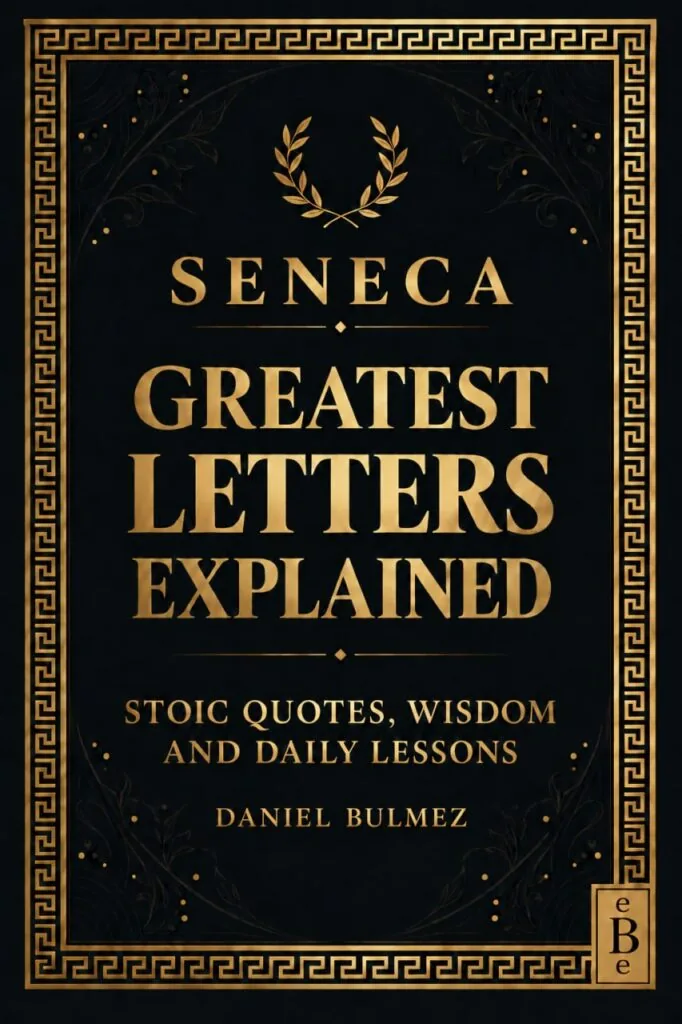
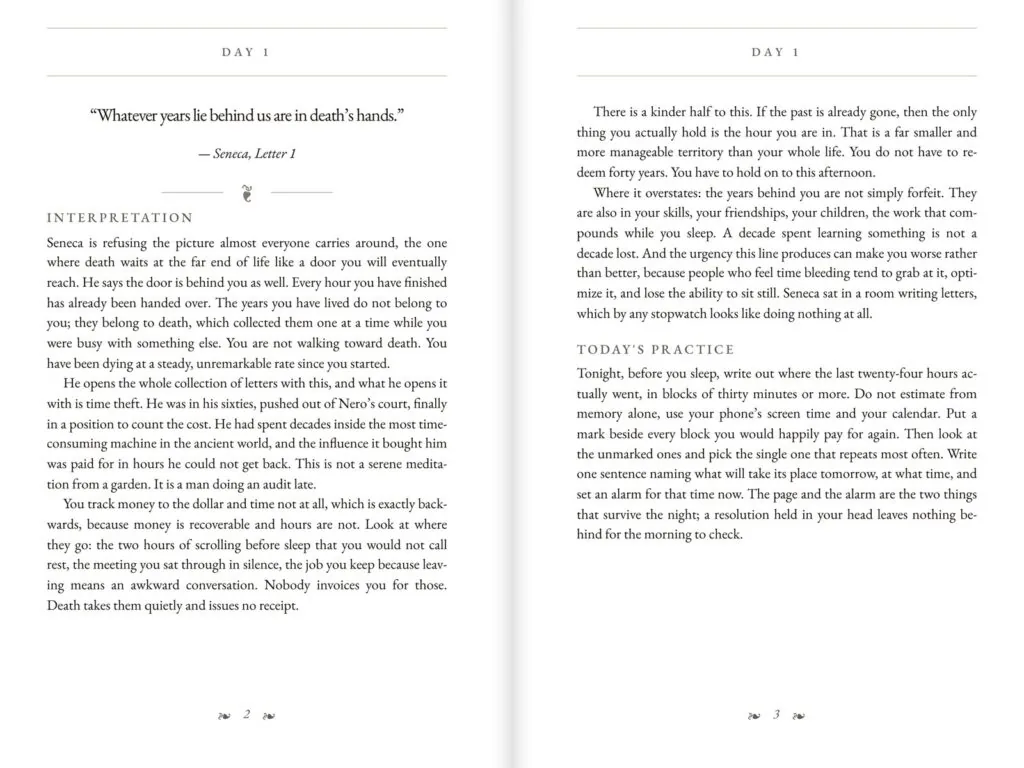
136 passages from Seneca's letters to Lucilius, one lesson a day across 12 chapters. Each gets two pages: the passage itself, what he meant and how it bears on you now, and one thing to do before tonight.
136 passages from Seneca's letters to Lucilius, one lesson a day across 12 chapters. Each gets two pages: the passage itself, what he meant and how it bears on you now, and one thing to do before tonight.
Seneca spent years near the center of Nero's court and paid for it in hours. Near the end he wrote to Lucilius, a friend in Sicily, about that cost, and about money, fear and ambition. This book takes 136 passages from 87 of those letters and gives each two pages: the passage, what it means today, and one practice.
The practices are small and checkable. On Day 1 you write out where your last twenty-four hours went, from your screen time and calendar rather than memory.

It does not treat him as a saint. He praised owning little while holding a fortune few Romans could match, and the pages say so.
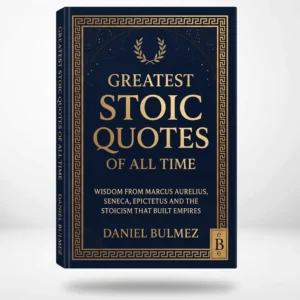
Greatest Stoic Quotes of All Time spans the whole school in 152 short quotes, each with a brief reflection. This book is Seneca alone, two pages a passage plus a practice. Its companion, Marcus Aurelius Greatest Meditations Explained, does the same for the emperor's notebook.

Last week is spent, and nothing you read tonight brings it back. What is still yours is this evening and tomorrow.
Day 1 begins with an audit. Money gets counted to the cent while hours leave with no record at all, though only one of the two can ever be earned back.
The risk with any book of wisdom is that you agree with every page and change nothing. Here each lesson ends with a task you can check off tonight.
Days full of meetings, messages and errands, and the thing that matters keeps sliding to next month. Chapter one is about exactly that.
Short lines are easy to nod at. Here you get the passage in full context, what Seneca was actually arguing, and where he was wrong.
Reading about courage is cheap. Every lesson ends with one small, checkable task, like a tally, a list or a message sent today.
If you recognize yourself here, start on Day 1.
Each lesson is laid out the same way, so you always know where the day's work starts.
Gummere's 1917 to 1925 translation, unmodernized, with the number of the letter beneath it.
Plain prose on what Seneca was claiming, why it still bites, and where he falls short.
One practice for today. You will know tonight whether you did it.
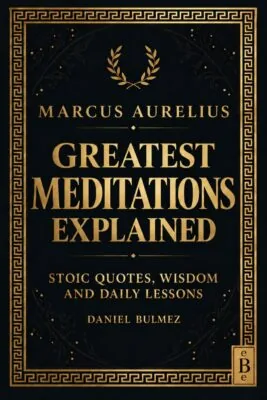
The Marcus Aurelius companion, and a Stoic quote book that spans the whole school.
The dedication reads "For anyone who has run out of time and has to begin anyway." It suits a retirement, a graduation, a new job, or a bad year that is finally ending.
The price is not printed on the book, so it can be handed over as it is.
Enter the recipient’s address at checkout and it goes direct, with no stop at your house first.








No. Each passage is explained from scratch in ordinary English, and the book makes no assumptions about what you have read before.
No. The text is Richard Mott Gummere's, as he published it. Seven passages start partway into his sentence, and the copyright page says so.
No. He was immensely rich and served Nero for years. Where he did not follow his own advice, the page says so.
That book has 152 short quotes from many Stoics. This one is Seneca only, at two pages a passage, with a practice for each.
136 of Seneca's passages, each read honestly and paired with one practice. Start with Day 1 tonight.
| Daily lessons | 136 |
|---|---|
| Pages | 308 |
| Page size | 6 × 9 in |
| Format | Paperback |
| Translation | Richard Gummere, unmodernized |
| ISBN | 978-1-997718-77-2 |