The Best Space Books for Kids Who Want to Know Everything About the Universe
From encyclopedias to picture books, 9 of the best space books for kids, matched by age, plus where the Smart Kids Ask Why series fits into the rotation.
 Daniel
September 24, 2026
5 min read
Daniel
September 24, 2026
5 min read
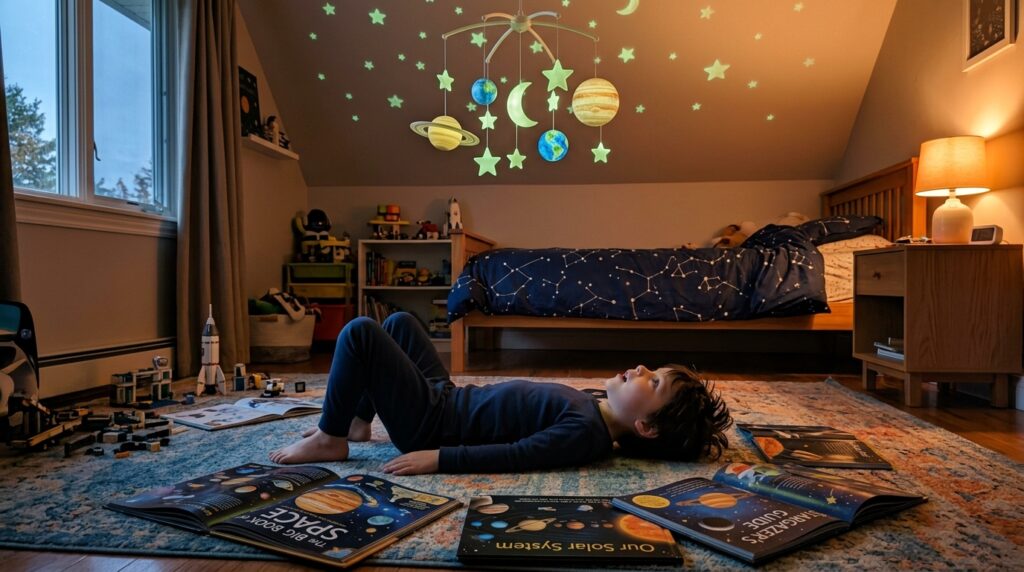
Space is the one topic that never runs out of “but why.” Why is the sky dark at night if there are so many stars? Why don’t astronauts float away from Earth but do float inside the space station? Why did it take so long to reach the Moon? Kids who ask these questions don’t need a textbook — they need a book that treats the universe like the most interesting story ever told, because it is.
Here are 9 of the best space books for kids, organized so you can match the right one to the right age and level of obsession.
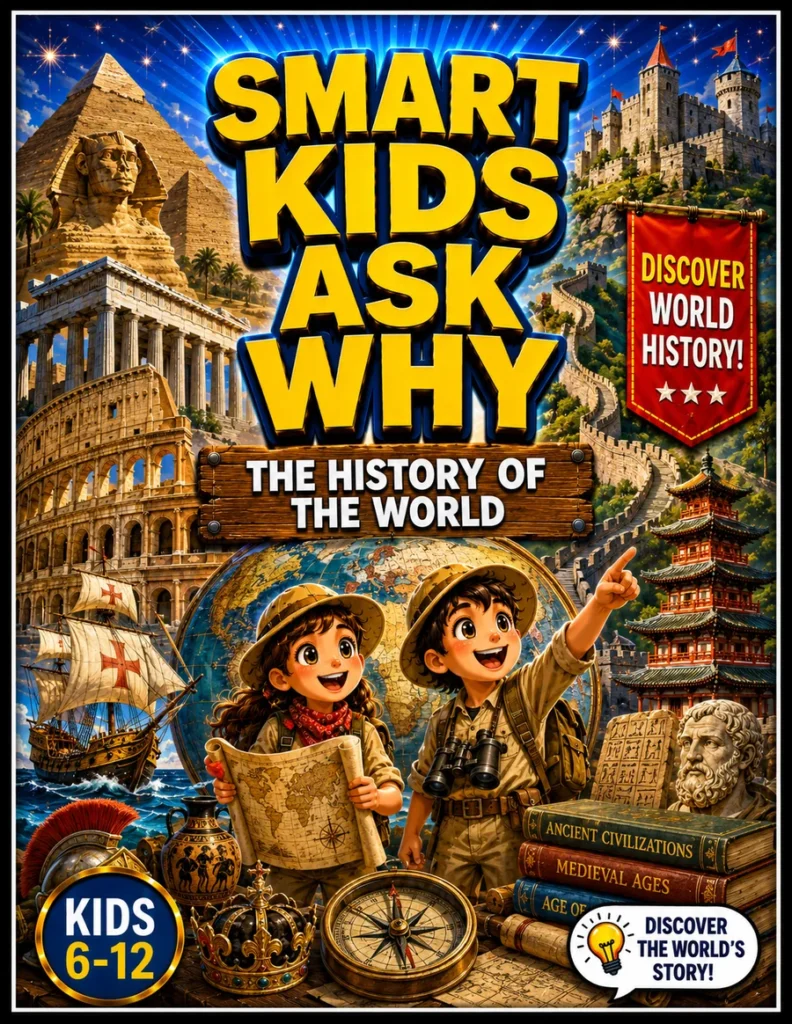
1. Smart Kids Ask Why: The History of the World
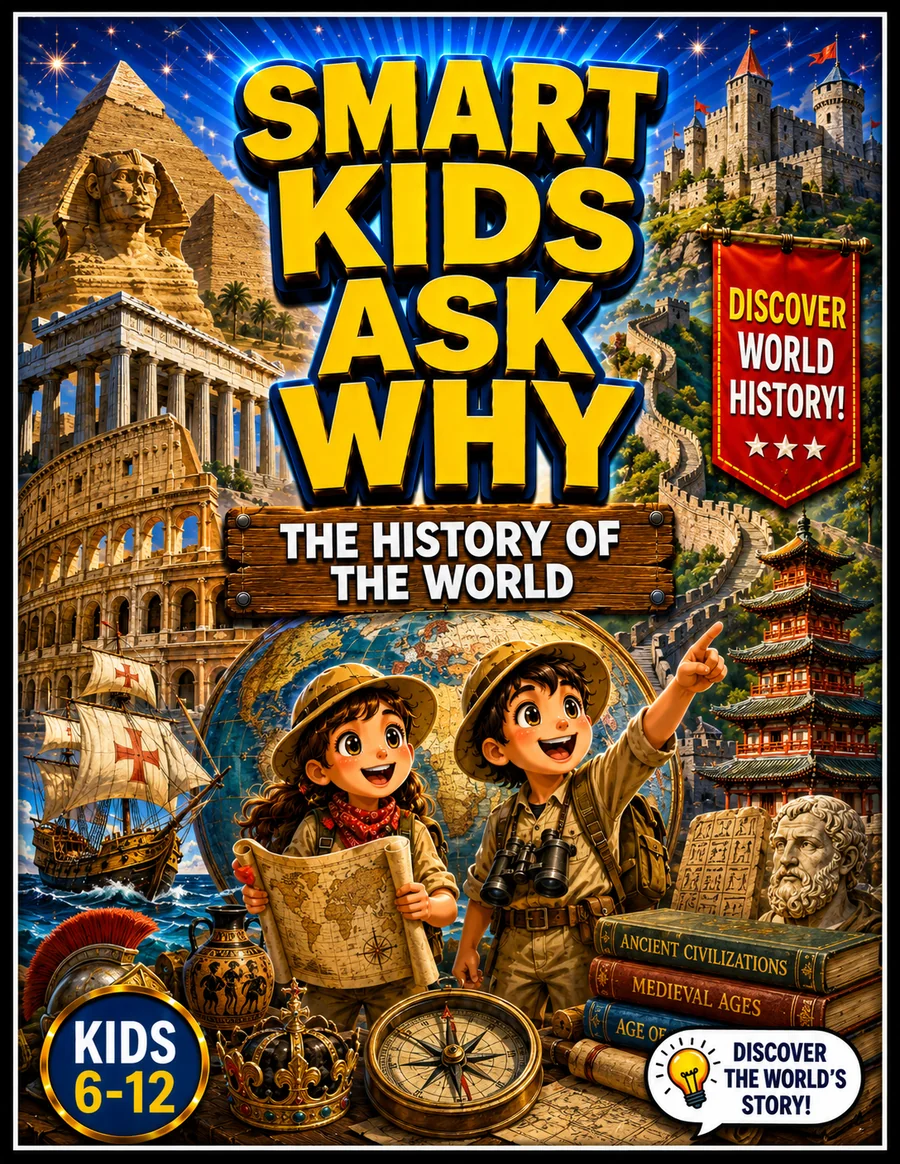
This one earns its spot on a space list for a single chapter most history books skip entirely: the Moon landing, told as one of the biggest “why” moments in human history — why we went, why it took a decade of failed rockets to get there, and why it still matters. Across 101 full-color pages and 17 chapters, a recurring kid explorer walks readers from ice-age campfires all the way to 1969, and every page follows the same format: one full-page illustration, four bite-sized facts, and a fun fact at the bottom. For a kid who loves space but also wants to understand how humanity actually got there — the Cold War, the engineering, the risk — this is the book that connects the dots. Ages 7 and up.
2. National Geographic Kids Space Encyclopedia
A dense, photograph-heavy reference that covers the solar system, galaxies, black holes, and the history of space exploration in one volume. It’s less narrative and more “look something up,” which makes it a great companion book — kids who finish a story-driven space book often want a reference to go check facts against, and this is the one they’ll reach for.
3. DK Space Encyclopedia (Smithsonian)
Similar in spirit to the National Geographic title but produced with the Smithsonian, leaning harder into real NASA imagery and mission timelines. Strong for kids who like their space facts backed by an institution they’ve heard of, and useful for school projects that need a citable source.
4. Look Inside Space by Usborne
Usborne’s flap-book format works especially well for space because so much of the subject is about things hidden inside other things — what’s inside a rocket, what’s inside a spacesuit, what’s behind a planet’s clouds. Best for the 4-7 range, before kids are ready for denser text.
5. There’s No Place Like Space! (Cat in the Hat’s Learning Library)
A rhyming, Dr. Seuss-style tour of the solar system that keeps things light and silly while still naming real planets and real facts. A good on-ramp for kids who aren’t ready for a “serious” space book yet but already love the topic.
6. DK Eyewitness: Space Exploration
Part of DK’s long-running Eyewitness series, this one focuses on what it’s actually like to be an astronaut — training, food, sleeping in zero gravity, spacewalks — alongside the history of real missions. Kids who are more interested in “what would it be like to go” than in orbital mechanics tend to love this angle, and it pairs naturally with the Moon-landing chapter in History of the World above.
7. Smart Kids Ask Why: Dinosaurs!
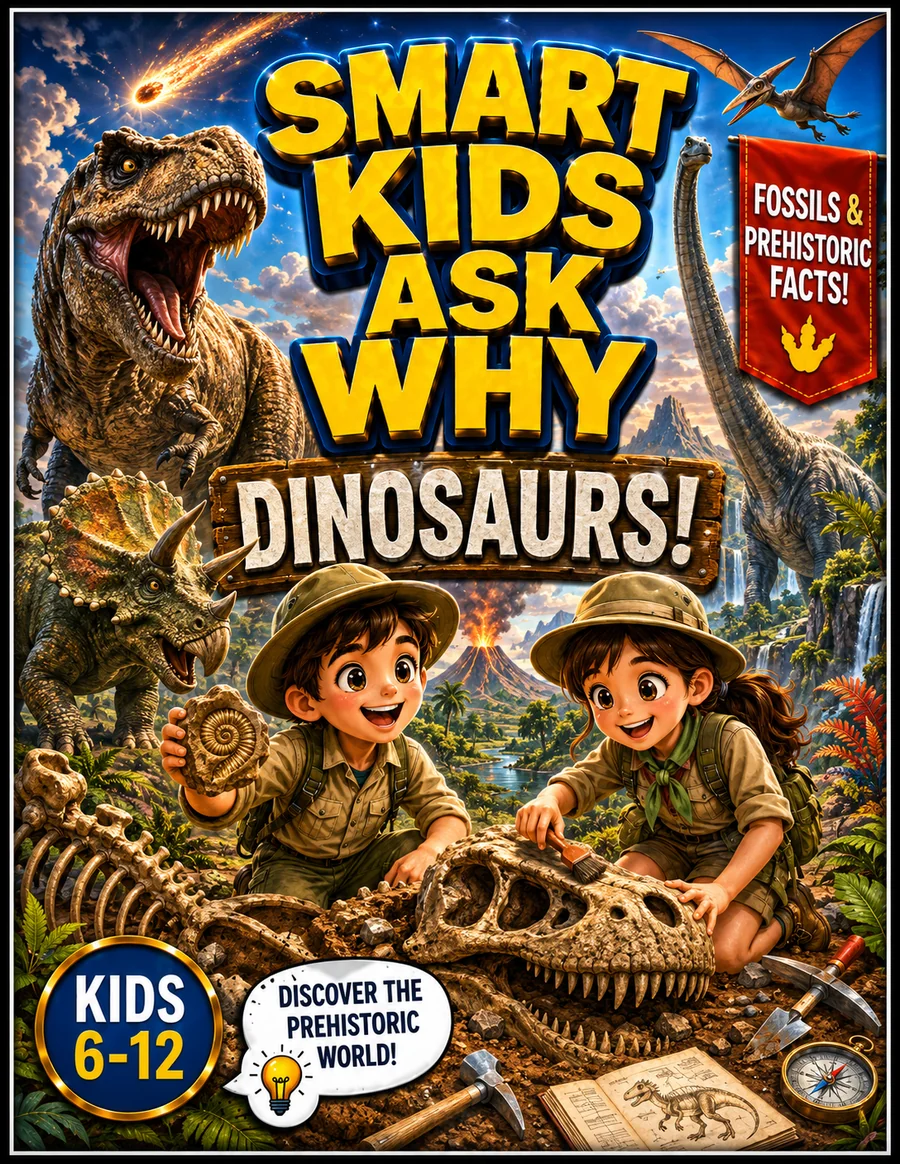
Not a space book on the surface, but it belongs on this list for the question every space-obsessed kid eventually asks: what actually killed the dinosaurs? The answer is an asteroid — a six-mile piece of space rock — and this book’s “why” format is built to explain exactly that kind of cause-and-effect science. Across 112 full-color pages, every page opens with a “why” question, and roughly 20 famous dinosaurs (including T. rex and Giganotosaurus) get their own profile-card spread. It’s the natural next book for a kid who just learned that space isn’t only about rockets — sometimes space comes to us.
8. Older Than the Stars by Karen C. Fox
A picture-book explanation of the Big Bang and where the atoms in your body actually came from, told as a chain of cause-and-effect events going back to the beginning of everything. Big, ambitious questions handled at a kid’s reading level — good for the child who asks “where did the universe come from” and means it.
9. Mousetronaut by Mark Kelly
A picture book based on a true story about the smallest mouse chosen for a real NASA space shuttle mission. Written by an actual astronaut, it’s a gentler, story-first entry point for younger kids (ages 4-8) who want a space book that feels like a bedtime story rather than a fact dump.
How to Pick
- Ages 4-6: start with the flap books and picture books (Usborne, Cat in the Hat, Mousetronaut) — short bursts of wonder, not walls of text.
- Ages 7-9: this is where History of the World and Dinosaurs! both land — kids old enough for real facts and full-page illustrations, still young enough to want a story wrapped around them.
- Ages 9-12: the encyclopedias (National Geographic, DK, Smithsonian) become genuinely useful reference tools rather than just picture books.
- The kid who asks “but why” about everything, not just planets: that’s exactly the reader both Smart Kids Ask Why books are built for — the format rewards curiosity instead of just answering one question and moving on.
Space books work best in a rotation, not alone — one for the big story, one for reference, one for pure wonder. Start with whichever one matches how your kid is asking the question right now.
Daniel Bulmez is the author of the Smart Kids Ask Why book series, available on this store and on Amazon.