How to Win an Argument Without Losing the Relationship
Learn how to win an argument without damaging the relationship — research-backed techniques from top negotiators and communicators. No shouting required.
 Daniel
September 22, 2026
5 min read
1 view
Daniel
September 22, 2026
5 min read
1 view

You won the argument. Three days later, your coworker still routes decisions around you instead of through you, and the project moves slower than before you “won.” That’s not winning. That’s a tax you’ll keep paying.
A CPP Global Human Capital Report study found U.S. employees spend an average of 2.8 hours a week embroiled in workplace conflict — and more than a quarter said it had led to a personal attack. Most of that time isn’t spent resolving anything. It’s spent re-litigating the same disagreement because the first round left someone feeling beaten instead of heard. Dale Carnegie put it bluntly decades ago in How to Win Friends and Influence People: “the only way to get the best of an argument is to avoid it.” He wasn’t being cute. He’d noticed that the people who “won” arguments kept losing the relationships attached to them.
Here’s how to actually get what you need from a disagreement without turning the other person into someone who quietly works against you afterward.
Winning Isn’t the Point — Here’s What Actually Matters
Before you say a word, decide what you’re actually optimizing for: being right, or getting somewhere. Those are different goals, and most arguments go sideways because people default to the first without noticing.
If the relationship has to survive past this conversation — a coworker, a partner, a client — being right at the cost of being trusted is a bad trade almost every time. You can be factually correct and strategically wrong in the same sentence.
Practical takeaway: Before you respond, ask yourself one question: “Am I trying to be right, or trying to get to a workable outcome?” If it’s the former, that’s the thing to fix first — not your argument.
Separate the Person From the Position
Negotiation researchers Roger Fisher and William Ury built an entire framework around this in Getting to Yes: separate the people from the problem. Most arguments feel personal because they are — not about the stated topic, but about what’s underneath it.
Journalist Amanda Ripley calls this the “understory” in her book High Conflict — the real driver of a dispute is usually status, fear, or feeling disrespected, not the calendar date or the budget line everyone’s shouting about. Two coworkers “arguing about a deadline” are often really arguing about one of them being blindsided.
Practical takeaway: Before you counter their position, ask yourself what they’re actually protecting — their competence, their say in the decision, their time. Respond to that, not just the surface claim.
Use the Move Hostage Negotiators Use — Before You Disagree
Former FBI lead hostage negotiator Chris Voss built his entire methodology in Never Split the Difference around a technique called “labeling” — naming the other person’s emotion out loud before you respond to their point. “It sounds like you’re worried this change is going to blow up everything you promised your team” costs you ten seconds and does something a counter-argument never can: it proves you were listening.
People who feel heard get less defensive, not more. Most arguments escalate not because the positions are far apart, but because both people are too busy building their next point to prove they heard the last one.
Practical takeaway: Label their concern out loud before you make your case. It’s the fastest de-escalation move available, and it costs you nothing.
Disagree and Commit — How to “Lose” the Room and Still Win the Outcome
Amazon’s “disagree and commit” leadership principle exists for exactly this problem: you can state your disagreement clearly, lose the vote, and still come out ahead — as long as you actually commit afterward instead of relitigating it in the hallway. The alternative, silent compliance followed by quiet sabotage, is what actually destroys teams. It just does it slower.
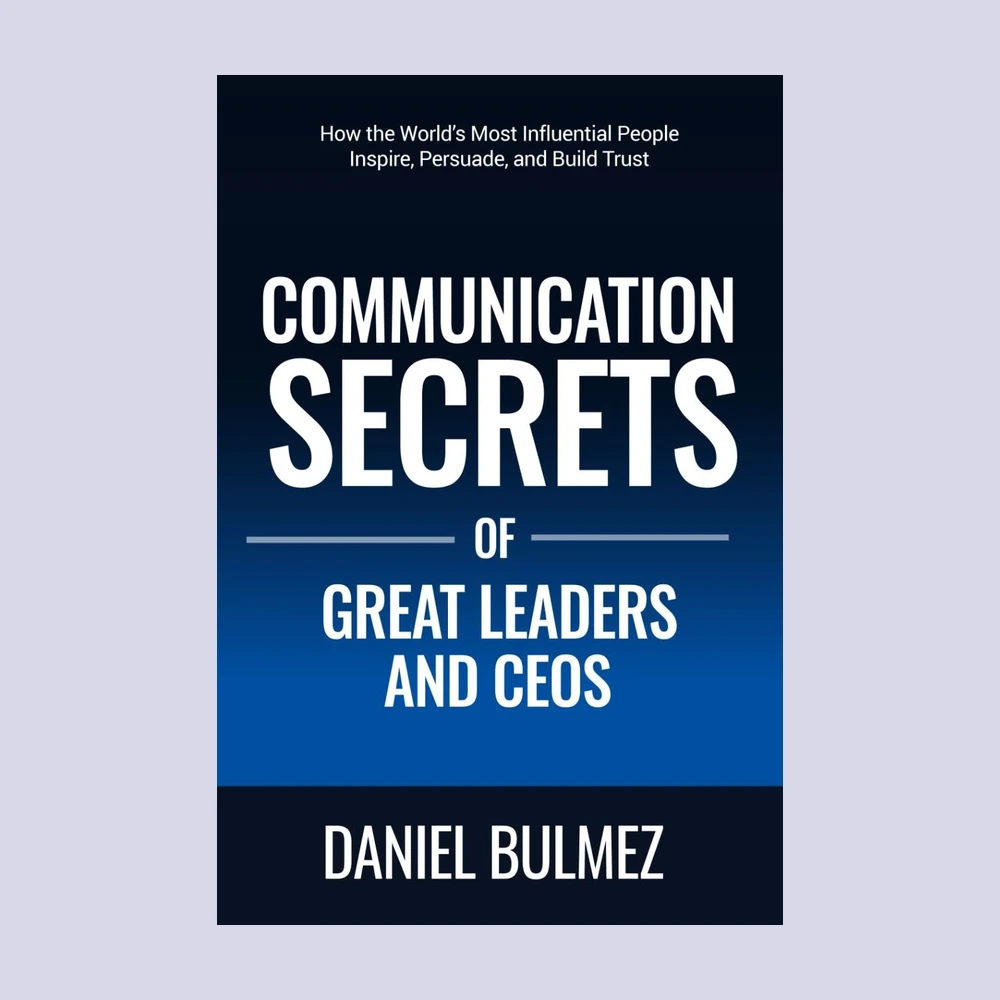
This is the distinction Communication Secrets of Great Leaders and CEOs keeps coming back to: the goal was never to be agreed with every time. It’s to be trusted enough that people are willing to disagree with you in the room — and to make it safe to lose that disagreement without it costing anyone anything.
Practical takeaway: State your objection once, clearly, on the record. Then commit. If you catch yourself re-raising it in a side conversation afterward, that’s the moment trust actually erodes — not the disagreement itself.
What to Say When You Feel Yourself About to Lose It
Psychologist John Gottman’s research on “flooding” found that once a person’s heart rate crosses roughly 100 beats per minute in conflict, rational thinking shuts down and the conversation becomes physiologically incapable of going well — no matter how good your technique is. The fix isn’t a better argument. It’s a pause.
Practical takeaway: If you notice yourself repeating the same point louder than the last time, that’s the flooding signal. Say “I want to get this right — can we pick this back up in twenty minutes?” and mean it. A short break preserves more relationships than any clever comeback ever has.
The best communicators aren’t the ones who never lose an argument. They’re the ones whose disagreements make people trust them more, not less — because how you argue tells people more about you than what you argue for. That instinct is trainable, and it’s exactly what Communication Secrets of Great Leaders and CEOs is built to teach: the specific habits great leaders use to disagree without ever losing the room.
Daniel Bulmez is the author of Communication Secrets of Great Leaders and CEOs, available on Amazon.