The Only Thing Necessary for the Triumph of Evil Is That Good Men Do Nothing: The Burke Quote Nobody Can Find
Nobody has found "good men do nothing" in Burke's writings. Here is the real trail from Burke to Mill to 1920, and how to act on it at work this week.
 Daniel
November 14, 2026
4 min read

It gets quoted in speeches, board rooms and comment threads, almost always with Edmund Burke’s name attached:
“The only thing necessary for the triumph of evil is that good men do nothing.”
Nobody has found those words in Burke’s writings. The attribution is shaky, but the idea behind it is older and more useful than the name on it, and the real history shows what the line is actually about: silence.
Where the Quote Really Comes From
Quote Investigator, the research site that traces the origins of famous sayings, concludes that quotations from Burke and from John Stuart Mill “are conceptually related to the quote under examination, but neither expression is close textually.” It also says the record is too incomplete to name who crafted the popular wording. Here is the trail it lays out:
- 1770. In Thoughts on the Cause of the Present Discontents, Burke wrote: “When bad men combine, the good must associate; else they will fall, one by one, an unpitied sacrifice in a contemptible struggle.” This is the closest real Burke passage. It is an argument for political allies to organize, not a warning about doing nothing.
- 1867. John Stuart Mill, in an inaugural address at the University of St Andrews, said: “Bad men need nothing more to compass their ends, than that good men should look on and do nothing.” That is much nearer to the modern line.
- October 1916. The San Jose Mercury Herald reported a prohibition speech by the Rev. Charles F. Aked that used a similar maxim: “It has been said that for evil men to accomplish their purpose it is only necessary that good men should do nothing.” Aked did not claim it as his own.
- July 1920. Sir R. Murray Hyslop addressed a Congregational church conference and said: “Burke once said: ‘The only thing necessary for the triumph of evil is that good men should do nothing.'” The address was published in 1921. It is the earliest Burke attribution Quote Investigator knows of, which is roughly 150 years after Burke wrote the passage above.
- 1961. President John F. Kennedy, speaking to the Canadian Parliament, credited the line to Burke, and Bartlett’s Familiar Quotations printed it under Burke with a citation to an 1795 letter. Quote Investigator reports that the letter does not contain it, and the columnist William Safire raised the problem in 1980.
So the honest label is “attributed to Burke,” with the true author unknown.
What the Line Gets Right
This part is my reading, not a documented fact: the Mill version is the sharper one, because of two words, “look on.” Harm does not need extra help from the people around it. It needs their silence.
That matches a well-known result in psychology. In the late 1960s, John Darley and Bibb Latané showed that people are less likely to step in when they believe others are present, a pattern now called diffusion of responsibility. Everyone assumes someone else will act.
Why Good People Stay Quiet at Work
At work, the “evil” in the quote is rarely dramatic. It is a colleague taking credit for someone else’s work, a number rounded in the wrong direction, a joke at one person’s expense, a safety shortcut everyone has agreed not to mention. These are my observations, not a study, but the reasons for staying quiet tend to be the same:
- It seems like everyone else is fine with it. Silence from others reads as approval, so you stay silent too.
- It is not your team or your call. Which is true until the same behavior reaches your team.
- The cost is yours and immediate; the benefit is shared and later. You pay the awkward moment now, and everyone gets a better workplace afterwards.
Three Moves for This Week
- Name one small thing you let pass. Do not wait for the dramatic version. Pick one moment from the last two weeks where you watched and said nothing, and decide what you would say next time.
- Say one specific sentence in the room. Something like “I don’t think that figure is right. Can we check it before we send it?” is about the work, not about anyone’s character, which makes it easier to say and easier to hear.
- Follow up privately with the person affected. “I saw how that meeting went. Are you okay?” is a small act, and it ends the isolation that makes people think nobody noticed.
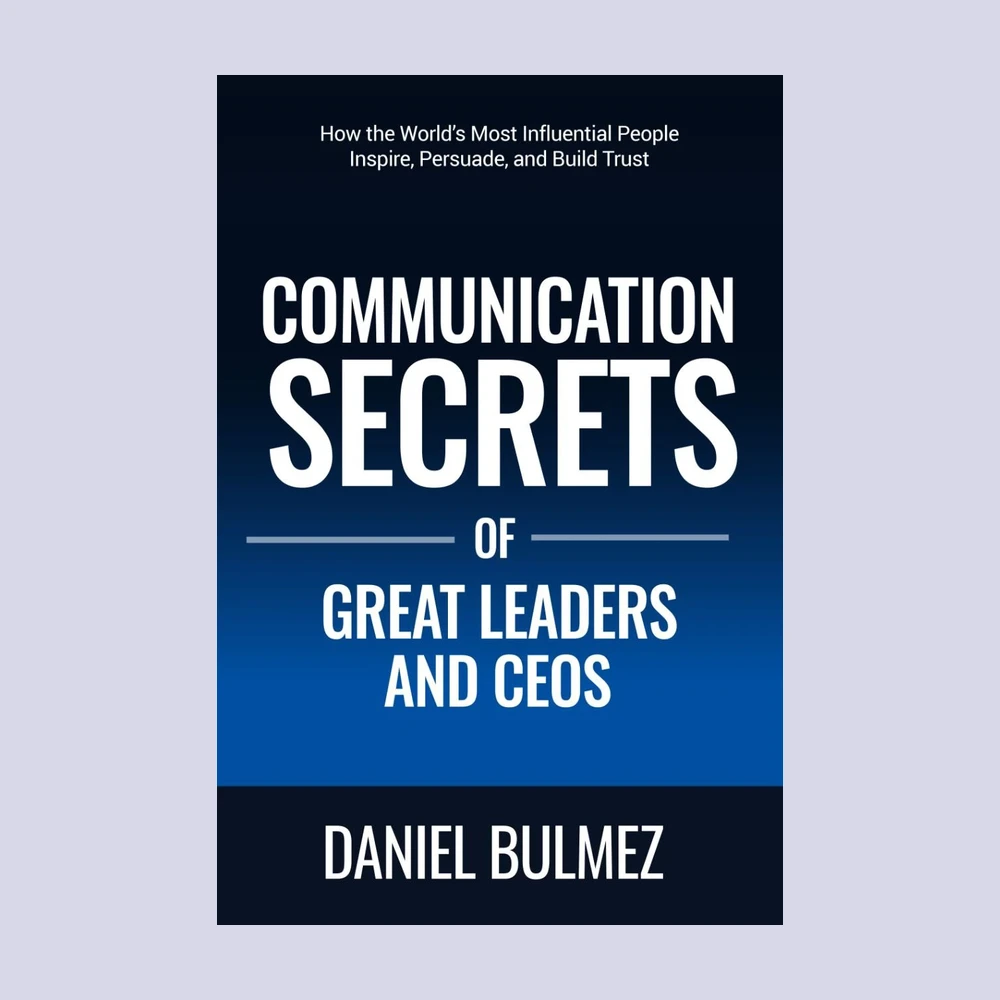
Speaking up is a skill, and it is easier with the words ready. For how top leaders raise hard issues without escalating them, Daniel Bulmez’s Communication Secrets of Great Leaders and CEOs is a practical place to start.
Daniel Bulmez is the author of Communication Secrets of Great Leaders and CEOs, available on Amazon.