It Is Not the Strongest of the Species That Survives: The Quote Darwin Never Said
Darwin never wrote it. The quote about the strongest of the species traces to a 1963 business professor's paraphrase. Here is the real history.
 Daniel
November 21, 2026
4 min read

It turns up on conference slides, in change-management decks and in LinkedIn posts, almost always with Charles Darwin’s name under it:
“It is not the strongest of the species that survives, nor the most intelligent, but the one most responsive to change.”
Darwin never wrote it. The Darwin Correspondence Project, which looks after his letters, lists a version of this line among “six things Darwin never said.” The real history is more interesting than the myth, because it starts with a business professor.
Where the Quote Really Comes From
Quote Investigator and the Darwin Correspondence Project both trace it to the same place. Here is the trail:
- 1859 to 1872. The phrase does not appear in the sixth edition of On the Origin of Species. A search of its full text for “responsive,” “adaptable” and “most intelligent” finds nothing. The Correspondence Project also says it is not in his letters.
- 1963. Leon C. Megginson, a management professor at Louisiana State University, gave a presidential address to the Southwestern Social Science Association. It was printed in the Southwestern Social Science Quarterly in June 1963. He wrote: “According to Darwin’s Origin of Species, it is not the most intellectual of the species that survives; it is not the strongest that survives;” and went on to say that the species that survives is “the one that is able best to adapt and adjust to the changing environment.” Quote Investigator notes there are no quotation marks. It was his own paraphrase of Darwin’s ideas, and he never claimed to be quoting him.
- 1964. Megginson repeated the idea in Petroleum Management and closed it with “so says Charles Darwin in his ‘Origin of Species.'” Still no quotation marks.
- 1968. Quote Investigator’s earliest direct quotation is a chapter epigraph in Kamal Sayegh’s book Oil and Arab Regional Development, credited to “Charles Darwin.”
- 1982. Robert Moran and Philip Harris printed it in Managing Cultural Synergy as a Darwin quote, with no source.
So within about five years, a professor’s paraphrase became a “quotation.” One caveat: I could not find the exact wording “most responsive to change” in any of the early sources. The closest versions are “most adaptable to change” and Megginson’s “able best to adapt and adjust.” The wording you see today is a later polish.
What Darwin Actually Wrote
The word people usually think of is “fittest.” Herbert Spencer coined “survival of the fittest” in 1864, and Darwin adopted it from the fifth edition of the Origin in 1869. In the sixth edition he wrote: “But the expression often used by Mr. Herbert Spencer, of the Survival of the Fittest, is more accurate, and is sometimes equally convenient.”
He used it as another name for natural selection. In that sense, “fittest” means best suited to local conditions, not strongest or smartest. That is closer to Megginson’s point than the quote’s own wording suggests.
What the Line Gets Right
This part is my reading, not a documented fact. Megginson was talking about whether a civilization could survive a changing environment, and business writers borrowed the line because it fits companies and careers too. The useful word is “environment.” The line is not telling you to be fast or flexible in general. It says what works depends on what is going on around you, and that the environment keeps moving whether or not you are looking at it.
The version I see go wrong at work is that “adapting” gets treated as a personality trait. People are told to “be more agile” without being told what changed. In my experience, teams adapt well when they can say what has changed out loud, and badly when the change lives only in someone’s head.
Three Moves for This Week
- List what has changed in the last year. Clients, tools, your boss’s priorities, how your industry buys. Then mark each item where your habits are still set for the old situation.
- Ask two people who see different things. A newer colleague and someone close to customers are good choices. “What have you noticed lately that we are not adjusting to?” is a question people can answer honestly.
- Explain the change in one sentence. When you shift a process or a plan, say what changed in the world and why that matters. People follow a change they understand much more easily than one they are told to accept.
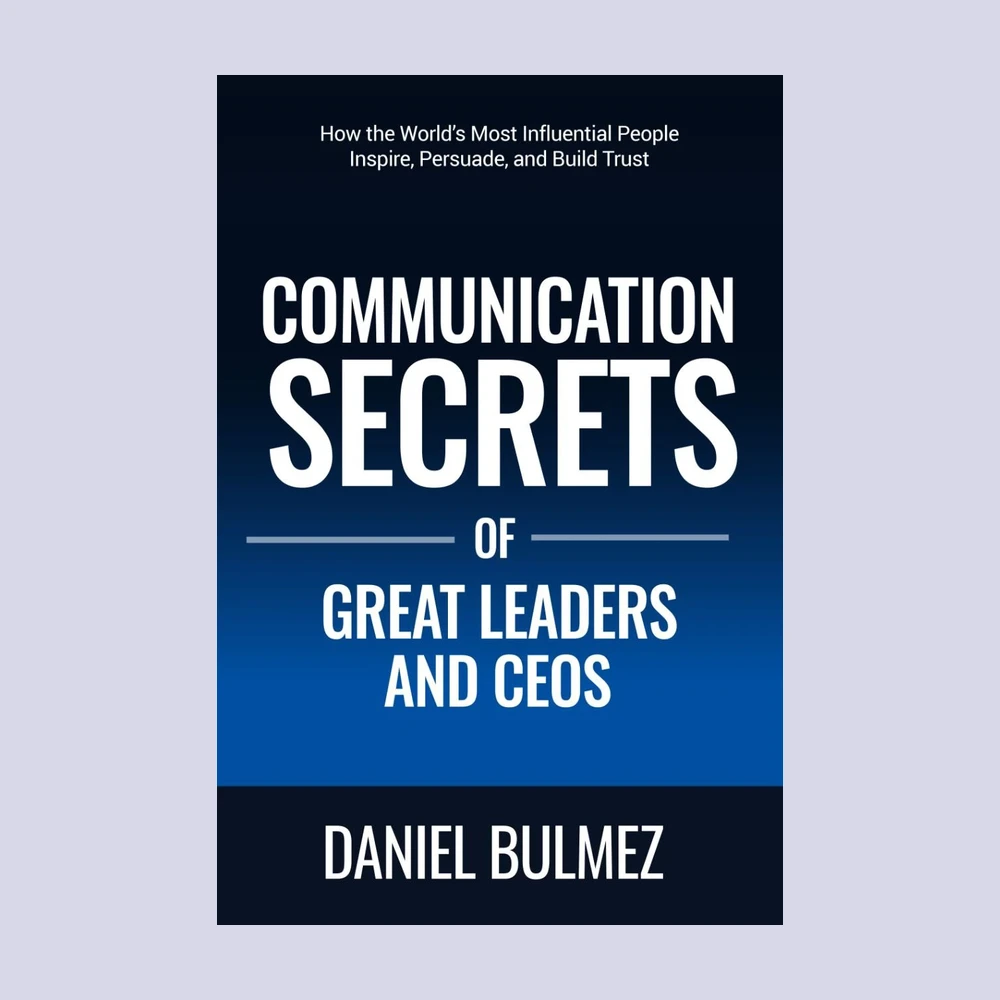
Leading people through change is mostly a communication problem. For how top leaders explain shifts so their teams act on them, Daniel Bulmez’s Communication Secrets of Great Leaders and CEOs is a practical place to start.
Daniel Bulmez is the author of Communication Secrets of Great Leaders and CEOs, available on Amazon.