How to Improve Your Communication Skills at Work (The 12 That Actually Move Careers)
Skip the generic advice. Here are the 12 specific communication skills that actually get people promoted at work, and how to build each one.
 Daniel
July 13, 2026
6 min read
40 views
Daniel
July 13, 2026
6 min read
40 views

Everyone tells you to “communicate better.” Almost no one tells you what that actually means.
“Listen more.” “Make eye contact.” “Be clear.” It’s advice so generic it’s useless — the kind of thing that sounds true and changes nothing. Meanwhile, some people in your building say less than you, in fewer meetings, and somehow every room defers to them. That’s not charisma. It’s a set of specific, learnable moves.
Communication skills training usually stops at the surface. Here’s what’s underneath — the 12 skills that actually move careers, broken down into the exact behavior, not the platitude.
1. Say the Headline First
Most people build up to their point — context, backstory, justification, then the ask. By the time they get there, the room has stopped listening.
The people who get taken seriously lead with the conclusion. “I need budget approval for X, here’s why” — not five minutes of preamble before the word “budget” shows up. Say the headline first. Let people ask for the details if they want them.
2. Ask the Question Behind the Question
When someone brings you a complaint or a request, the surface ask is rarely the real one. “This deadline doesn’t work” might really mean “I don’t have the resources” or “I don’t trust this plan.”
Strong communicators pause and ask one more layer down: “What’s making this hard?” That single question surfaces the actual problem instead of negotiating around a symptom — and it’s the difference between solving something and just managing it.
3. Replace “Sorry, but” With a Direct Statement
Qualifying every opinion with “this might be a dumb question, but” or “sorry to push back, but” trains people to discount what comes next before they’ve even heard it. It’s a habit, not a personality trait — and it’s costing you credibility every time you do it.
Say the thing directly. “I disagree, here’s why.” “That timeline is too tight — here’s what I’d need.” You can be respectful without pre-apologizing for having a view.
4. Match Message to Medium
A complex, sensitive, or high-stakes message sent over Slack or email will get misread almost every time — tone doesn’t survive text, and neither does nuance. A quick status update turned into a 30-minute meeting wastes everyone’s day.
The skill is matching the message to the right channel before you send it: quick facts go async, anything emotional or ambiguous gets a call or a face-to-face. People who get this backwards create most of the friction they later complain about.
5. Deliver Bad News Without Burying It
Bad news wrapped in five minutes of throat-clearing doesn’t soften the blow — it just makes people anxious waiting for the other shoe to drop, and it reads as avoidance.
Say what happened, plainly, early. Then move straight to what you’re doing about it. “The launch is delayed two weeks. Here’s why, and here’s the recovery plan.” People trust the messenger who doesn’t flinch far more than the one who softens everything into mush.
6. Use Silence on Purpose
Most people treat silence in a conversation as a problem to fix — they rush to fill it. That’s a mistake. A pause after you make a point lets it land. A pause after you ask a question forces the other person to actually answer instead of getting rescued.
Practice sitting in a silence for two full seconds longer than feels comfortable. It reads as confidence, not awkwardness — and it almost always gets you a better answer.
7. Give Feedback That’s Specific, Not Vague
“Good job” and “needs work” tell someone nothing they can act on. Specific feedback names the exact behavior and the exact impact: “When you framed the numbers before the recommendation, the room bought in immediately — do that again.”
Vague feedback feels safe to give but wastes everyone’s time. Specific feedback is slightly uncomfortable and is the only kind that actually changes behavior.
8. Repeat Back Before You Respond
In any disagreement or complex request, restate what you heard before you react to it: “So what I’m hearing is X — is that right?” It costs five seconds and prevents the single most common failure in workplace communication: two people responding to two different versions of the same conversation.
It also does something subtler — it makes the other person feel heard before you’ve said a word of your own position, which lowers their defenses for whatever comes next.
9. Speak in Concrete Numbers, Not Vague Language
“We’re making good progress” tells a leader nothing. “We’re at 70%, on track for Friday, one risk is the vendor delay” tells them everything. Vague language is often a hiding place — a way to avoid commitment. Concrete numbers force clarity, and clarity is what makes people trust you with bigger things.
10. Read the Room Before You Speak
The same message lands differently depending on whether the room is stressed, rushed, defensive, or relaxed. Strong communicators spend a few seconds reading the temperature before they open their mouth — tone, body language, what’s already been said — and adjust accordingly.
Say the exact right thing to the wrong room and it still fails. This is the skill that makes every other skill on this list actually work.
11. Close Every Conversation With a Clear Next Step
Meetings and conversations that end without a stated owner and deadline evaporate. Nothing happens, and everyone quietly assumes someone else has it.
End with one sentence: “So you’ll send the draft by Thursday, I’ll review by Friday.” It takes ten seconds and it’s the single biggest predictor of whether a conversation actually produces anything.
12. Say What You Actually Think, Once You’ve Earned the Room
The highest-leverage communication skill isn’t a technique — it’s the willingness to say the true thing when it’s uncomfortable, once you’ve built enough credibility that people know you’re not just being difficult. Most careers stall not from a lack of skill, but from a habit of softening every real opinion into something safe and forgettable.
Underneath all twelve of these is the same core skill: how to influence people honestly, without the manipulation or forced authority that makes people dig in.
The Deeper Playbook
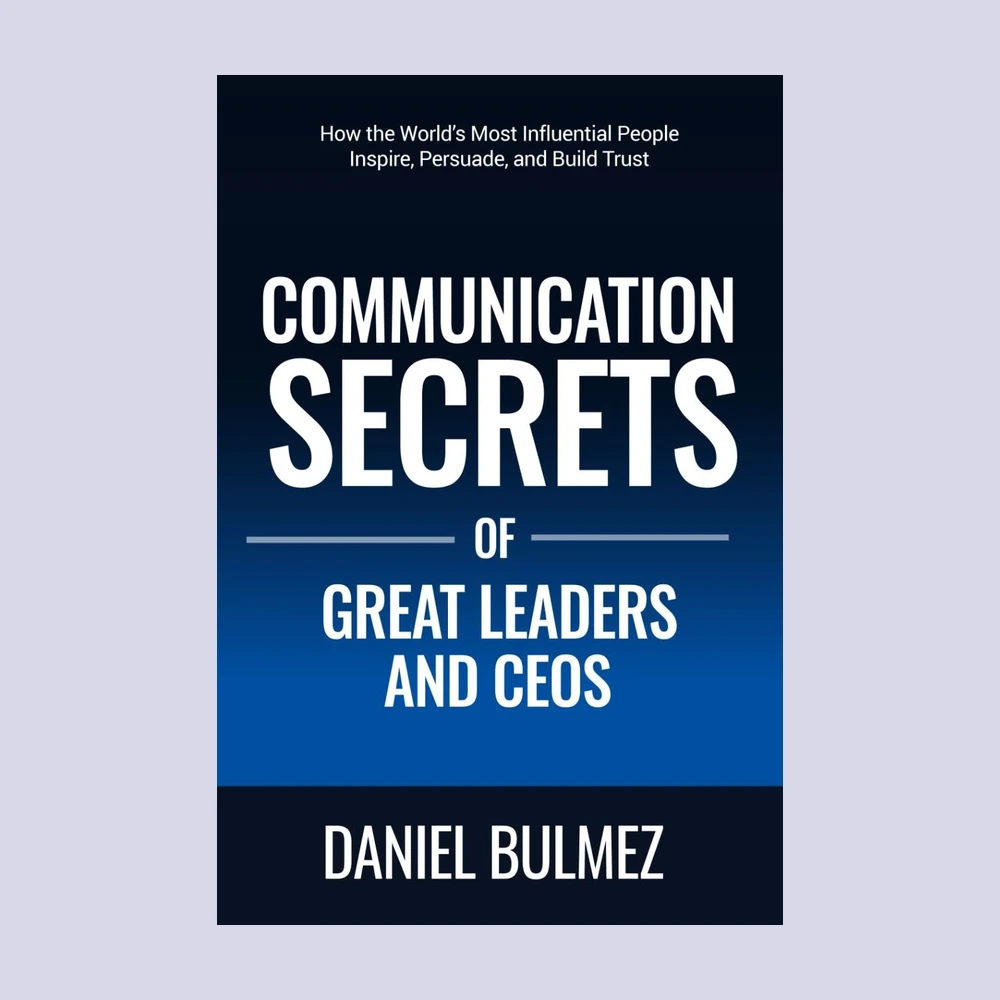
This article is the overview. Communication Secrets of Great Leaders and CEOs is the field manual — the exact phrasing top operators use, situation by situation, when the stakes are higher than a status update.
Communication skills training usually stays generic because generic advice is safe to give. The specific version is harder to teach and worth infinitely more. Pick two skills from this list, run them for two weeks, and watch how differently people respond to you in the same rooms you’ve always been in.
Which of these skills to prioritise depends on how you naturally communicate — communication styles in the workplace helps you spot your default and its blind spots.
Daniel Bulmez is the author of Communication Secrets of Great Leaders and CEOs, available on Amazon.