Nobody Cares How Much You Know Until They Know How Much You Care
Theodore Roosevelt said nobody cares how much you know until they know how much you care. Here is why trust beats expertise in leadership and communication.
 Daniel
June 20, 2026
4 min read
31 views
Daniel
June 20, 2026
4 min read
31 views

“Nobody cares how much you know, until they know how much you care.” — Theodore Roosevelt
It is one of the most quoted lines in leadership, and one of the most ignored. We spend years collecting credentials, sharpening expertise, and rehearsing the perfect argument — then wonder why people nod politely and walk away unmoved. Roosevelt’s insight cuts straight through the noise: knowledge alone does not move people. Care does. And until the people in front of you feel that you genuinely have their interests at heart, every fact you offer lands on deaf ears.
This is not a soft, feel-good slogan. It is a hard observation about how influence actually works.
Why Expertise Alone Falls Flat
Think about the last time someone tried to convince you of something. The person may have been brilliant, well-prepared, and completely right — yet if you sensed they were talking at you rather than for you, you resisted. That resistance is not stubbornness. It is human wiring.
People decide whether to trust you long before they evaluate what you are saying. Neuroscience backs this up: the brain assesses warmth before competence. We first ask “Is this person on my side?” and only then “Are they any good?” Get the first question wrong and the second never gets a fair hearing. The smartest person in the room loses to the one who makes others feel seen.
That is why so many talented people stall. They optimized for the wrong variable. They invested everything in being right and nothing in being trusted.
Care Is a Skill, Not a Mood
Here is where Roosevelt’s line is often misread. “Care” sounds like a feeling — something you either have or you don’t. In practice, care is a set of behaviors people can observe and verify. You demonstrate it, you don’t just feel it.
You care by listening first. Most people listen only long enough to find the gap where they can insert their own point. Real listening means staying in the other person’s world long enough to understand what they actually need — not what you assumed they needed.
You care by asking before advising. A single genuine question — “What’s the hardest part of this for you?” — communicates more concern than ten minutes of unsolicited solutions.
You care by remembering. Recalling what mattered to someone last week tells them they registered as a person, not a transaction. Small acts of memory compound into deep trust.
You care by being honest when it costs you something. Telling someone a truth they don’t want to hear — gently, and clearly for their benefit — proves you value them more than their approval.
The Leadership Multiplier
In leadership, this principle is not optional — it is the entire game. A team does not give discretionary effort to the most knowledgeable manager. They give it to the one who has shown, repeatedly, that their wellbeing is part of the equation. Direction without demonstrated care produces compliance. Direction with it produces commitment. The difference between the two is the difference between a team that does the minimum and one that runs through walls.
The same is true in sales, negotiation, parenting, and friendship. Influence flows through relationship. The relationship is built on the felt sense that you are not merely using the other person to get what you want.
How to Put It to Work This Week
You do not need a personality transplant. Try one experiment: in your next important conversation, spend the first few minutes purely understanding the other person before you advance a single point of your own. Ask, listen, reflect back what you heard. Watch how the temperature of the conversation changes once they feel understood. Only then make your case. You will find that the same argument that bounced off before now lands — because the channel is finally open.
Roosevelt understood something every great communicator eventually learns: people are not persuaded by information. They are persuaded by people they trust. Earn the trust first, and the knowledge finally has somewhere to go.
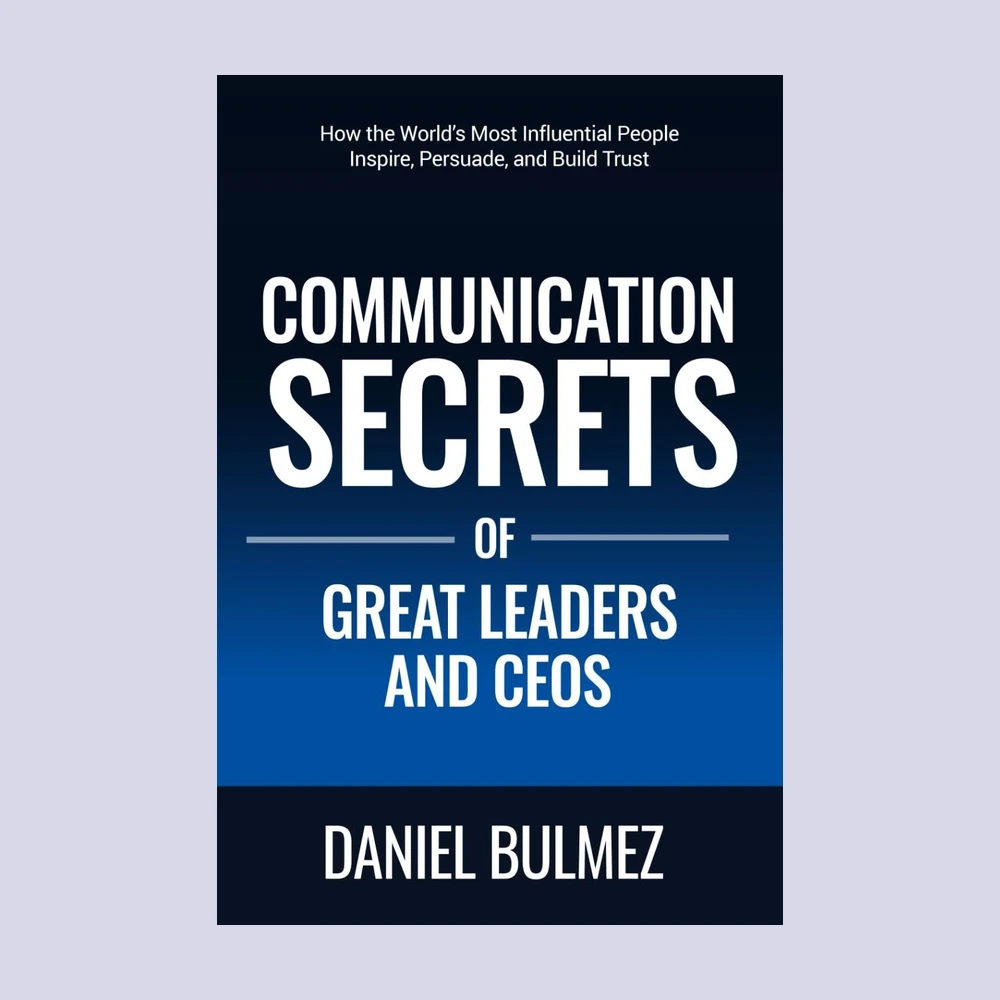
Want the deeper playbook on turning trust into influence? Daniel Bulmez breaks down exactly how the most respected leaders build connection before they make their case in Communication Secrets of Great Leaders and CEOs, available now on Amazon.
Daniel Bulmez is the author of Communication Secrets of Great Leaders and CEOs, available on Amazon.