We Suffer More in Imagination Than in Reality: What Seneca Actually Meant
Seneca's famous line on anxiety is usually quoted half-finished. Here's the full sentence from Letter 13, the context Seneca gave it, and why it still holds up.
 Daniel
September 12, 2026
4 min read
3 views
Daniel
September 12, 2026
4 min read
3 views

Two thousand years before cognitive behavioral therapy had a name, a Roman statesman wrote a letter to his friend explaining why worry hurts more than the thing being worried about. Seneca’s line has outlived the empire it was written in: “We suffer more often in imagination than in reality.”
It shows up on posters and Instagram captions stripped down to that single clause. But Seneca actually wrote a fuller sentence, and the missing half changes what the quote means. Here’s where it comes from, what he was really saying, and why it still holds up against what modern psychology knows about anxiety.
Where the Quote Actually Comes From
The line is from Seneca’s Letters to Lucilius, Letter 13, sometimes titled “On Groundless Fears.” Lucilius was a Roman official and friend Seneca wrote to throughout his life, and this particular letter opens by acknowledging that Lucilius doesn’t need a pep talk — he’s already weathered real setbacks and come out fine. Seneca offers to add “some additional safeguards” anyway, and this is where the famous line lands, in the Richard Gummere translation (public domain, Loeb Classical Library, 1917):
“There are more things, Lucilius, likely to frighten us than there are to crush us; we suffer more often in imagination than in reality.”
Notice the full sentence is a comparison — things that frighten us versus things that actually crush us — not a blanket claim that all suffering is imaginary. That distinction matters, because Seneca goes on to get specific about exactly which kind of suffering he means.
The Part Everyone Leaves Out
Right after the famous clause, Seneca clarifies the target. He’s not talking about grief after a loss or pain after an injury — the real things. He’s talking about anticipatory suffering: the dread you manufacture about something that hasn’t happened yet and might never happen. In the next section of the same letter, he breaks it into three categories: things that torment us more than they should, things that torment us before they should, and things that torment us that shouldn’t torment us at all.
“We are in the habit of exaggerating, or imagining, or anticipating, sorrow,” he writes. That’s a precise diagnosis of what modern therapists call catastrophizing — running a worst-case scenario on a loop before there’s any evidence it will happen. Seneca isn’t dismissing real pain. He’s isolating the specific tax we pay on pain that doesn’t exist yet.
Why a 2,000-Year-Old Letter Still Checks Out
This isn’t just a nice historical footnote — the mechanism Seneca described is now a documented feature of how anxiety works. Cognitive behavioral therapy is built almost entirely on the observation that the emotional response to a threat and the emotional response to the thought of a threat are processed by the brain in overlapping ways. You don’t need the bad outcome to happen for your body to run the stress response. The dread alone is enough to raise cortisol, disrupt sleep, and crowd out the mental bandwidth you’d need to actually solve the problem if it showed up.
Seneca’s advice, once you read past the one-liner, is essentially a proto-CBT technique: notice which fears are about something real and present versus something hypothetical and future, and stop paying interest on a debt you may never owe. He wasn’t telling Lucilius to stop feeling things. He was telling him to stop pre-paying for pain that hadn’t been billed yet.
How to Actually Use This Line
The next time a worry spirals — a health scare, a work outcome, a conversation you’re dreading — try Seneca’s own filter. Ask which category it falls into: is this happening now, or is this a rehearsal for something that might never come? If it’s the second one, the discomfort you’re feeling is manufactured, and naming that out loud tends to loosen its grip faster than trying to argue yourself out of the feeling directly.
It won’t make real problems disappear. Seneca never claimed it would. But it clears out the imagined ones taking up space next to them — which, on most days, is most of what’s actually weighing you down.
Want More Lines Like This, With the Context Intact?
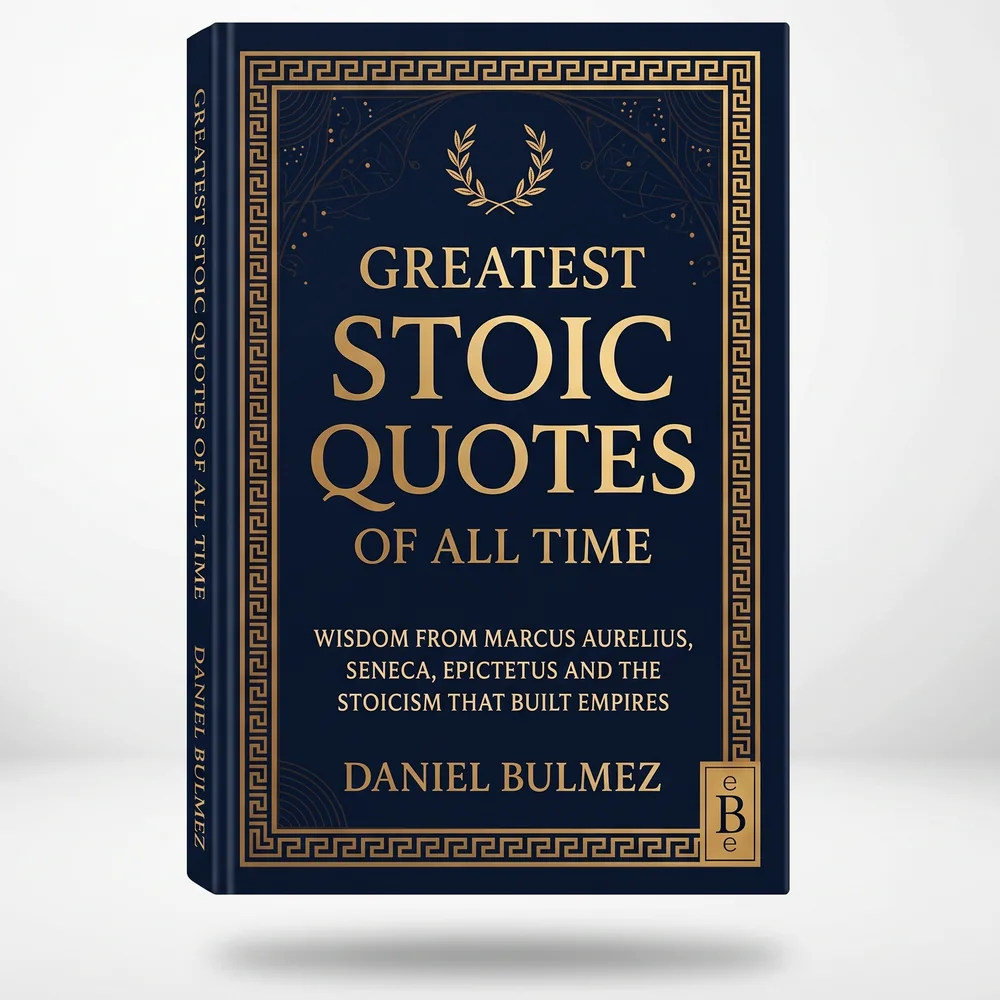
One quote helps for a moment. Greatest Stoic Quotes of All Time collects 152 passages from Marcus Aurelius, Seneca, and Epictetus, sorted into 18 categories by the actual problem you’re facing — anxiety, grief, anger, ambition — each with a plain-language reflection and, where it matters, the real context behind the quote instead of the stripped-down version that goes viral.
Daniel Bulmez is the author of Greatest Stoic Quotes of All Time, available now.