


There’s a specific kind of kid who can’t walk past a book of facts without opening it — and a specific kind of parent who ends up reading it over their shoulder and forgetting what they were doing. Fact books are different from other kids’ books: no plot to follow, no chapters to finish. Open to any page, walk away five minutes later knowing something new. That’s the whole appeal, and it’s why the good ones get read cover to cover, then picked up again a year later.
Here are nine of the best, mixing household names with two newer additions worth knowing about.
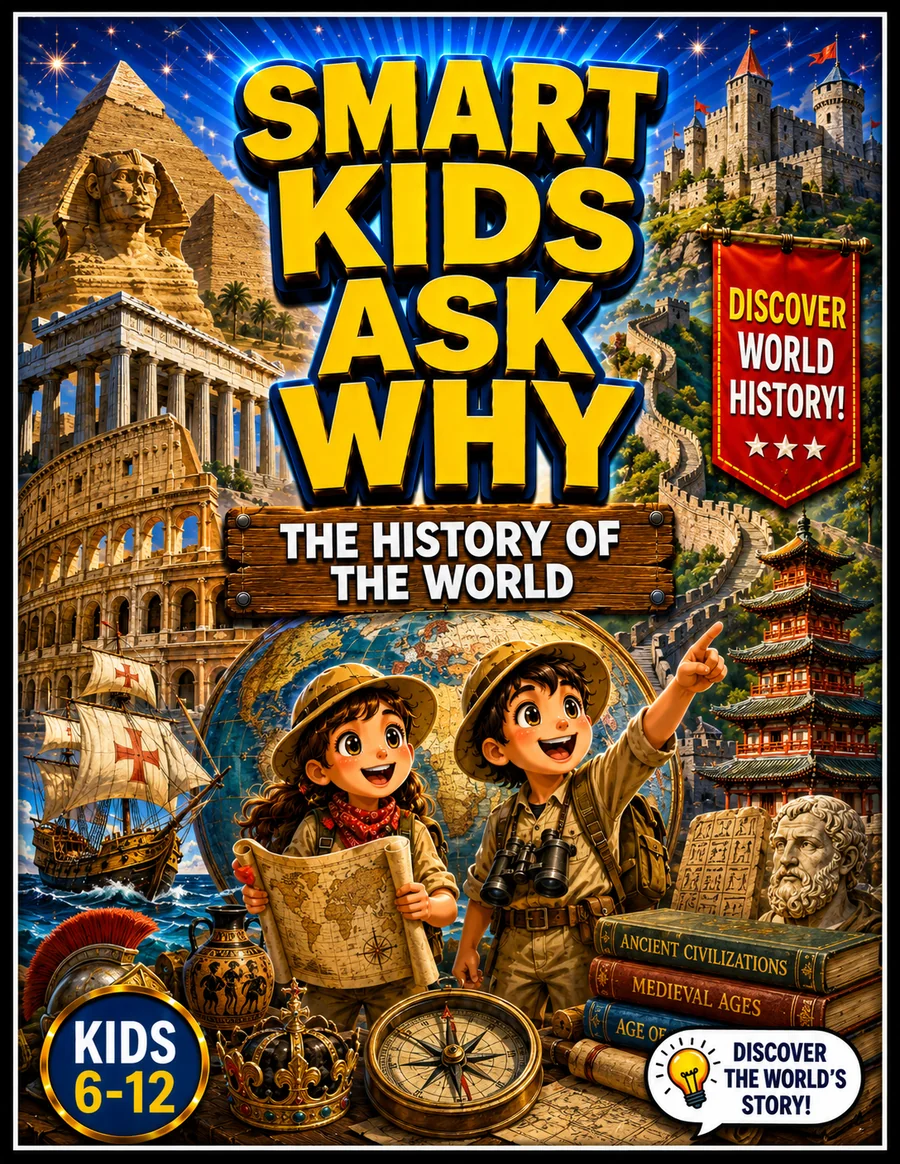
1. Smart Kids Ask Why: The History of the World
Most fact books scatter their content across unrelated topics — a fact about sharks next to a fact about volcanoes. This one walks kids through the actual sweep of human history instead, from ice-age campfires to the moon landing, one big moment per page. Each spread pairs a full-page illustration with four bite-sized facts and a bonus “fun fact,” so kids get the payoff of a fact book with the pull of a story that’s actually going somewhere. A recurring kid explorer character keeps younger readers oriented across 17 chapters — a good pick for a kid who likes facts but gets lost when a book jumps randomly between topics.
2. Smart Kids Ask Why: Dinosaurs!
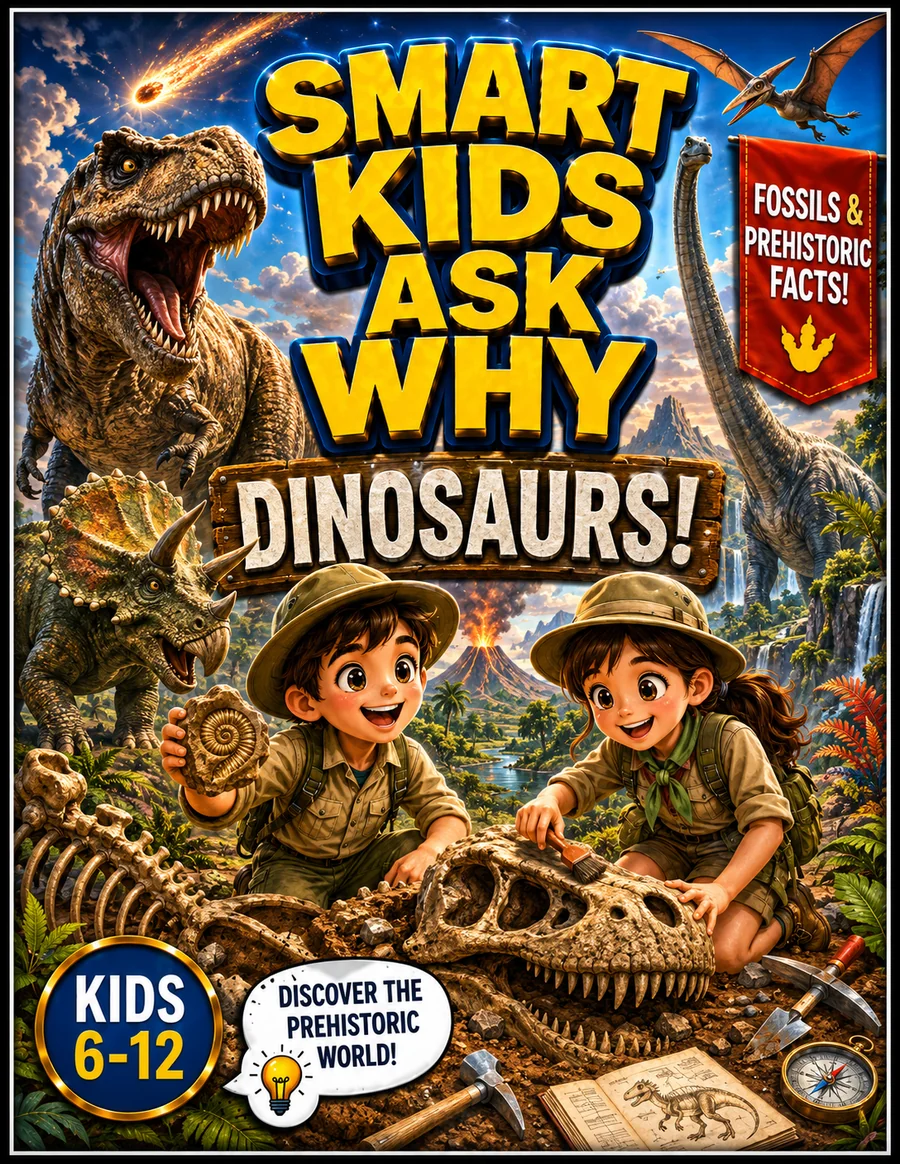
For the kid whose fun facts are all dinosaur facts, this one goes deep instead of wide. Every page opens with a “why” question — why did T. rex have such tiny arms, why did some dinosaurs have feathers — and answers it in full-color illustrated spreads. It builds out profile-card style pages on roughly 20 famous dinosaurs, including the usual favorites like T. rex alongside bigger surprises like Giganotosaurus, so kids who’ve already memorized the basics still find new material.
3. National Geographic Kids: Weird But True!
The book that basically defined the modern kids’ fact-book format. Each entry is a short, punchy, genuinely odd fact — paired with a photo — and the “weird” framing means kids remember them long after they’d forget a plain trivia list. It’s grown into a huge numbered series (Weird But True 1 through 10-plus, with spinoffs like Weird But True World), so once your kid finishes one, there are a dozen more waiting.
4. National Geographic Kids: 5,000 Awesome Facts (About Everything!)
If Weird But True is bite-sized, this is the buffet. It’s organized into two-page topic spreads — dinosaurs, space, animals, history, and more — packed with over a thousand photos across its volumes. It’s less about any single wow-fact and more about giving a kid a book they can flip open anywhere and land on something interesting, which makes it a natural next step after they’ve outgrown board-book fact collections.
5. Guinness World Records
The original, and still the gold standard for a certain kind of kid — the one who wants to know who’s the tallest, the fastest, the most anything. The annual edition refreshes a huge share of its content every year, so it doesn’t go stale the way some fact books do, and the record-format facts (longest fingernails, biggest pizza, most stacked cups) are exactly the kind kids repeat at the dinner table.
6. Ripley’s Believe It or Not!
Where Guinness does records, Ripley’s does the bizarre and barely-believable — strange-but-true stories, oddities, and facts that make kids do a double take. The “Just For Kids” line is built specifically for the 8-to-12 range, with the same photo-heavy, short-entry format that makes it easy to dip in and out of.
7. DK: Did You Know? Fact Encyclopedia
DK’s fact books lean into a question-and-answer structure, which works especially well for kids who ask a lot of “but why” follow-ups anyway. The core Fact Encyclopedia covers hundreds of questions across broad topics, and DK has spun off subject-specific volumes (animals, space, Earth) for kids who want to go deeper on one thing instead of everything.
8. Uncle John’s Bathroom Reader: For Kids Only
The book that kicked off an entire series aimed at exactly the reading habits real kids actually have — short entries, sorted by how long they take to read, covering everything from science to pop culture to genuinely gross facts. It’s less polished than the National Geographic or DK books, and that’s part of the charm: it reads like it was built by people who remember being a kid who wanted the weird stuff, not the tidy stuff.
9. Britannica All New Kids’ Encyclopedia
The most reference-like book on this list, but don’t let “encyclopedia” scare you off — it’s organized thematically rather than A-to-Z, built by Britannica’s editorial team with input from over a hundred expert consultants, and broken into chapters that each end with a quiz. It’s the pick for a kid who’s ready to graduate from scattered fun facts into something closer to real general knowledge, without losing the fun.
How to pick
If your kid wants short, standalone, easy-to-quote facts, start with Weird But True or Guinness World Records — both are built for reading in two-minute bursts. If they want facts that connect into something bigger, The History of the World or the Britannica encyclopedia will hold their attention longer. And if dinosaurs are the obsession of the moment, Dinosaurs! goes deeper than any general fact book will.
Most fact-hungry kids end up wanting more than one of these — that’s normal, and honestly the whole point. The goal isn’t to pick “the” right book, it’s to keep a stack going so there’s always something new to open.
Daniel Bulmez is the author of the Smart Kids Ask Why book series, available on this store and on Amazon.