

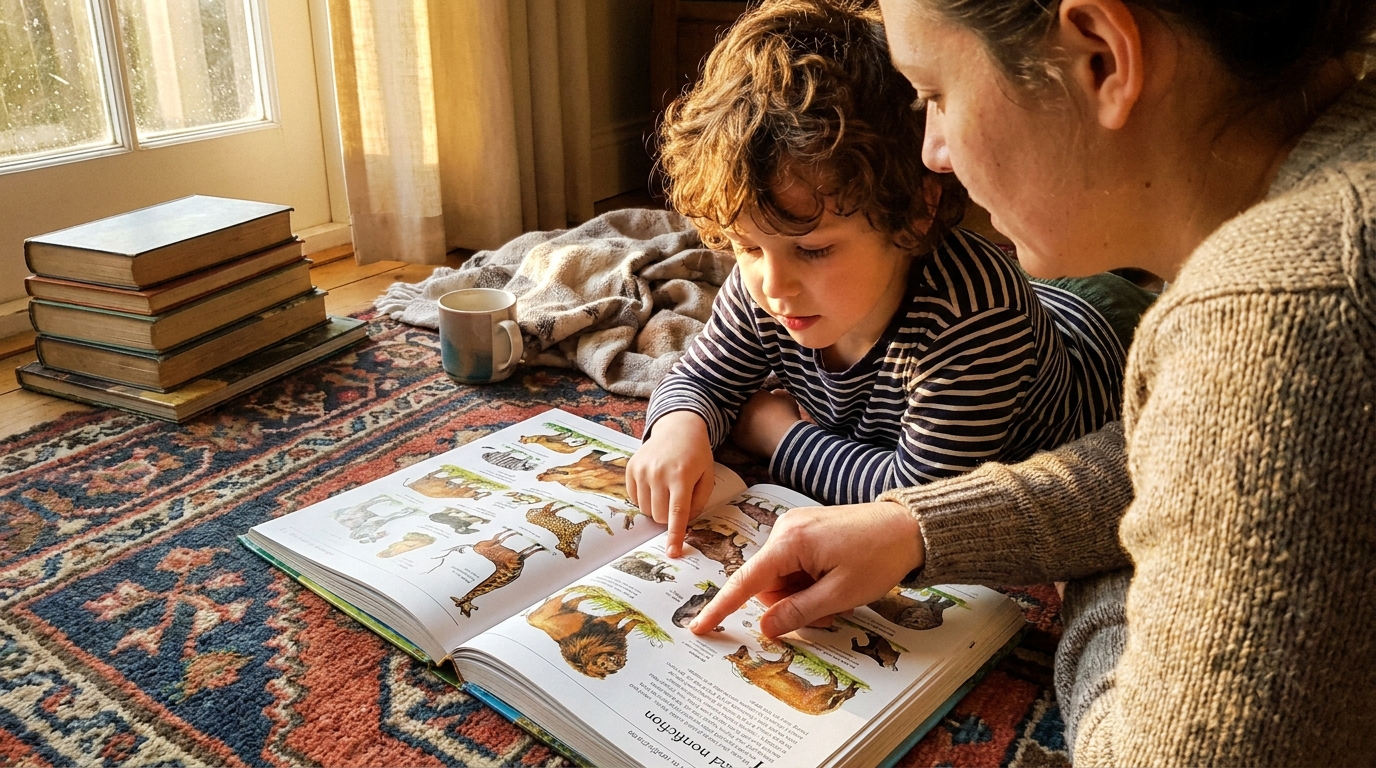
Why kids outgrow the flaps (and what they actually want next)
Usborne’s Lift-the-Flap Questions and Answers series is often the first “real” nonfiction a toddler owns. Sturdy board-book flaps, one fact hiding under each one, built for small hands that are still learning to turn pages gently. It’s a great series — but most kids age out of it by six or seven. The flaps start tearing, the questions start feeling too simple, and the “why is the sky blue” phase turns into “no, but actually why.”
The good news: the format that made those books work — a question up top, a clear answer below, bright illustrations doing half the explaining — doesn’t disappear once the flaps do. It just moves into books with more pages, more chapters, and no die-cut cardboard to rip. Here are 9 of them.
1. Smart Kids Ask Why: The History of the World
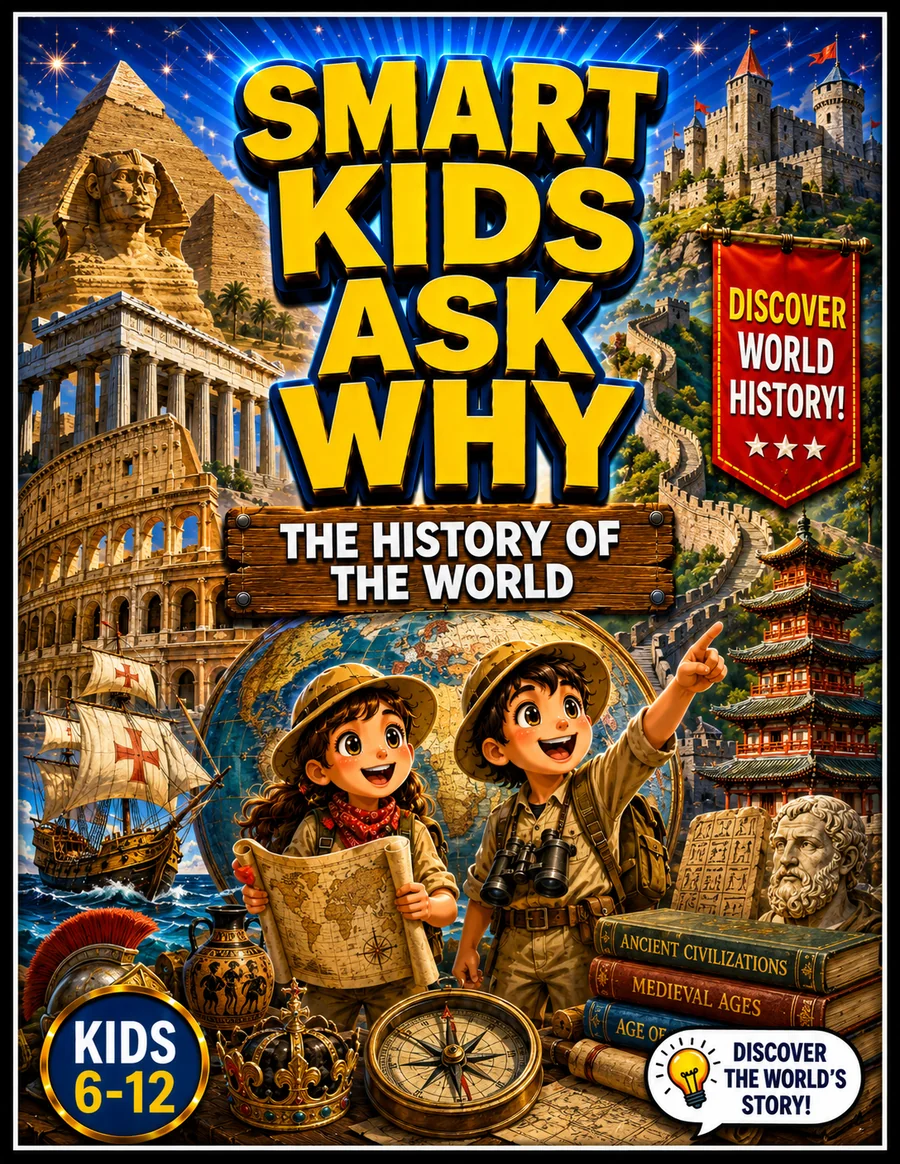
This is the natural next step for a kid who grew up on Usborne’s question-and-answer format: every page opens with a “why,” answers it with a full-page illustration and four bite-sized facts, and closes with an extra fun fact for the kid who always wants one more. Across 101 full-color pages and 17 chapters, a recurring kid explorer walks readers from ice-age campfires to the moon landing — one big moment per page, in the same “ask a question, get a real answer” rhythm the flap books started. Built for ages 7 and up, right when the flaps stop being enough.
2. Smart Kids Ask Why: Dinosaurs!
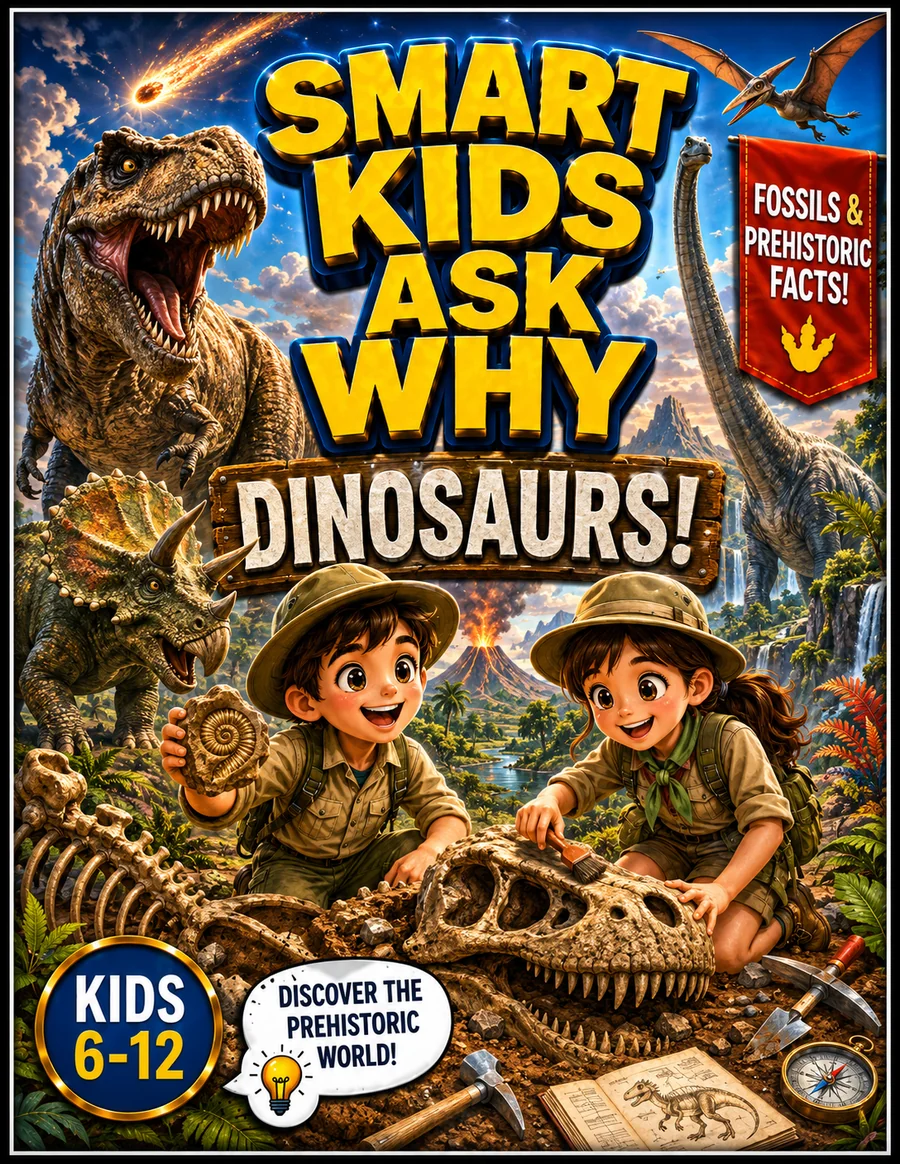
Same “why” format, dinosaur-obsessed edition. Every one of its 112 full-color pages opens with a question, and profile-card spreads dig into roughly 20 famous dinosaurs, including the T. rex and the lesser-known but genuinely enormous Giganotosaurus. If your kid’s Usborne flap book was the dinosaur one, this is where that fascination goes next — deeper facts, real chapters, nothing to peel off.
3. Why?: The Best Ever Question and Answer Book, by Catherine Ripley
A longtime favorite in the same spirit as Usborne’s Q&A line: real kid-asked questions about nature, space, and the human body, answered directly and illustrated throughout. It reads almost exactly like a flap book with the flaps removed — short question, short answer, next page — which makes it an easy bridge for a kid who isn’t ready for denser nonfiction yet.
4. National Geographic Kids Why?: Over 1,111 Answers to Everything
Where the Usborne series answers a curated handful of questions, this one goes wide — hundreds of quick Q&A entries covering animals, space, the human body, and plain weird trivia, laid out with National Geographic’s usual wall-to-wall photography. It’s less a story and more a browsing book, which is exactly what some kids want at this stage: flip anywhere, land on something interesting.
5. Usborne Big Book of Big Questions, by Susan Meredith
For families who liked the Usborne house style specifically, this is Usborne’s own next step up — same illustrated, question-led approach, but aimed at bigger, more abstract questions (“is time travel possible,” “what happens when you die”) that a five-year-old wouldn’t ask but a nine-year-old will. No flaps, more text per spread, same publisher.
6. DK Findout! Encyclopedia
DK’s Findout! line trades the strict question-and-answer format for topic spreads, but the reading experience is nearly identical to flipping through a flap book: big captioned photos, short fact panels, nothing that demands to be read start to finish. It’s a good pick for a kid who loved the browsing part of the Usborne books more than the question format itself.
7. Britannica All New Kids’ Encyclopedia: What We Know & What We Don’t
A genuinely huge general-knowledge volume, and one of the few kids’ encyclopedias that’s honest about the difference between settled science and open questions — a nice next layer of nuance for a kid who’s outgrown “here’s the one true answer” and is ready for “here’s what scientists are still figuring out.”
8. National Geographic Kids Weird But True!
Less question-and-answer, more one-wild-fact-per-page — but it scratches the same itch that made the flap books addictive: a small, self-contained hit of “did you know,” over and over. Popular with reluctant readers because there’s no obligation to read it in order or even read the whole page.
9. DK Timelines of Everything
A different organizing idea entirely — chronological instead of topic-by-topic — but the same “open anywhere, learn one thing, close it happy” appeal that made the Usborne flap books work as a bedtime book. Good for a kid who’s started asking not just “why” but “when,” and wants to see how everything lines up.
How to pick
If your kid loved the “one flap, one fact” rhythm most of all, start with National Geographic Kids Weird But True! or DK Findout! Encyclopedia — both keep that bite-sized, browse-anywhere feel. If they were the type to ask “but why” five times in a row, Smart Kids Ask Why: The History of the World, Smart Kids Ask Why: Dinosaurs!, or Why? by Catherine Ripley keep the real question-and-answer format intact. If they’re ready for bigger, harder questions, Usborne Big Book of Big Questions or the Britannica encyclopedia are the step up. And if the timeline of history is what’s actually clicking for them right now, DK Timelines of Everything or The History of the World will hold their attention longest.
Most kids end up wanting a mix — one book for bedtime browsing, one for the questions that come out of nowhere at dinner. That’s normal, and it’s exactly what this list is for.
Daniel Bulmez is the author of the Smart Kids Ask Why book series, available on this store and on Amazon.