We Are What We Repeatedly Do: The Quote Aristotle Never Said
"We are what we repeatedly do" is attributed to Aristotle, but Will Durant wrote it. Here is where it came from and what Aristotle really said about habit.
 Daniel
October 3, 2026
4 min read
Daniel
October 3, 2026
4 min read

You have seen it on gym walls, in commencement speeches, and in a thousand motivational posts, always with the same name underneath:
“We are what we repeatedly do. Excellence, then, is not an act, but a habit.” — Aristotle
It is a good line. It is also not Aristotle’s. The words belong to the historian Will Durant, and the real story of where they came from is more useful than the poster version.
Who Actually Wrote It
Will Durant was summarizing Aristotle’s ethics for a general audience. The passage appears in his 1926 book The Story of Philosophy, in the chapter on Aristotle, and the same wording is already in an earlier pamphlet of his, The Story of Aristotle’s Philosophy, published in 1923. Here is the sentence as Durant wrote it:
“Excellence is an art won by training and habituation: we do not act rightly because we have virtue or excellence, but we rather have these because we have acted rightly; ‘these virtues are formed in man by his doing the actions’; we are what we repeatedly do. Excellence, then, is not an act but a habit.”
Notice what the poster version removed. It is one long sentence, not two slogans. The line “we are what we repeatedly do” is the end of a clause, and the single quotation marks inside it mark where Durant is quoting Aristotle directly. The part everyone shares is Durant’s own summary. It is easy to see why the name drifted: Aristotle carries more authority than a historian, and a line sounds stronger with the bigger name under it.
What Aristotle Actually Said
The idea is genuinely his. In the Nicomachean Ethics, Book II, he argues that virtue is not something you are born with or reason your way into. It is built by practice. In W. D. Ross’s translation: “we become just by doing just acts, temperate by doing temperate acts, brave by doing brave acts.” And more briefly: “states of character arise out of like activities.”
Then comes the line that carries the real weight: “It makes no small difference, then, whether we form habits of one kind or of another from our very youth; it makes a very great difference, or rather all the difference.”
So the quote is fair as a summary, but it is a summary. Durant compressed an argument into a sentence people could repeat. That is a skill worth admiring on its own.
The Part the Poster Gets Wrong
The shortened quote makes habit sound like a motivational push: do the thing every day and greatness arrives. Read the full sentence and the order is the opposite. We do not act rightly because we have virtue; we have virtue because we acted rightly, over and over, before we felt it.
That reverses how most people wait. They wait to feel confident before they speak up, disciplined before they start, calm before they handle the hard conversation. Aristotle’s claim is that the doing comes first and the identity follows. You are not what you intend, or what you believe about yourself on a good day. You are what the last hundred ordinary days added up to.
It also carries a warning, which the poster leaves out. The same mechanism builds bad character as readily as good. Aristotle says virtue and vice are produced and destroyed by the same means. A person who interrupts, deflects, or avoids a little every day is practicing, and they are getting good at it.
Putting It to Work This Week
Skip the vague resolution and run a short audit instead.
- Pick one behavior people notice about you. How you open a meeting, how you respond to criticism, how you end an email. Choose something small and repeatable.
- Count it for five working days. Not what you meant to do. What you did. Honest repetition data is rarely flattering and always useful.
- Change one rep, not the whole pattern. Next time, do the better version once. Then again. Durant’s point, and Aristotle’s, is that character is assembled one repetition at a time.
This matters most in how you communicate, because that is the habit others experience directly. Nobody sees your intentions. They see your repeated pattern of how you speak, listen, and respond under pressure.
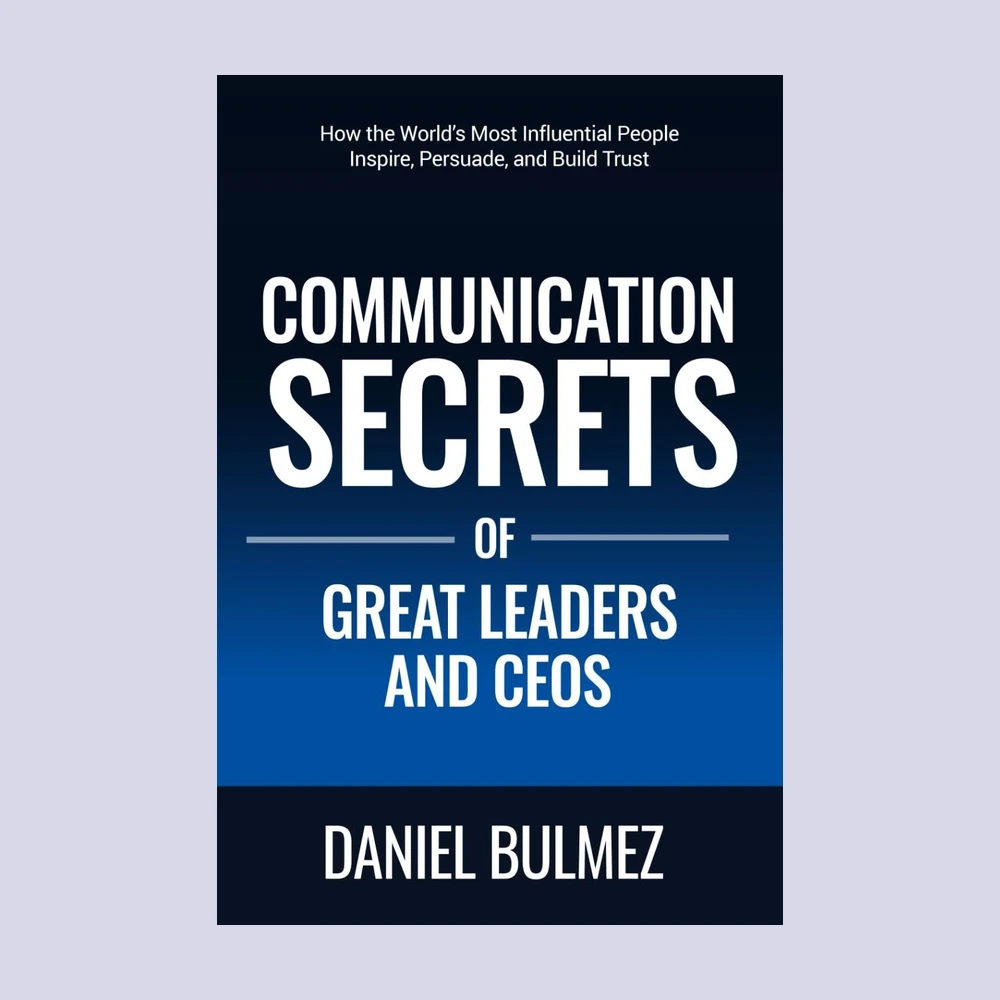
For a structured look at how top executives build those patterns on purpose, from how they open a meeting to how they handle the sentence that could lose the room, Daniel Bulmez’s Communication Secrets of Great Leaders and CEOs breaks down the specific habits the most effective leaders return to daily, and why they work.
Daniel Bulmez is the author of Communication Secrets of Great Leaders and CEOs, available on Amazon.