How to Give Constructive Feedback People Actually Listen To
Most feedback fails before the second sentence. How to give constructive feedback that gets heard: be specific, name the impact, and skip the feedback sandwich.
 Daniel
October 6, 2026
6 min read
Daniel
October 6, 2026
6 min read

Most feedback fails in the first ten seconds. Not because the content was wrong, but because the person receiving it stopped listening somewhere around “Do you have a minute?” Their heart rate went up, their guard went up, and everything you said after that was filtered through one question: am I in trouble?
If you manage people, mentor people, or simply work next to people, you will have to say things they don’t want to hear. The skill isn’t finding a gentle way to say nothing. It’s saying the true thing in a form the other person can actually use. Here’s how.
Decide What the Feedback Is For
Before you say a word, ask yourself what you want to be different afterward. If the honest answer is “I want them to know I’m annoyed,” stop. That isn’t feedback, it’s venting, and the other person will feel the difference even if they can’t name it.
Useful feedback has a purpose you can state in one sentence: I want the client reports to go out with the numbers checked. I want you to stop interrupting in team meetings. If you can’t write that sentence, you’re not ready to deliver the conversation. Do that thinking first, privately, and the conversation gets shorter and kinder.
Describe What Happened, Not Who They Are
The most common mistake is feedback about character: “You’re careless.” “You’re not a team player.” “You have an attitude problem.” Each of these is a verdict, and a verdict can only be defended against or accepted. Neither helps.
A far more useful structure is one the Center for Creative Leadership has taught for years, called Situation-Behavior-Impact:
- Situation: where and when it happened. “In Tuesday’s client call…”
- Behavior: what you actually saw or heard, the way a camera would record it. “…you spoke over Dana twice while she was explaining the timeline.”
- Impact: what it caused. “She stopped contributing, and the client left without the full picture.”
Notice what’s missing: any guess about why they did it. You don’t know their motive, and offering one turns a conversation about behavior into an argument about intent. Describe the camera footage and the effect. Then stop and let them respond.
Be Specific Enough to Act On
“Your presentation needs work” gives someone nothing to do. “Your first slide had eleven bullet points, and I lost the main point by the third” gives them something to fix by Friday.
The test is simple: after hearing your feedback, could the person tell exactly what to do differently next time? If not, you’ve given them a feeling, not a direction. Vague criticism is also quietly cowardly. It lets the giver feel they’ve been honest while leaving the receiver to guess.
Skip the Feedback Sandwich
You’ve probably been taught the feedback sandwich: a compliment, then the criticism, then another compliment. It feels kind. In practice it tends to backfire. People learn the pattern fast, and after a few rounds every compliment sounds like a warning that the “but” is coming. Worse, the real message gets buried between two soft slices of bread, and the person walks away remembering the praise and missing the point.
A better approach is to separate the two. Give genuine praise when it’s earned, on its own, with specifics, at a moment unrelated to any criticism. Then, when you have something hard to say, say it directly and respectfully, without the padding. This is close to what Kim Scott calls “radical candor” in her book of the same name: caring personally while challenging directly. The caring shows in how you deliver it, not in a decoy compliment.
Choose the Time, the Place, and the Medium
Timing changes how feedback lands. Do it soon enough that the incident is still fresh, but not in the heat of the moment, and never in front of an audience. Praise can be public. Criticism almost never should be.
Choose a real conversation over a message whenever the stakes are high. Written feedback strips out tone, and the reader will supply their own, usually the harshest available. A short note confirming what you discussed is fine. The note shouldn’t be the first they hear of it.
Ask, Then Listen
Feedback is a two-way conversation, not a delivery. After you’ve described the situation, ask: “How did it look from your side?” Sometimes you’ll learn something that changes your view entirely: the deadline moved, the instructions were unclear, the data you assumed they had never reached them. Sometimes you won’t, and you’ll still have shown them they’re being treated as a colleague, not a defendant.
When they respond, listen to understand before you reply. If you want a method for this, the principles in active listening apply directly: reflect back what you heard, and don’t start building your rebuttal while they’re still talking.
Expect a reaction. Some people go quiet, some get defensive, some get emotional. Researchers Douglas Stone and Sheila Heen, authors of Thanks for the Feedback, point out that people resist feedback for three reasons: they doubt the content is true, they dislike the person giving it, or it threatens their sense of who they are. You can’t control the third one, but you can avoid triggering it by sticking to behavior, not character. And if the reaction is strong, it’s fine to pause and return to it tomorrow.
End With Agreement on What Happens Next
A feedback conversation that ends in a warm silence has changed nothing. Close by agreeing on the next step: what will be different, by when, and how you’ll both know. Then follow up. Noticing improvement and saying so is the single most effective way to make the next round of feedback easier, because it proves the process leads somewhere.
Feedback Is a Leadership Skill, Not a Personality Trait
Some people seem naturally good at hard conversations. Most are just practiced. The habits above are learnable: define the purpose, describe the behavior, name the impact, ask a question, agree on the next step. They also connect to the broader skills of difficult conversations at work, staying direct without becoming harsh as described in assertiveness at work, and the day-to-day interpersonal skills that make people willing to hear you in the first place. If you manage a team, team communication skills for managers is a natural next read.
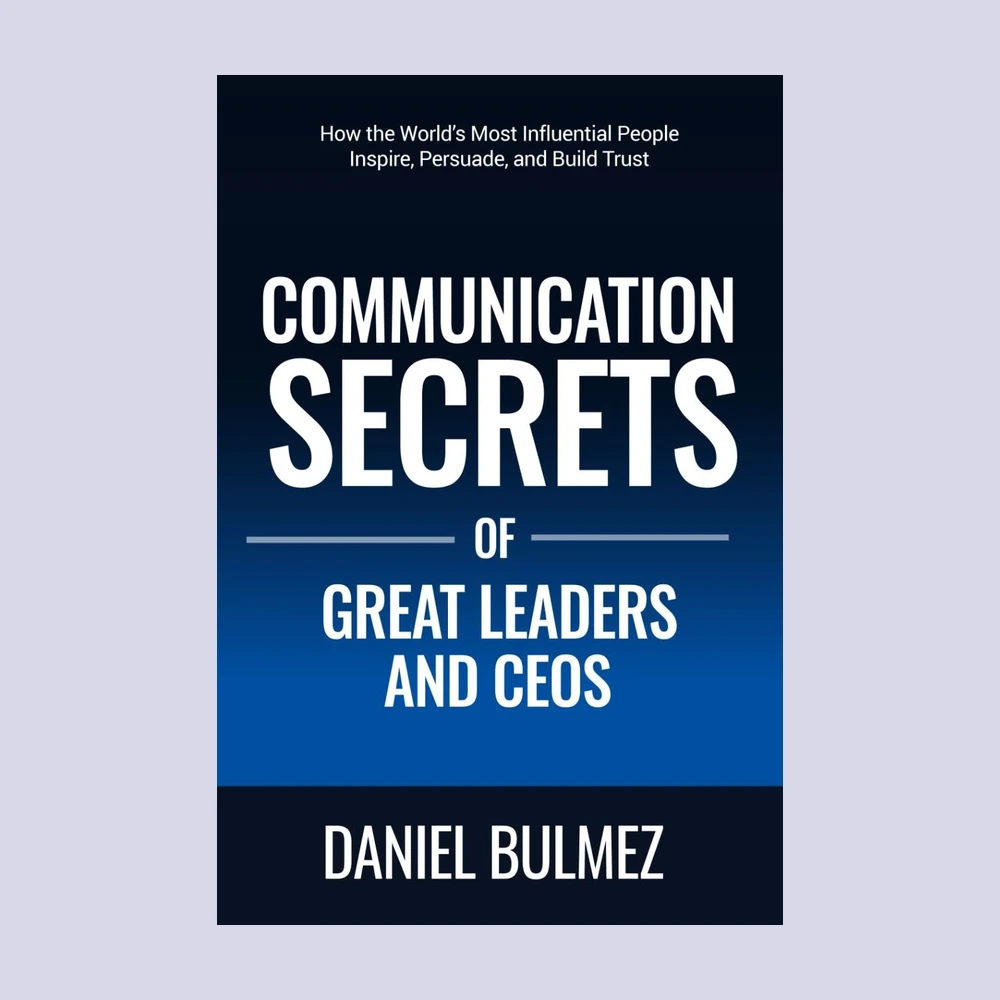
The best leaders don’t avoid hard feedback, and they don’t deliver it carelessly. They say the true thing, clearly and with care, to someone they want to succeed. Communication Secrets of Great Leaders and CEOs studies how leaders handle exactly these high-stakes moments, the ones where what you say and how you say it decide whether trust grows or breaks. If you want the deeper playbook, Communication Secrets of Great Leaders and CEOs breaks it down in full.
Daniel Bulmez is the author of Communication Secrets of Great Leaders and CEOs, available on Amazon.