Our Deepest Fear Is That We Are Powerful Beyond Measure: The Quote Mandela Never Said
Marianne Williamson wrote "Our deepest fear is that we are powerful beyond measure." Mandela never said it. Here is the source and what it asks of you.
 Daniel
October 17, 2026
4 min read
You have seen it on a poster, in a commencement speech, or in a movie scene where someone reads it aloud and the room goes quiet:
“Our deepest fear is not that we are inadequate. Our deepest fear is that we are powerful beyond measure.”
It is one of the most shared passages about fear ever written, and most people attach the wrong name to it. It was not Nelson Mandela’s. Here is who wrote it, why the mix-up stuck, and what the line asks of you that the poster version usually leaves out.
Who Wrote It (and Who Didn’t)
The passage comes from Marianne Williamson’s A Return to Love, published by HarperCollins in 1992, in chapter 7. Williamson is an American author and speaker who has taught A Course in Miracles for decades, and this was her first book. The very next line in the book is: “It is our light, not our darkness that most frightens us.”
The Mandela attribution is everywhere, often tied to his 1994 inaugural address. It does not hold up. The Nelson Mandela Foundation issued a statement in November 2007 saying he did not use the quotation in any of his three inauguration addresses of May 1994, and that it comes from A Return to Love. The foundation’s archivist added that, as far as she knew, he never used it in any speech.
The error is older than most people assume. Quote Investigator found it circulating by 1996, and a 1998 New York Times article had already pointed out that commencement speakers were crediting Mandela for words he never spoke. Films such as Coach Carter (2005) later echoed the passage, but the misattribution came first. How it began is unknown. Williamson herself has said she has no idea where the story came from, and that she would have been honored if Mandela had said it.
What the Line Is Actually Saying
Most advice about fear assumes you are afraid of failing. Williamson’s claim is stranger and more uncomfortable: some of what holds us back is the fear of succeeding. Being visible, being capable, and then being held to it.
That is my reading of the passage, not a quotation, but the wording supports it. The sentence turns on a contrast between “inadequate” and “powerful.” Feeling inadequate is familiar, and in a quiet way it is safe. If you are not good enough, nobody can expect much of you. If you are capable, the excuses stop working.
Notice the order, too. She does not say we fear our weakness. She says we fear our light. The thing we are avoiding is not the shadow side of us. It is the part that could actually change the room.
Where This Shows Up at Work
This kind of fear rarely announces itself. It looks like good professional manners. Four common disguises:
- The held-back idea. You have the better solution, and you let the meeting end without offering it because someone more senior is talking.
- The deflected compliment. “Oh, it was nothing, the team did it all.” Sometimes true. Often it is a reflex to avoid being the person who did the thing.
- The waiting list. You do not apply for the role until you meet every listed requirement, then watch someone else take it.
- The permanent helper. You stay in the supporting role because leading means your work gets judged in public.
None of these feel like fear. They feel like modesty, teamwork, or being realistic. That is exactly why they last for years.
Three Moves for This Week
- Catch the deflection. The next time someone compliments your work, say “Thank you” and stop. Do not add a disclaimer. It will feel oddly exposed for about three seconds.
- Say the idea first. In your next meeting, offer one concrete proposal before hearing everyone else’s. A small, specific suggestion is enough.
- Take one stretch step. Apply, ask, or volunteer for something you have been telling yourself you are not ready for. If the full version is too big, do the first small piece: send the two-line email asking about the role.
Afterward, write one line about what actually happened. Fear forecasts embarrassment. The record usually shows something much milder, and that record is what makes the next step easier.
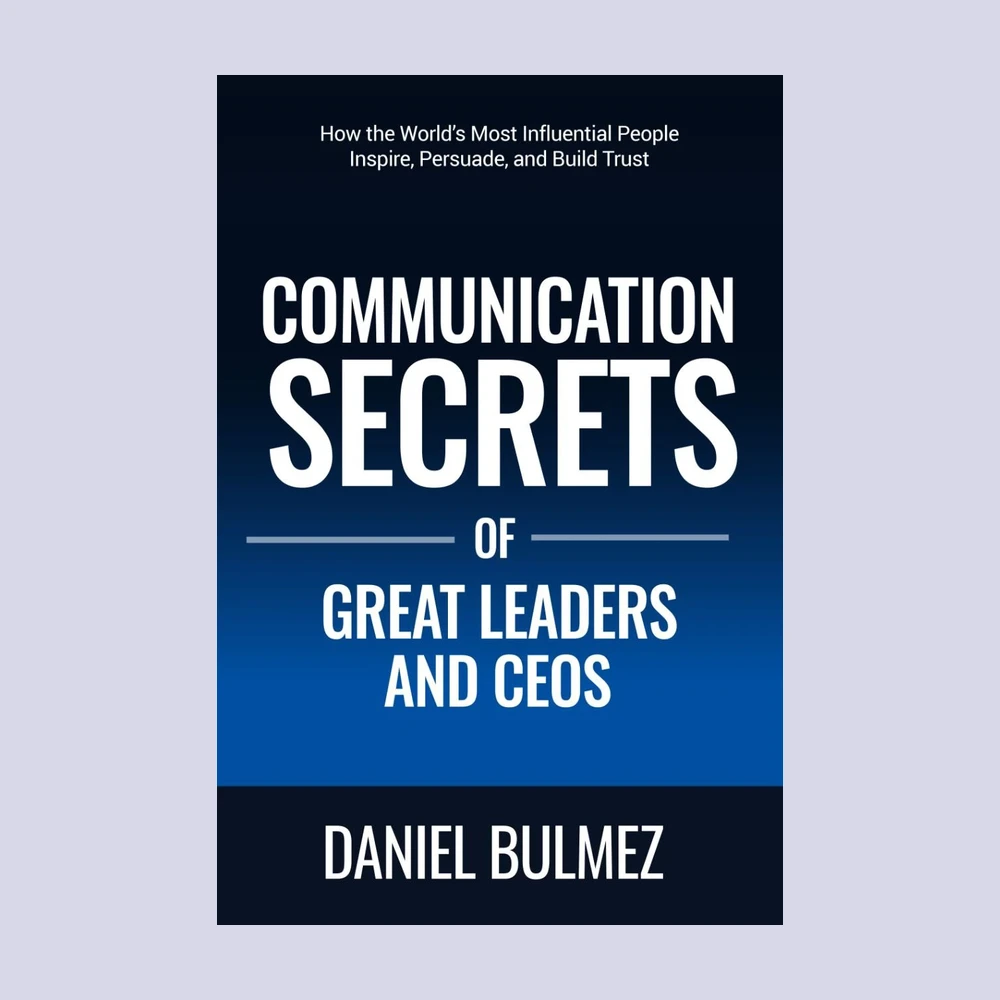
Speaking up with presence is also a learnable skill, not just a matter of courage. For the specific phrasing effective leaders use to claim credit, make a case, and take the lead without apologizing, Daniel Bulmez’s Communication Secrets of Great Leaders and CEOs breaks down what the strongest communicators say and do when the stakes are high.
Daniel Bulmez is the author of Communication Secrets of Great Leaders and CEOs, available on Amazon.