Be the Change You Wish to See in the World: The Gandhi Quote He Never Said
Gandhi never said "Be the change you wish to see in the world." Here is what he actually wrote in 1913, where the slogan came from, and how to use it.
 Daniel
October 24, 2026
4 min read

You have seen it on a mug, in a graduation speech, and under a thousand photos of sunsets:
“Be the change you wish to see in the world.”
It is credited to Mahatma Gandhi so often that questioning it feels almost rude. But there is no record that he ever said or wrote those words. What he did write is stranger, and in one respect harder to live up to than the slogan.
Where the Quote Really Comes From
Researchers who have gone looking, including Quote Investigator and the editors of Wikiquote, report the same thing: the sentence does not appear in Gandhi’s writings, including the roughly 98 volumes of his Collected Works. Both also cite a 2011 New York Times essay by Brian Morton that found no reliable evidence for it.
The closest authentic text is a passage from a health column Gandhi wrote in the Gujarati edition of Indian Opinion on 9 August 1913. It sits in a series on general health knowledge, in a chapter about snake bites, and it argues that a person’s inner state shapes what they meet in the world. These are the sentences usually cited:
“If we could change ourselves, the tendencies in the world would also change. As a man changes his own nature, so does the attitude of the world change towards him. … We need not wait to see what others do.”
Notice what is missing. There is no slogan, no instruction to “be” anything on display. It is a claim about cause and effect: change yourself, and your experience of the world shifts with you.
The slogan has a later and much less famous ancestor. The earliest close match Quote Investigator found in print is from 1974, in a chapter by the teacher Arleen Lorrance about her “Love Project”: “One way to start a preventative program is to be the change you want to see happen.” The first attribution to Gandhi that researchers have found appeared in a New Mexico newspaper on 22 March 1987, and it was already in the “in the world” form. Nobody has documented exactly how the name got attached.
Why the Misquote Is Not the Real Lesson
The popular version works as a motto, but it is vague. “Be the change” does not tell you which change, or what to do on Tuesday morning. Gandhi’s actual sentence is more demanding because of its last line: we need not wait to see what others do.
That line removes the best excuse most of us have. “I would be more patient if my manager were.” “I would speak up if the culture allowed it.” “I will start once everyone else does.” Gandhi’s passage says the waiting is the mistake.
What This Looks Like at Work
Whichever version you prefer, the practical question is the same: what is one behavior you want to see more of around you, and are you doing it first? Four examples:
- You want meetings to start on time. Be the person who is there at the start, every time, for a month.
- You want honest feedback. Ask for it out loud, and respond to the first critical answer with “thank you” instead of a defense.
- You want less gossip. Stop adding to it. You do not have to lecture anyone; changing the subject is enough.
- You want a calmer team. Lower your own volume and speed in the next tense conversation, and see who matches you.
One caution, and it is my reading rather than anything Gandhi wrote: modeling a behavior is not a guarantee that others follow. Sometimes they do not, and sometimes it takes months. The case for going first is not that it always works. It is that it is the only part you control.
Three Moves for This Week
- Pick one behavior. Finish the sentence “I wish people around me would more often…” with something specific and observable.
- Do it yourself, visibly, for five days. No announcement and no commentary on anyone else.
- Write down what changed. Note any change in your own mood, and any change in how others respond. Count the first, and treat the second as a bonus.
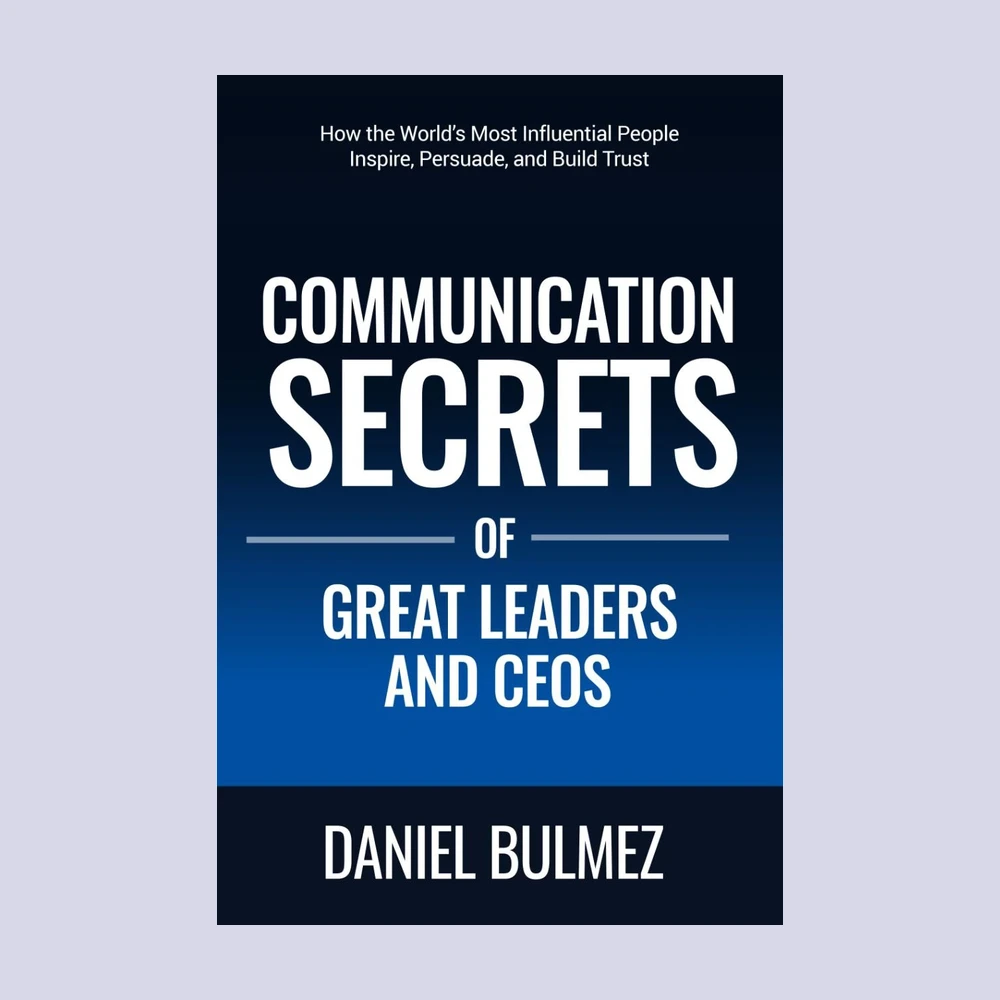
Leading by example is also a communication skill: what you say, how you say it, and when you stay silent all teach the room what is normal. For the specific language strong leaders use to set the tone without lecturing, Daniel Bulmez’s Communication Secrets of Great Leaders and CEOs breaks down what the best communicators say and do when others are watching.
Daniel Bulmez is the author of Communication Secrets of Great Leaders and CEOs, available on Amazon.