How to Run a Meeting People Don’t Dread
Learn how to run a meeting people value: a clear purpose, a tight agenda, fair airtime and a decisive close, with word-for-word scripts you can use today.
 Daniel
October 22, 2026
7 min read

You know the meeting. Eight people on a call, no agenda, and someone opens with “So, what do we want to cover?” Twenty minutes in, the loudest voice has taken over, two people are quietly answering email, and the one person who actually knows the answer hasn’t said a word.
It ends with “Let’s circle back.” Everyone knows that means nothing was decided.
People don’t hate meetings. They hate meetings that waste them. The difference between a meeting people dread and one they’d miss comes down to a handful of communication habits, and almost all of them happen before and after the meeting itself. Here’s how to run one properly.
1. Decide If You Need the Meeting at All
The best way to run a good meeting is to skip the bad one. Before you send an invite, ask what the meeting is for. There are really only a few legitimate reasons:
- To make a decision that needs several people in the room.
- To solve a problem that benefits from live back-and-forth.
- To align on something where tone and nuance matter.
- To work through something sensitive that shouldn’t be handled in writing.
If the purpose is “share an update,” that’s an email or a short written note. If it’s “get everyone’s input,” a shared document often does it better. A useful test: if nobody would need to speak, don’t call a meeting.
2. Write the Purpose in One Sentence
If you can’t say what the meeting is for in a single sentence, the meeting isn’t ready. And “weekly sync” is a label, not a purpose.
Compare:
- “Project sync.”
- “Decide whether we launch on the 15th or push to the 29th.”
The second one tells every person what they’re there to do. Put that sentence at the top of the invite. It also gives you something to point back to when the conversation drifts: “We’re here to settle the launch date. Can we park that for another time?”
3. Invite Fewer People Than You Think
Every extra person adds cost and subtracts candor. Amazon is famous for the “two-pizza team” idea: if a team can’t be fed by two pizzas, it’s too big. The same logic works for meetings.
A simple rule: invite the people who must decide and the people who hold information the decision depends on. Everyone else gets the notes afterward. Telling someone “you don’t need to attend, I’ll send you what we decide” is a courtesy, not a snub. Most people will thank you.
4. Send a Real Agenda, in Advance
A real agenda isn’t a list of topics. It’s a list of questions with a time attached.
- “Launch date: 15th or 29th? (15 min)”
- “What’s the biggest risk to the 15th? (10 min)”
- “Who owns what from here? (5 min)”
Send it at least a day before, with any reading attached. This does two things. People arrive prepared, and the quieter ones get time to think, which means they contribute instead of nodding.
5. Open Strong in the First 60 Seconds
The first minute sets the tone for the next hour. Skip the five minutes of waiting for stragglers and the “so, I guess we’ll get started.” Start on time and say three things:
- The purpose: “We’re here to decide the launch date.”
- The outcome: “By the end, I want one date and one owner.”
- The time: “We have thirty minutes and will finish on time.”
That’s it. Fifteen seconds, and everybody knows what success looks like. If you want to get better at this kind of crisp, confident opening, our guide on presentation skills covers it in more depth.
6. Try Silent Reading When the Topic Is Complex
When a topic needs real thought, don’t make people absorb it while you talk. Jeff Bezos banned slide decks in senior meetings at Amazon in 2004 and replaced them with written narrative memos, which the group reads in silence at the start of the meeting. Only then does the discussion begin.
You don’t need a six-page memo. A one-page brief and five quiet minutes will do. Everyone starts from the same facts, and the discussion that follows is sharper because nobody is guessing at what someone else meant.
7. Manage Airtime Like It’s Your Job (It Is)
In almost every meeting, a few people do most of the talking. Left alone, it’ll stay that way, and you’ll lose the ideas from everyone else. Whoever runs the meeting is responsible for the airtime.
A few moves that work:
- Ask for input before opinions harden. “Before we discuss, I’d like each of you to give me a quick answer to this.”
- Name the quiet person without putting them on the spot. “Priya, you’ve dealt with this client more than anyone. What’s your read?”
- Politely contain the dominant one. “Thanks, Mark. I want to make sure we hear from others before we go further.”
- Let silence work. After a good question, wait. Most people rush to fill the gap. The best contributions often come in the awkward seconds that follow.
Underneath all of this is active listening. People contribute more when they can tell you’re actually hearing them, so reflect back what you’ve heard before you move on.
8. Keep Disagreement Useful
A meeting where nobody disagrees usually isn’t a meeting of agreement. It’s a meeting where people have decided it’s not worth the effort. Healthy disagreement is the point, as long as it stays about the work.
When the temperature rises, bring it back to the problem: “We seem to see this differently. Let’s each say what we’re most worried about.” If you need more tools for this, how to win an argument without losing the relationship and assertiveness at work cover the tone and phrasing.
And when people can’t fully agree, Bezos’s “disagree and commit” principle, from his 2016 shareholder letter, is a useful release valve: you can argue your case hard, and once the decision is made, everyone commits to it as if it had been their own choice. Say it out loud so people know it’s allowed.
9. Close With Decisions, Owners and Dates
This is the step most meetings skip, and it’s the one that determines whether the meeting was worth holding. In the last five minutes, stop the discussion and recap:
- What was decided?
- Who is doing what?
- By when?
Say it aloud, and ask: “Have I got that right?” Fixing a misunderstanding costs ten seconds now and a week of rework later.
“Let’s circle back” is not a conclusion. If something didn’t get decided, name the gap: “We haven’t settled the budget. Dana will bring two options to Thursday’s meeting, and we’ll decide then.”
10. Send Notes the Same Day
Write down the decisions and actions and send them within a few hours, while everyone still remembers. Keep it short: decisions, owners, deadlines. Skip the transcript.
This is also where your meeting earns its credibility. When people see that what was agreed on Tuesday shows up in writing on Tuesday afternoon, they start to take the meetings, and you, seriously.
Common Mistakes
- No clear purpose. The meeting becomes a discussion with no destination.
- Running over time. It teaches everyone to treat your end time as a suggestion. Finish early when you can.
- Talking too much yourself. The person running it should usually speak the least.
- Letting phones and laptops rule. If people are multitasking, the meeting is too long, too big or not relevant to them. Fix that, rather than banning devices.
- Skipping the follow-up. A meeting without written actions is a conversation that evaporates.
A Quick Template You Can Steal
Next time you call a meeting, run it like this:
- Invite: purpose in one sentence, the agenda as questions, and the reading attached.
- Open (1 min): purpose, outcome, time.
- Discuss (most of the time): silent read if needed, then input from everyone, then challenge.
- Close (5 min): decisions, owners, dates.
- After (same day): short written notes.
The Skill Behind the Meeting
Running a good meeting isn’t about software or a better calendar. It’s a leadership skill, and the communication underneath it is the same every time: be clear about what you want, make it safe for people to speak, and finish with commitments rather than vague goodwill.
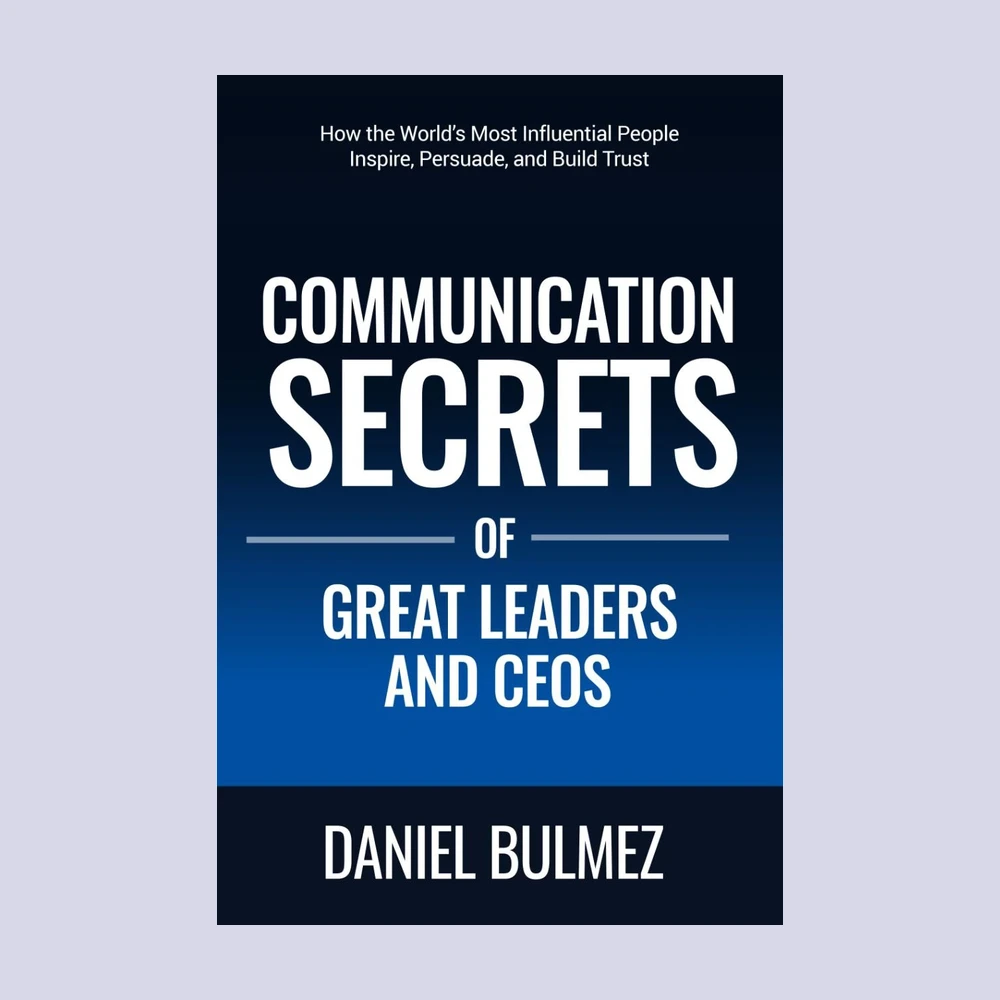
The best leaders treat the meeting as one of their main tools, because it’s where most of their influence is actually exercised. Communication Secrets of Great Leaders and CEOs looks at how top leaders frame a conversation, draw out the people in the room and close with a decision. If you want the deeper playbook, Communication Secrets of Great Leaders and CEOs breaks those habits down in full. For the day-to-day fundamentals, our guide to communication skills at work and the piece on team communication skills for managers are good places to start.
Daniel Bulmez is the author of Communication Secrets of Great Leaders and CEOs, available on Amazon.