Be Yourself, Everyone Else Is Already Taken: The Quote Oscar Wilde Never Said
Wilde never said it. The be-yourself quote traces to a 1999 Usenet sign-off. Here is the real history, what Wilde wrote, and how to be authentic at work.
 Daniel
November 7, 2026
4 min read

You have seen it on mugs, in LinkedIn bios, and under a thousand profile photos:
“Be yourself; everyone else is already taken.”
It is credited to Oscar Wilde so often that it feels like settled fact. There is no evidence he said it. And the real Wilde was far more suspicious of “being yourself” than the mug suggests, which changes what the advice is actually worth at work.
Where the Quote Really Comes From
Quote Investigator, the research site that traces the origins of famous sayings, states that “there is no substantive evidence that Oscar Wilde made this remark.” The line is not listed in Ralph Keyes’s collection The Wit & Wisdom of Oscar Wilde. What the record does show, according to Quote Investigator, is a trail that starts about a century after Wilde died in 1900:
- December 27, 1999. The earliest exact match Quote Investigator located is a line appended to a message on Dutch-language Usenet newsgroups, posted by Erick T. Barkhuis: “Be yourself. Everyone else is already taken.” It sat in quotation marks, with no name attached.
- September 2000. A newspaper advertising supplement for the Midwestern hardware chain Menards printed “Be yourself. Everyone else is taken.” as an unattributed adage.
- 2000 and 2001. The line appears credited to a “Gilbert Perreira,” first on a quotations web page and then in an April 2001 Usenet post. Quote Investigator trusts the 2001 date with confidence, and the earlier web page date much less.
- 2008. A newspaper article credits a variant, “Be Yourself, Everyone Else Is Taken,” to the actress America Ferrera.
The earliest attributions on that list name other people, or no one. Quote Investigator’s conclusion is that Wilde did write several witticisms about identity, “but none was a strong match” for this one.
What Wilde Actually Wrote
The documented Wilde is a good deal more skeptical:
- “Being natural is simply a pose, and the most irritating pose I know.” This is Lord Henry speaking in The Picture of Dorian Gray (1890), so it is a character’s line, not Wilde’s personal creed.
- “Most people are other people. Their thoughts are some one else’s opinions, their lives a mimicry, their passions a quotation.” From De Profundis, written in prison and published in 1905, after his death.
- “Over the portal of the new world, ‘Be thyself’ shall be written.” The closest real match, from the essay The Soul of Man under Socialism (1891). It is a sentence about individuality, not a punchline about competition.
This part is my reading, not a documented fact: for the real Wilde, being yourself is rare and hard, because most people spend their lives running on borrowed opinions. The mug version makes it sound like something you already have and only need to announce.
Where the Mug Version Goes Wrong at Work
“Be yourself” is a fine direction and a poor instruction. It does not tell you which parts of yourself to hold and which to adjust. Here is a split I find useful, offered as my own framing:
- Your values: do not adjust. Honesty, how you treat people, and what you will not do are the parts of you that should look the same in every room.
- Your style: adjust. You already talk differently to a nervous new hire than to a senior executive. That is not fakery. It is communication, and it is why the same message can land with one person and miss with another.
- Your habits: change. Interrupting, going silent in conflict, burying the point in the fourth paragraph. “That’s just how I am” is usually a defense of a habit, not a statement about identity.
Three Moves for This Week
- Write one sentence naming a value you will not trade. If you cannot finish the sentence, you have found out what to think about next.
- Adapt one delivery, not one message. Pick one conversation, decide what the listener needs, and change the length, order, or tone while keeping the content the same.
- Audit one “that’s just how I am.” Ask a colleague you trust what effect that habit has on them. Their answer is data, not a verdict.
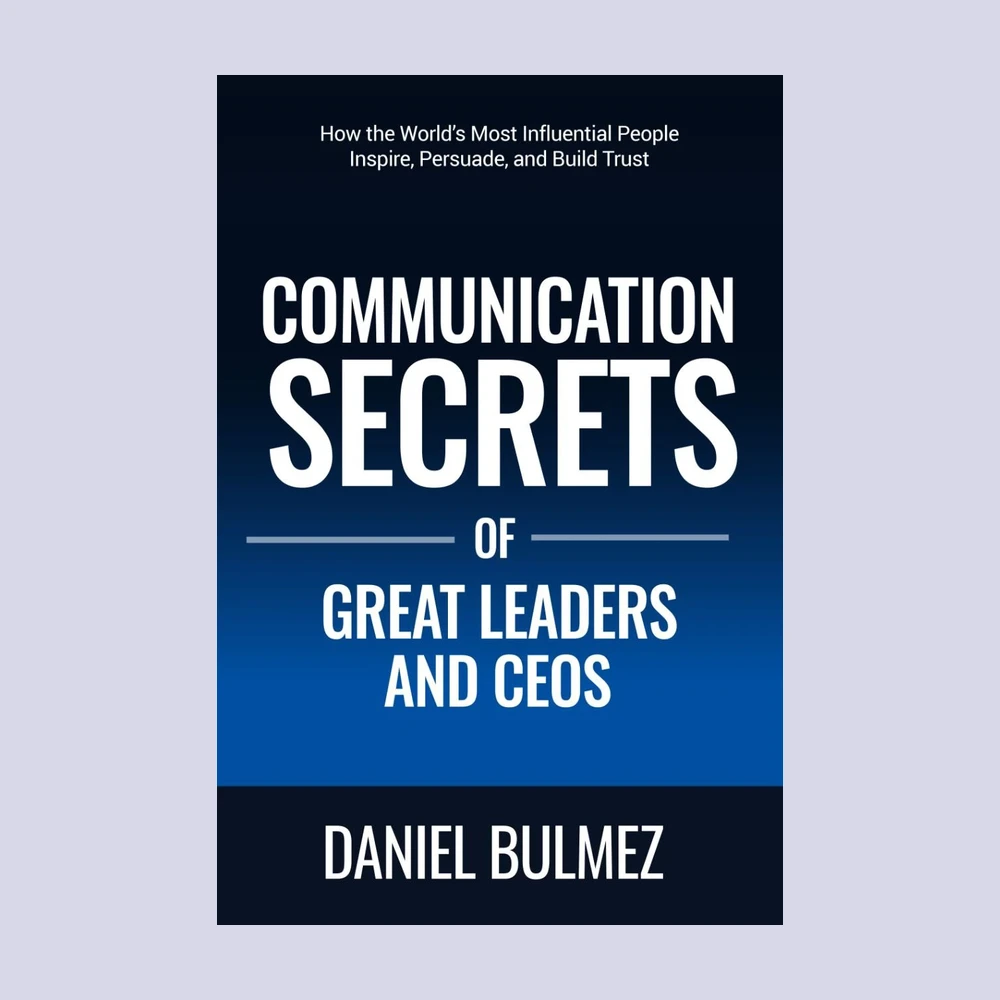
Adjusting how you deliver a message without changing what you stand for is a learnable skill. For how top leaders keep their message consistent while changing their delivery, Daniel Bulmez’s Communication Secrets of Great Leaders and CEOs is a practical place to start.
Daniel Bulmez is the author of Communication Secrets of Great Leaders and CEOs, available on Amazon.