The Best Dinosaur Books for Kids Ages 6-9
The best dinosaur books for kids ages 6-9 in 2026 — from picture books to encyclopedias, honest picks for every stage of a dinosaur obsession.
 Daniel
July 23, 2026
4 min read
17 views
Daniel
July 23, 2026
4 min read
17 views
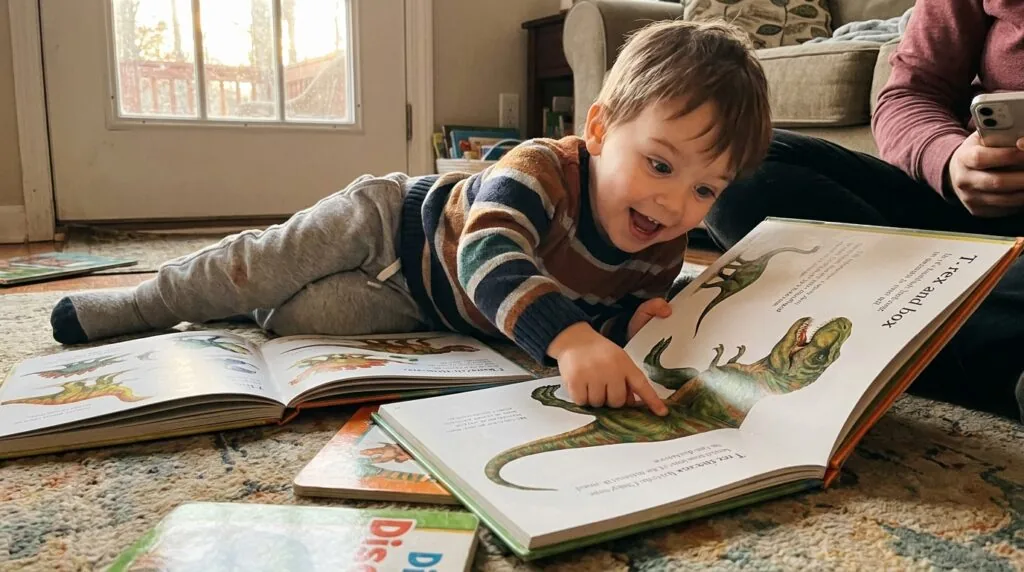
If your kid can pronounce “Micropachycephalosaurus” more easily than “spaghetti,” you already know the truth: dinosaur-obsessed kids are some of the most driven readers on the planet. The trick isn’t getting them to read — it’s finding books that keep up with how much they already know. Here are the best dinosaur books for kids ages 6-9, from browsable fact books to full encyclopedias.
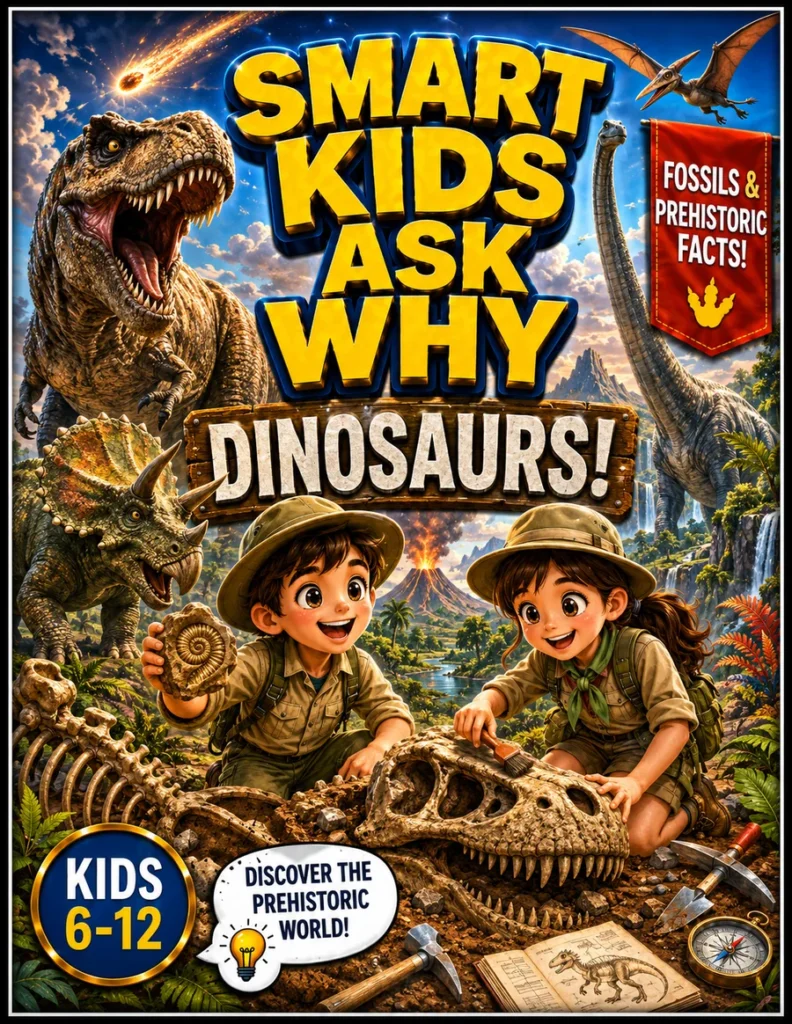
1. Smart Kids Ask Why: Dinosaurs!
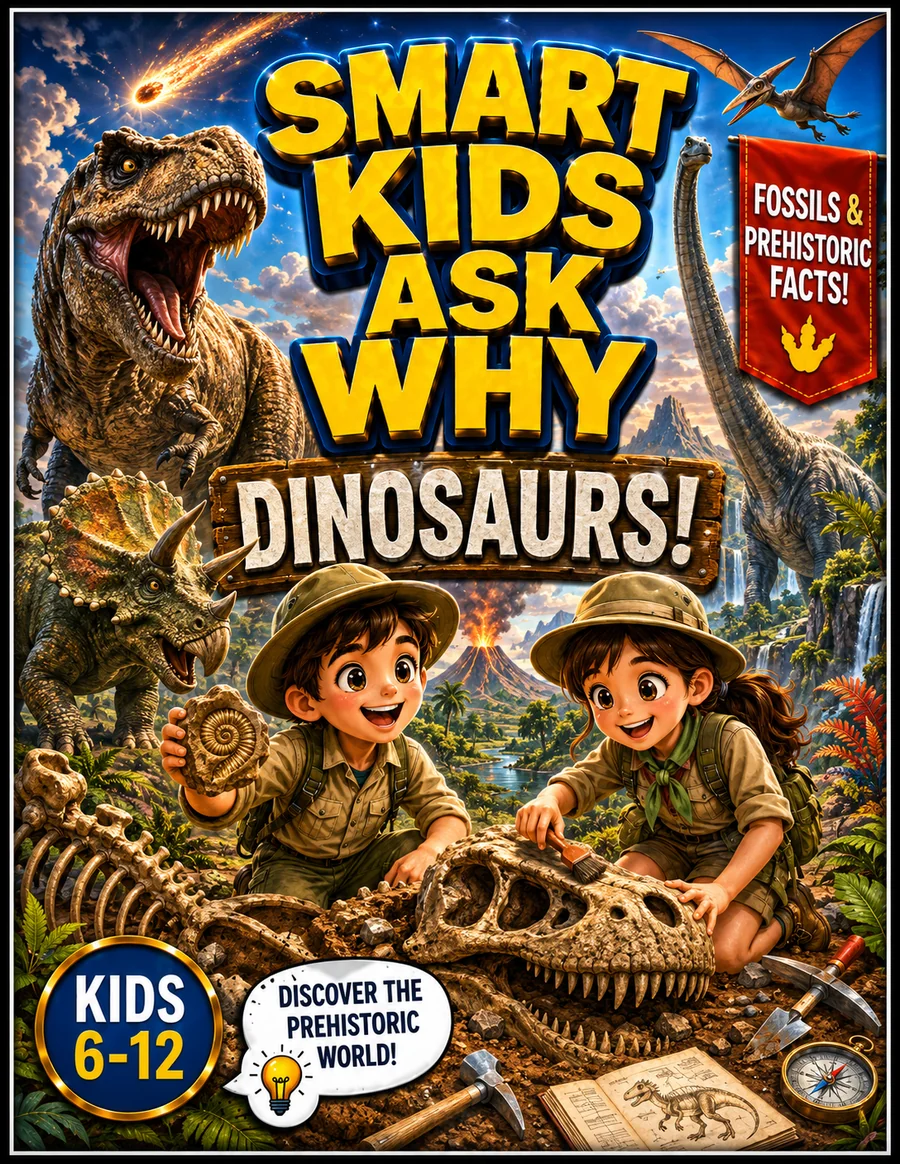
Most dinosaur books hand kids a wall of facts and hope something sticks. Smart Kids Ask Why: Dinosaurs! does the opposite — every spread starts with the question a curious kid would actually ask (“Why did T. rex have such tiny arms?” “Why did some dinosaurs have feathers?”) and then answers it in full color, kid-sized language. Profile-card spreads dig into roughly 20 famous dinosaurs, from the household names like T. rex to lesser-known giants like Giganotosaurus. It’s built for kids who don’t just want to memorize names — they want to know why things were the way they were, which is exactly the instinct worth reinforcing at this age.
2. National Geographic Kids Ultimate Dinopedia
Don Lessem’s Ultimate Dinopedia, published under the National Geographic Kids banner, is one of the most complete dinosaur reference books made for this age group. It profiles hundreds of species with photos of fossils, size comparisons, and pronunciation guides — genuinely useful for kids who want to go deeper than the usual dozen dinosaurs every book covers. It reads more like a field guide than a story, which is exactly what serious young paleontologists are looking for.
3. Dinosaurium (Welcome to the Museum series)
Lily Murray’s Dinosaurium is part of the “Welcome to the Museum” series, and it’s built around a clever conceit: the book itself is laid out like walking through a natural history museum, with large illustrated “exhibits” for each era and creature. It leans more artistic than most dinosaur books — big, painterly illustrations rather than photo-style renderings — which makes it a nice change of pace for kids who’ve already worked through more textbook-style options.
4. The How Do Dinosaurs… series (Jane Yolen & Mark Teague)
For families with a range of ages in the house, the How Do Dinosaurs picture book series by Jane Yolen and Mark Teague is a longtime favorite — titles like How Do Dinosaurs Say Goodnight? and How Do Dinosaurs Go to School? use giant, expressive dinosaur illustrations to teach everyday manners and routines. It skews younger than most on this list, but it’s worth mentioning because it’s often the very first “dinosaur book” a kid falls in love with before graduating to fact-heavy titles.
5. National Geographic Little Kids First Big Book of Dinosaurs
Catherine D. Hughes’s entry in the National Geographic Little Kids series is a step up in reading independence from the Yolen/Teague picture books, pairing full-page dinosaur photography-style illustrations with short, punchy facts. It’s a good bridge book for a 6- or 7-year-old who’s outgrown toddler dinosaur books but isn’t ready for a dense encyclopedia yet.
6. DK Dinosaurs: A Children’s Encyclopedia
DK’s encyclopedia format is instantly recognizable — clean layouts, real fossil and museum photography, and short factual captions rather than long paragraphs. For kids who like flipping to a random page and just reading whatever catches their eye, this style works better than a cover-to-cover narrative. It’s also a reliable choice if you want a book that will still be accurate and useful years from now, since DK updates these titles with current paleontology.
7. Dinotopia (James Gurney)
For a strong 8- or 9-year-old reader ready for something more immersive, James Gurney’s Dinotopia imagines a lost island where humans and dinosaurs live side by side. It’s part illustrated novel, part art book, with detailed painted scenes on nearly every page. It’s a different genre than the fact books above — more story and imagination than reference — but it’s often the book that turns a “dinosaur phase” into a lifelong love of reading.
8. And when the dinosaur phase widens into “everything”

Dinosaurs are usually the gateway — the first “why” a kid gets obsessed with before the questions widen out to everything else. Smart Kids Ask Why: The History of the World picks up right where the dinosaur books leave off, walking through 17 chapters and 101 full-color pages from ice-age campfires all the way to the moon landing, one big moment per page: a full-page illustration, four bite-sized facts, and a fun fact, guided by a recurring kid explorer. If your dinosaur expert is starting to ask “what happened after the dinosaurs went extinct?” — this is the natural next book on the shelf.
How to pick
If your kid is just starting out, lean toward picture books like the How Do Dinosaurs series or the Little Kids First Big Book. If they’re already naming dinosaurs you’ve never heard of, an encyclopedia-style book (DK, Ultimate Dinopedia, or Dinosaurium) will hold their attention longer because there’s more to discover. And if they ask “why” as much as they ask “what,” Smart Kids Ask Why: Dinosaurs! is built around exactly that instinct — which is usually the sign of a kid who’s going to love reading for a very long time.
Daniel Bulmez is the author of the Smart Kids Ask Why book series, available on this store and on Amazon.