The Art of Communication Is the Language of Leadership: What James Humes Really Meant
Presidential speechwriter James Humes said communication IS leadership. Here is what that actually means for how you lead, and how to apply it this week.
 Daniel
September 26, 2026
4 min read
Daniel
September 26, 2026
4 min read

James Humes wrote speeches for five U.S. presidents — Eisenhower, Nixon, Ford, Reagan, and George H.W. Bush. He spent a career standing behind the most powerful people in the world, listening to what worked and what fell flat in front of a crowd, a camera, or a hostile press corps. Out of that vantage point came a line that has outlived every speech he ever wrote for someone else:
“The art of communication is the language of leadership.”
It sounds almost too simple to matter. But sit with it for a second, because Humes wasn’t describing a nice-to-have skill. He was describing the mechanism itself — the thing leadership actually runs on.
Leadership Doesn’t Exist Until It’s Communicated
Here’s the part most people miss: a leader can have the right vision, the right strategy, and the right instincts, and none of it counts for anything until it’s said out loud in a way other people can act on. Vision that stays in your head is not leadership. It’s a private opinion. The moment it becomes leadership is the moment someone else understands it clearly enough to move.
That’s what Humes meant by “language.” Not vocabulary, not eloquence for its own sake — the actual transmission of thought from one mind into shared action. A brilliant idea explained badly produces confusion. A modest idea explained with total clarity produces momentum. Momentum is what leadership is actually made of, and momentum only comes from communication that lands.
This is why so many capable people get passed over for leadership roles despite being the smartest person in the room. Competence gets you noticed. Communication gets you followed. Those are not the same skill, and only one of them scales.
Why Clarity Beats Cleverness Every Time
Humes spent decades around men who had to move nations with a paragraph. What he learned from that seat is something every great communicator eventually learns the hard way: complexity impresses in the moment and fails in the long run. Clarity does the opposite. It looks unimpressive on delivery and then it’s the only thing anyone remembers three days later.
Reagan was called “the Great Communicator” not because his vocabulary was the largest in the room, but because his sentences were the ones people could repeat to someone else on the drive home. That’s the actual test of leadership language: can it survive being retold? If your message needs you standing there to make sense, it isn’t leadership language yet — it’s just a private explanation you haven’t finished simplifying.
The Skill Nobody Trains For
Most professional development spends its time on strategy, execution, and technical mastery. Almost none of it spends real time on the thing Humes is pointing at: the deliberate practice of turning your internal thinking into something someone else can hold onto, repeat, and act on without you in the room.
That gap is exactly where careers stall. Someone gets promoted into a room where influence — not output — is the job, and discovers that the skill that got them there (doing the work well) is not the skill the new seat requires (getting other people to do the work well, through language alone). It’s a different muscle, and most people never train it directly. They just hope it develops on its own. It usually doesn’t.
Putting the Quote to Work This Week
You don’t need a podium to apply this. The next time you’re explaining a decision to your team, drafting an email that matters, or trying to get buy-in on an idea, run it through one test before you send it: could someone repeat this accurately to a person who wasn’t in the room? If the answer is no, the idea isn’t ready — the language is still doing the thinking’s job for you instead of doing its own job, which is carrying the thinking to someone else intact.
That single filter, applied consistently, does more for how you’re perceived as a leader than almost anything else you could practice this month.
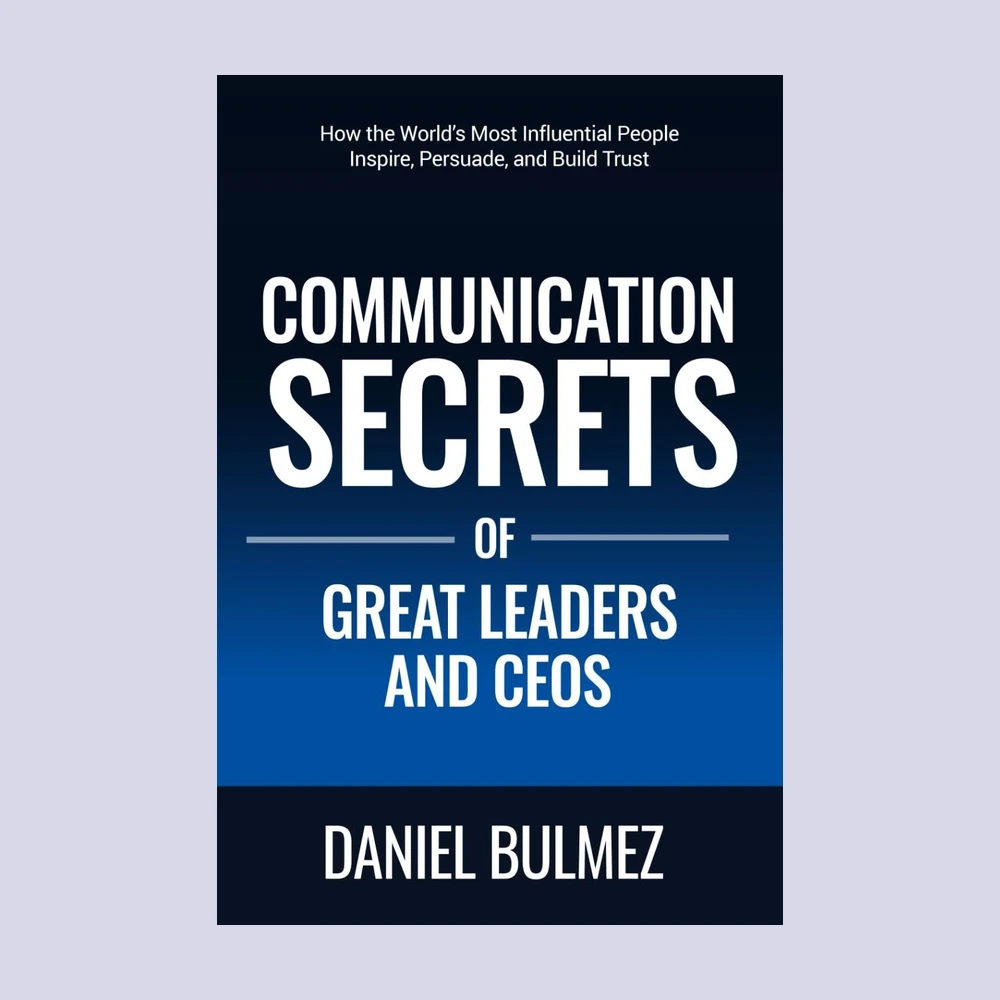
For a deeper, structured playbook on exactly how top CEOs and leaders turn this principle into daily habits — from how they open a meeting to how they handle the sentence that could lose the room — Daniel Bulmez’s Communication Secrets of Great Leaders and CEOs breaks down the specific language patterns the most effective leaders use, and why they work.
Daniel Bulmez is the author of Communication Secrets of Great Leaders and CEOs, available on Amazon.