What Charisma Actually Is (And How Anyone Can Build It)
Charisma isn't a trait you're born with. It's a set of learnable communication behaviors — presence, warmth, and power — here's how they work.
 Daniel
August 17, 2026
4 min read
22 views
Daniel
August 17, 2026
4 min read
22 views

Two people walk into the same room. One says almost nothing and everyone remembers them afterward. The other talks the whole time and leaves no impression at all. Ask most people why, and they’ll shrug: “some people just have it.” That answer feels true and explains nothing — and it’s also wrong. Charisma isn’t a trait some people are born with and others aren’t. It’s a specific set of communication behaviors, and every one of them can be learned.
That reframe matters because “you either have it or you don’t” is a dead end. “Here are the seven things charismatic people actually do” is a training plan. Break charisma into its parts and it stops being magic.
1. Charisma Is Presence, Not Personality
The single biggest driver of how charismatic someone feels isn’t what they say — it’s whether they’re actually there. Half-listening while thinking about your next sentence, glancing at your phone, scanning the room for someone more important — all of it reads instantly, even when you think you’re hiding it. Charismatic people are fully in the conversation they’re in. Presence alone, without a single clever word, does most of the work.
2. Warmth Gets Decided Before Competence Does
People form a “does this person like me” judgment before they form a “is this person impressive” judgment — and the first one colors the second. Charismatic communicators signal warmth early and genuinely: real interest in what the other person just said, a first question about them instead of a pitch about you. Skip this step and even strong competence lands cold.
3. Power Is Communicated Through Stillness, Not Volume
Loud isn’t the same as commanding. Charismatic people tend to move less, not more — deliberate gestures instead of fidgeting, a settled posture instead of shifting weight, calm instead of scrambling when the pressure goes up. Restlessness reads as low status even when the words are confident. Stillness reads as control even when nothing has been said yet.
4. Make the Other Person the Only Person in the Room
This is the single most repeatable charisma move there is: full attention on the person you’re talking to, with nothing held back for the next conversation. No scanning the room over their shoulder. No half-formed reply while they’re still finishing their sentence. Most people can feel the difference between being listened to and being tolerated within the first ten seconds — and they remember which one they got.
5. Ask the Follow-Up Question That Proves You Were Listening
Anyone can ask a question. Charisma shows up in the second question — the one that could only come from actually hearing the answer to the first one. “Wait, how did you end up doing that instead?” lands completely differently than a generic “that’s interesting.” The follow-up is proof of attention, and proof beats claims every time.
6. Praise Specifically, Not Generically
“Great job” is forgettable because it could be said to anyone about anything. “The way you handled that objection in the second half of the meeting — that’s the part that actually changed the room” is unforgettable, because it proves you were paying close attention to this person, not delivering a script. Specific praise is one of the cheapest, most underused charisma tools available.
7. Recover From Awkward Moments Without Flinching
Charismatic people aren’t the ones who never say the wrong thing — they’re the ones who don’t visibly panic when they do. A dropped name, a flubbed joke, a question with no good answer: the charisma isn’t in avoiding the stumble, it’s in moving through it without broadcasting discomfort. That composure, more than any clever recovery line, is what people actually remember.
Why Charisma Is a Skill, Not a Gift
The “born with it” myth survives because charisma feels effortless from the outside. It isn’t. It’s presence, warmth, and power, expressed through a handful of specific, observable behaviors — full attention, early warmth, stillness under pressure, questions that prove you were listening. None of that requires a personality transplant. It requires noticing what charismatic people actually do differently, and practicing it on purpose until it stops feeling like practice.
Charisma is also the foundation the rest of influence is built on — once people are drawn in, how to influence people without relying on authority is the next skill worth building.
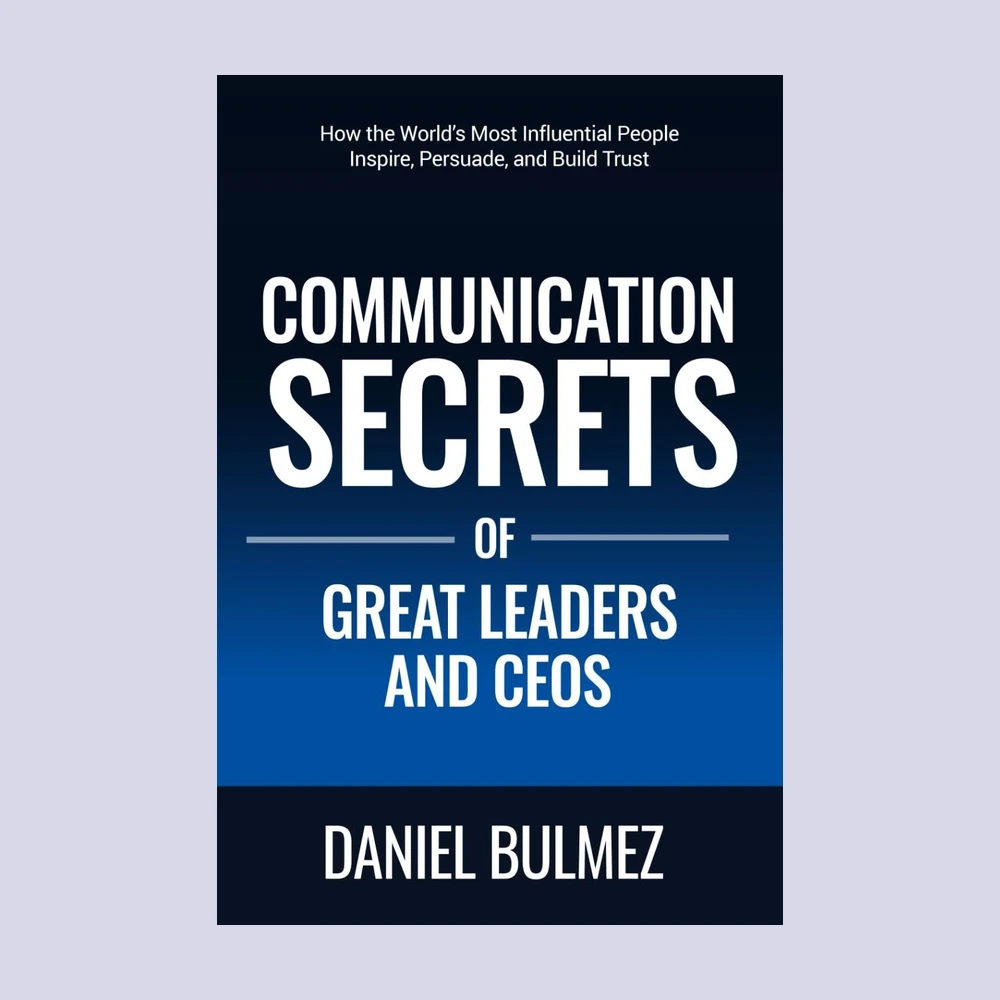
Communication Secrets of Great Leaders and CEOs reverse-engineers charisma into repeatable moves — the way charismatic leaders make every person feel like the most important one in the room. If you want the full pattern instead of the highlight reel, Communication Secrets of Great Leaders and CEOs breaks it down move by move.
Daniel Bulmez is the author of Communication Secrets of Great Leaders and CEOs, available on Amazon.