8 Books Like 100,000 Whys for Kids Who Never Stop Asking Questions
Love 100,000 Whys? Here are 8 question-and-answer books that feed the same curiosity - full-color, kid-tested, and picked by a childrens author.
 Daniel
July 13, 2026
4 min read
55 views
Daniel
July 13, 2026
4 min read
55 views
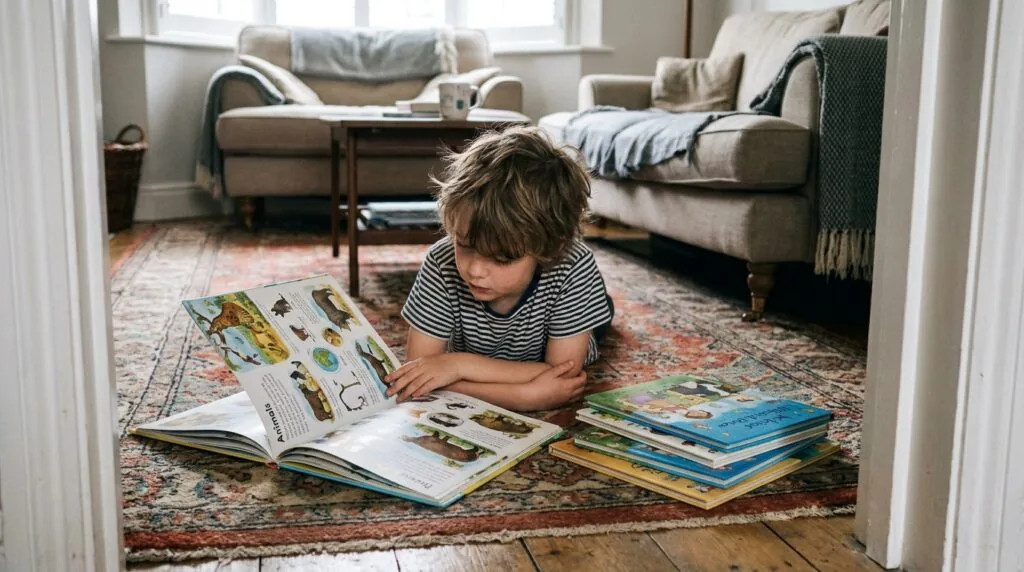
If your kid has worn out a copy of 100,000 Whys — or worn out your ears with the questions it started — you already know the secret of that series: kids don’t want to be taught. They want to be answered.
Question-and-answer books work because they match how children actually think. A kid never wonders “chapter four: weather systems.” They wonder why the sky is blue, why volcanoes explode, and why they can’t feel the Earth spinning. Books built around the questions — not the curriculum — get read to pieces.
Here are eight books that scratch the same itch, from a household that has tested all of them on real, relentless question-askers.
1. Smart Kids Ask Why: The History of the World
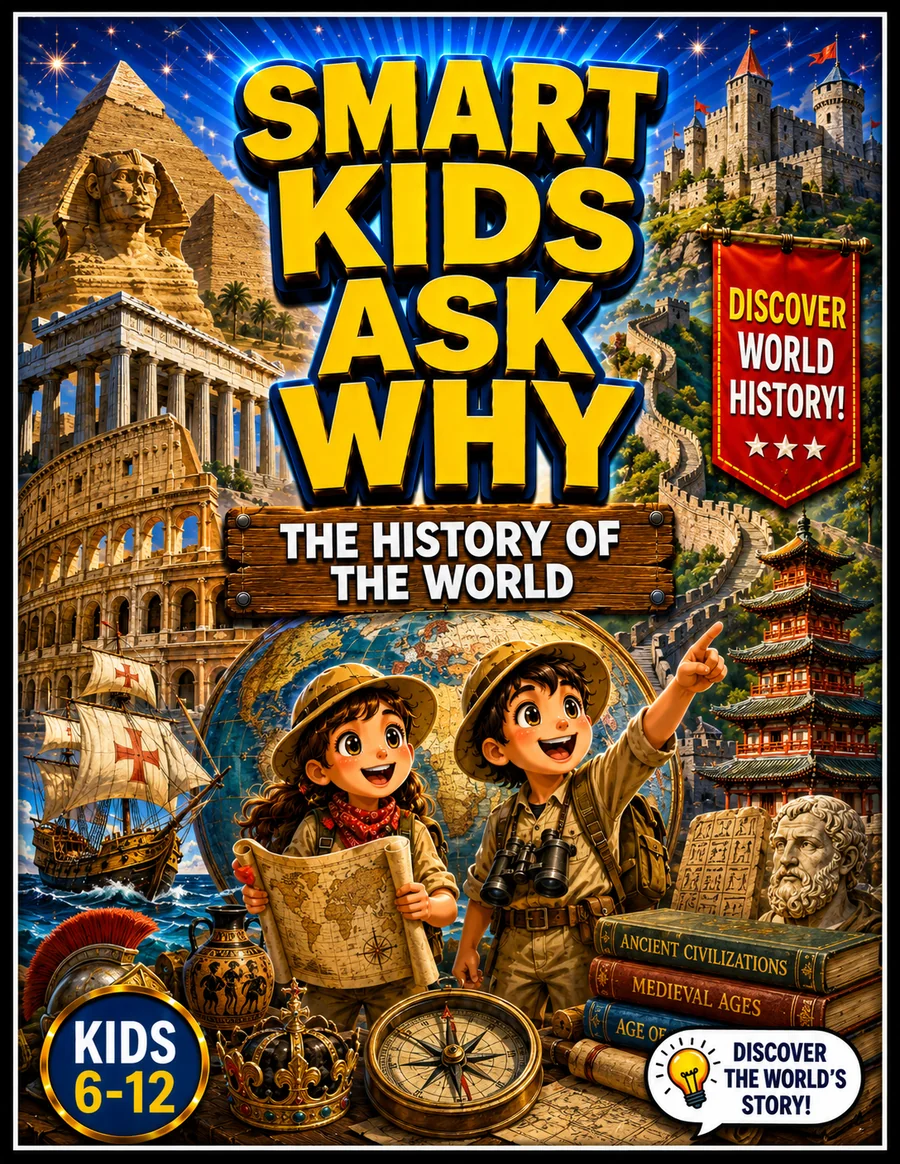
Most world history books for kids are either too babyish or secretly written for adults. This one gets the balance right: 101 full-color pages that run from the first ice-age campfires to the moon landing, with every page built around one big moment — a full-page illustration, four bite-sized facts, and a fun fact that surprises grown-ups too.
The illustrations are the standout: bold, modern, and packed with details kids hunt for on every read. A friendly kid explorer appears on each page asking the same questions your child would. Best for ages 7 and up. You can find it here on our store.
2. Smart Kids Ask Why: Dinosaurs!
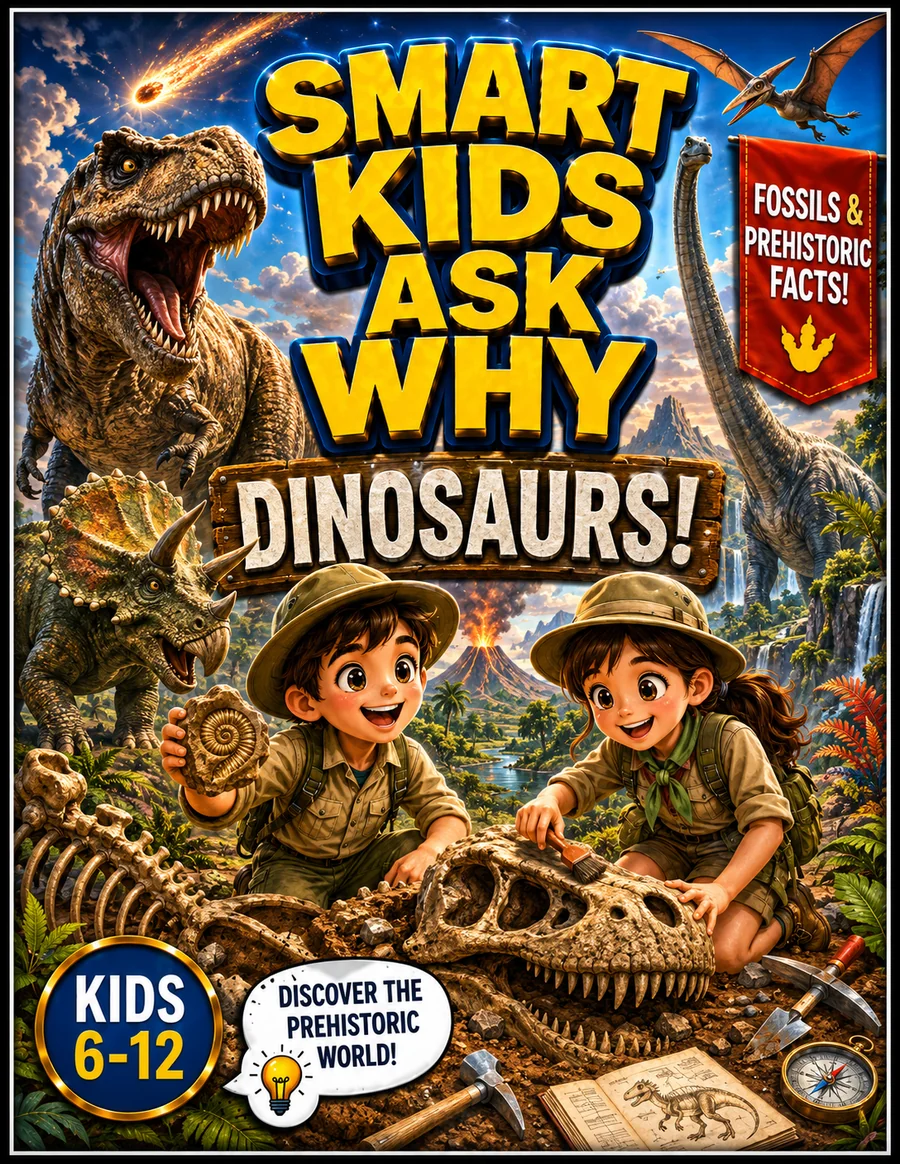
If your child is in the dinosaur years, this is the deep end: 112 full-color pages covering what dinosaurs were, how we know about them, and why they vanished — plus profile-card spreads on the famous ones, from T. rex and Velociraptor to Giganotosaurus, the predator that may have out-sized T. rex (kids love settling that debate).
It’s structured exactly like the question-and-answer books kids already love — every page starts with a “why,” and every answer is short enough to stick. Available here.
3. Usborne Lift-the-Flap Questions and Answers
For the younger end (about 4-7), Usborne’s lift-the-flap series turns Q&A into a physical game — the question is on the flap, the answer underneath. The format is genius for kids who aren’t reading fluently yet, and the series covers everything from your body to space to “how things work.”
4. Why? Over 1,111 Answers to Everything (National Geographic Kids)
The heavyweight. Real photography instead of illustrations, huge topic range, and the sheer volume means it survives years of bedtime browsing. Better as a dip-in book than a read-through — some answers run wordy for younger kids — but it’s the closest thing to an encyclopedia disguised as a Q&A book.
5. The Big Book of Why (TIME for Kids)
A classic for a reason. Punchy one-page answers to the exact questions kids actually ask (“Why do I get brain freeze?”), organized loosely enough that kids flip around freely. The design is a little dated now, but the question selection is still one of the best.
6. Tell Me Why by Arkady Leokum
The book that started the whole genre — generations of curious kids grew up on it. Text-heavy and mostly black-and-white, so it suits strong readers (9+) rather than picture-book kids, but the answers have a depth most modern Q&A books skip.
7. Britannica All New Kids’ Encyclopedia
Not strictly a Q&A book, but it’s built on the same principle — it leads with what we don’t know as much as what we do, and kids find that irresistible. Gorgeous production. Best for ages 8-12, and heavy enough to double as strength training.
8. DK Knowledge Encyclopedia
For the kid who has outgrown one-page answers and wants the full picture — cutaway diagrams, cross-sections, and dense visual spreads. Less “why is the sky blue,” more “here is the entire atmosphere, labeled.” A natural graduation book once the Q&A format has done its job.
How to Pick the Right One
Three quick rules from watching kids actually use these books:
- Match the format to the age, not the topic. Flaps for 4-6, one-question-per-page for 6-9, dense encyclopedias for 10+.
- Full color is non-negotiable under age 9. A wall of text loses them on page one, no matter how good the answers are.
- Let them pick the topic. A dinosaur-obsessed kid will read a dinosaur book five levels above their “reading level” and skip an easy book about anything else. Obsession beats difficulty every time.
The whole point of books like 100,000 Whys is to keep the question machine running — because the kids who keep asking why at 7 are the ones still asking it at 27, when the answers start paying.
Daniel Bulmez is the author of the Smart Kids Ask Why book series, available on this store and on Amazon.



Leave a comment
Your email address will not be published. Your first comment is read before it appears; after that they show straight away.