The George Bernard Shaw Quote Every Leader Gets Wrong
George Bernard Shaw exposed the biggest leadership blind spot: mistaking talking for being understood. Here is how to actually close that gap.
 Daniel
July 18, 2026
4 min read
23 views
Daniel
July 18, 2026
4 min read
23 views

There’s a line from George Bernard Shaw that should be printed on the wall of every conference room in the world:
“The single biggest problem in communication is the illusion that it has taken place.”
Read it twice. It doesn’t say communication is hard. It doesn’t say people don’t listen. It says something sharper: you can walk out of a conversation certain that you were understood, and be completely wrong — and nothing in the moment will tell you that.
That’s the trap. Not silence. Not conflict. Certainty.
Why This Illusion Is So Easy to Fall For
Nobody sets out to be misunderstood. The problem is that speaking clearly feels like the whole job. You said the words. They nodded. Meeting adjourned. Everyone in the room experienced a shared moment of communication — except three of the five people walked away with three different interpretations of what was just decided.
This happens because talking and understanding are two separate events, and only one of them is visible. You can watch someone’s mouth move. You cannot watch what their brain did with the information. A nod is not comprehension. “Got it” is not agreement. Silence is not consent. All of them are just as consistent with confusion as they are with clarity — and most people, especially in a room with a boss in it, will choose the nod over the follow-up question every time.
Leaders get burned by this more than anyone, because hierarchy makes the illusion worse. The higher you sit in a room, the less likely anyone is to say “I don’t actually understand what you just asked for.” Status suppresses the exact signal you need to catch the gap. So the instructions go out clean, and three days later the deliverable comes back wrong — not because anyone was careless, but because the illusion held all the way to the deadline.
The Three Places the Illusion Hides
1. The meeting that ends in nods. A room full of head-nods after a decision is not agreement — it’s often the fastest way for people to exit an uncomfortable conversation. Real alignment sounds different: people paraphrasing the decision back in their own words, unprompted.
2. The instruction that “should be obvious.” The more confident you are that something goes without saying, the more likely it’s exactly the part that needed to be said. Clarity is inversely related to how obvious you think something is — because the words you skip are the ones the other person has to guess at.
3. The written message with no reply beyond “sounds good.” Two words that mean everything from “I read every line and agree” to “I skimmed this on my phone between two meetings.” You have no way to tell which one you got, and neither does the sender.
How to Actually Close the Gap
Shaw’s line is a diagnosis, not a cure — but the cure follows directly from it. If the illusion lives in the space between speaking and confirming, the fix is to force that space open on purpose:
- Ask for the playback, not the nod. “What are you walking away with?” turns a passive nod into an active test. If their answer surprises you, you just caught a miscommunication before it cost you anything.
- Replace “does that make sense?” with “what questions does this raise?” The first question invites a reflexive yes. The second assumes there’s a gap and gives people permission to name it.
- Write the one sentence you’re most tempted to skip. The instruction you’re sure is unnecessary to spell out is usually the one worth spelling out anyway.
- Treat silence as unread, not agreed. In writing, silence is the cheapest signal in the world — and the least informative. Don’t build decisions on top of it.
The Real Skill Underneath This
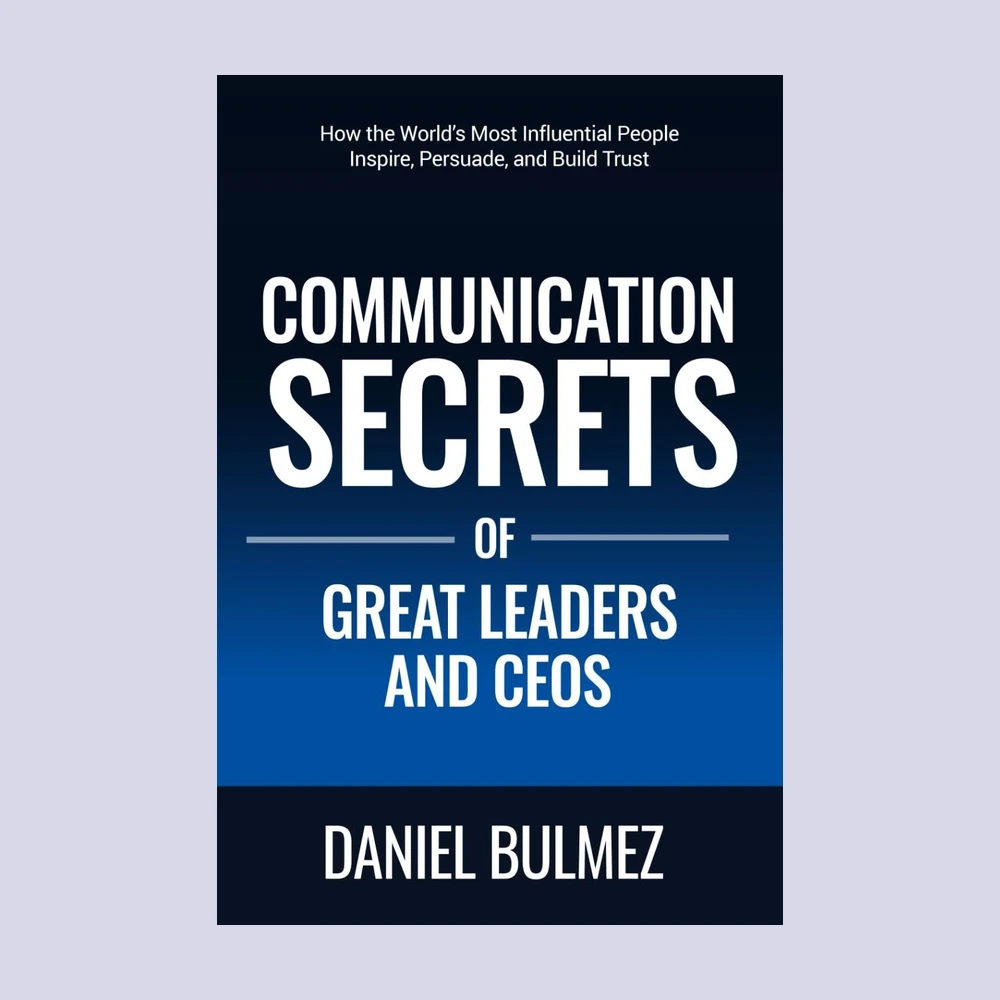
The leaders who communicate well aren’t the ones with the best vocabulary. They’re the ones who’ve stopped trusting the moment communication feels complete, and built a habit of checking instead. That single habit — treating every “got it” as a hypothesis to test, not a fact to file away — is one of the most underrated skills in leadership, and it’s the exact muscle Communication Secrets of Great Leaders and CEOs is built to train: how the sharpest communicators close the gap between saying something and being understood, in rooms where nobody will tell you the gap exists.
Shaw wrote that line over a century ago, long before Zoom calls and Slack threads made the illusion easier to fall into than ever. The tools changed. The trap didn’t. The only real defense is refusing to believe you were understood just because nobody said otherwise.
Daniel Bulmez is the author of Communication Secrets of Great Leaders and CEOs, available on Amazon.