Darkness Cannot Drive Out Darkness: The MLK Quote That Explains Why Retaliation Never Works
Martin Luther King Jr's famous line isn't a poster slogan - it's a mechanism. Here's where it actually comes from and what it teaches about handling conflict.
 Daniel
September 19, 2026
4 min read
Daniel
September 19, 2026
4 min read

Someone fires off a hostile email. A colleague undercuts you in a meeting. A client accuses you of something you didn’t do. Every instinct says: hit back, and hit back harder, so they know not to try that again.
Martin Luther King Jr. spent his life inside exactly that instinct, aimed at him by people with far more power and far worse intentions than a rude coworker. His answer to it is one of the most quoted lines in American history — and also one of the most flattened. Most people who repeat it have never read the sentence that comes right after it, which is where the actual argument lives.
“Darkness cannot drive out darkness; only light can do that. Hate cannot drive out hate; only love can do that.”
Said like that, it sounds like a poster. Read in context, it’s a mechanism — a specific claim about what retaliation does to a conflict, and why fighting back rarely produces the outcome the person fighting back wants.
Where This Quote Actually Comes From
The line is from Strength to Love, King’s 1963 collection of sermons, in the chapter “Loving Your Enemies.” It’s worth being precise about that, because a lot of sites quoting it will tell you it’s from a sermon King delivered at Dexter Avenue Baptist Church in 1957 — and while King did preach an earlier version of “Loving Your Enemies” that year, the surviving transcript of that 1957 sermon doesn’t contain this exact wording. The “darkness cannot drive out darkness” formulation is sharper and more compressed than what he said from the pulpit six years earlier. It’s the writer’s revision of the preacher’s line, made when he sat down to turn years of sermons into a book in the middle of the Birmingham campaign.
That detail matters for the same reason it matters in any communication: King didn’t land on his clearest version of the idea the first time he said it out loud. He rewrote it. The version everyone quotes is the edited version — proof that even a message this simple went through drafts.
The sentence immediately after the famous one is the part almost nobody quotes: “Hate multiplies hate, violence multiplies violence, and toughness multiplies toughness in a descending spiral of destruction.” That’s not a metaphor about virtue. It’s a claim about mechanics — that retaliation doesn’t cancel the original aggression, it adds to it.
The Psychology of Why Retaliation Multiplies Conflict
King was describing, in 1963 language, something social psychologists have since given a name: the reciprocity norm. People respond to hostility with hostility and to warmth with warmth, almost automatically, and each exchange tends to escalate slightly rather than hold steady — what researchers studying conflict spirals call “negative reciprocity,” where each party’s response is a notch more extreme than what triggered it.
There’s a reason it works this way. A hostile message doesn’t just carry information — it carries a threat cue, and the brain’s response to a threat cue is defensive, not deliberative. You’re not really replying to what the other person said. You’re replying to how it made you feel, which is a different and worse message than the one you’d send if you’d waited ten minutes.
This is also why “fighting back harder so they respect you” so often backfires in a professional setting. The other person isn’t disarmed by force equal to their own — they’re confirmed in their belief that you were the problem all along, which is exactly the story King was trying to keep the civil rights movement from writing for its opponents. Every retaliatory act handed segregationists a fresh justification. Restraint denied them one.
What This Looks Like in an Actual Conversation
You don’t need a movement-scale conflict for this to apply. It shows up in a Slack thread where someone’s tone reads as condescending, in a performance review where an employee gets defensive, in a client call where someone raises their voice.
The practical move isn’t passivity — King wasn’t preaching passivity, he was organizing a campaign that directly confronted power. The move is separating the response from the reflex. Before replying to something hostile, name what’s actually being asked for underneath the tone. A sharp email about a missed deadline is usually a request for reliability, not an invitation to a tone war. Responding to the request instead of the delivery is what de-escalates the exchange instead of feeding it.
That single substitution — reply to the content, not the heat — is most of what separates a leader who calms a room from one who empties it.
The Deeper Playbook
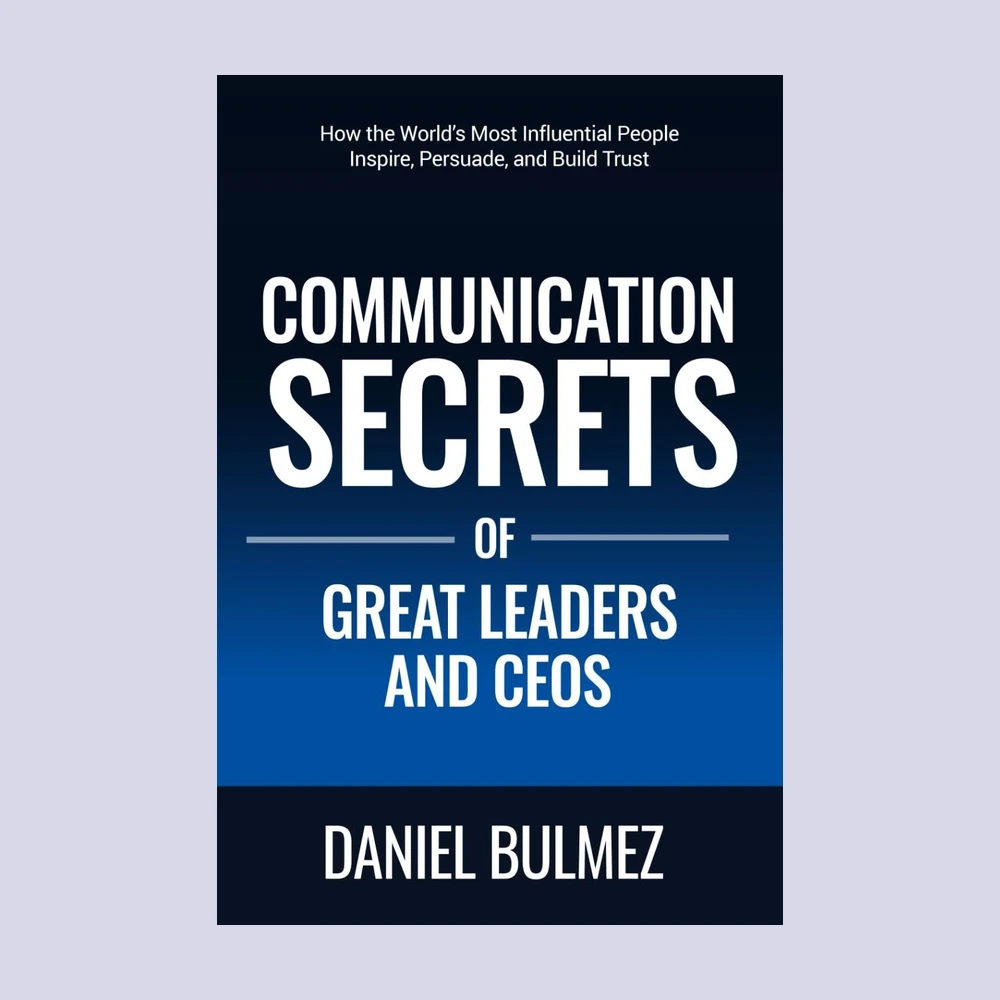
Reading the mechanism behind a famous line is useful. Practicing it in a live, heated exchange is a different skill, and it’s the one most careers actually get tested on. Communication Secrets of Great Leaders and CEOs breaks down exactly how top communicators handle the moment right after someone comes at them hard — the specific phrasing, pacing, and pauses that keep a hostile exchange from becoming a worse one. If this quote resonated, that’s the next layer.
Daniel Bulmez is the author of Communication Secrets of Great Leaders and CEOs, available on Amazon.