How to End a Conversation Gracefully (Without the Awkward Exit)
How to end a conversation gracefully: the three-step exit, word-for-word lines for work, events and phone calls, and the mistakes that make leaving feel rude.
 Daniel
November 24, 2026
8 min read

You are at a work event. A colleague is telling you about their kitchen renovation. It has been eleven minutes. You have nodded, said “wow” four times, and checked the room for an escape route twice.
You want to leave. They do not seem to notice. And the longer you wait, the harder leaving feels, so you wait some more.
Starting a conversation gets most of the attention. Ending one is the skill nobody teaches, and it is the part people remember. This guide covers how to end a conversation gracefully: why it feels so hard, a simple three-step structure, exact lines for different situations, and the mistakes that turn a polite exit into an awkward one.
Why Ending a Conversation Feels So Hard
It is not that you are bad at it. The situation is stacked against you.
- Nobody signals when they are ready to stop. Both people usually want to be polite, so both keep going. Researchers who studied this (Adam Mastroianni, Daniel Gilbert and colleagues, published in PNAS in 2021) found that conversations rarely end at the moment both people want them to, and that people are generally poor at guessing when their partner would like to leave.
- You worry the exit will read as rejection. Leaving feels like saying “you are boring.” It is not. It is saying “I have somewhere to be.”
- You have no words ready. In the moment, the only available options seem to be “stay forever” or “vanish mid-sentence.”
- Endings carry extra weight. Daniel Kahneman’s work on the peak-end rule suggests we judge an experience heavily by how it finished. A warm ending can rescue a so-so chat. A clumsy one can sour a good one.
The good news is that the last point works in your favor. A graceful close takes about ten seconds, and it is what the other person will remember.
The Three-Step Exit
Almost every smooth ending contains the same three moves, in this order:
- Signal that you are wrapping up. A short phrase that tells the other person the conversation is nearing its end, so the goodbye does not ambush them.
- Appreciate something specific. One real, concrete thing you enjoyed or learned. This is what keeps the exit from feeling like a brush-off.
- Close with a reason or a next step, then go. Either a brief, true reason you are leaving, or a plan to continue later. Then actually leave.
Put together:
“I’m going to let you get back to your evening. It was great hearing how the renovation turned out, I’d never have thought of moving the sink. I’ll see you Thursday.”
Three sentences. Nothing false, nothing cruel, and the other person walks away feeling heard.
Why the order matters
If you start with the appreciation (“This was great!”) and then stay another five minutes, the compliment becomes noise. If you start with the signal, the other person knows what is coming and can finish their thought. The appreciation lands softly because it is attached to the exit, and the next step gives them something to look forward to instead of something to lose.
Lines You Can Use Today
Borrow these as they are, or change a few words to sound like yourself.
At a networking event or party
You usually need to move on to meet other people, and everybody there knows it.
“I’m going to circulate a bit, but I’m really glad we talked. Good luck with the launch.”
“I should say hello to a couple of people before they leave. It was great meeting you.”
If you want to keep in touch, add the next step: “Can I find you on LinkedIn?” is easier than it sounds, and it turns a goodbye into a connection. For more on this, see our guide on how to network.
With a colleague who keeps talking
This is the hardest case, because you will see them again tomorrow. Honesty plus warmth works best.
“I want to give this the attention it deserves, and I’ve got a deadline at three. Can we pick it up at lunch?”
“I have to jump on a call, but I’d like to hear how it ends. Catch me later?”
Only say this if you mean it. If you do not want to hear the rest, drop the second sentence and keep the first.
In a meeting hallway or by the coffee machine
Short, friendly, no need for a big production.
“Good catching up. I’ll let you get on with your day.”
On the phone or a video call
Without body language, the signal has to be verbal, and you can be a little more direct.
“I know we’re both busy, so I’ll let you go. Thanks for walking me through that.”
“I want to be respectful of your time. Let me summarize what I’m doing next, and then we can wrap up.”
The summary is a quiet trick: restating next steps gives the conversation a natural last beat, and the other person usually responds with “great, thanks” instead of starting a new topic.
With someone you want to keep talking to
Ending is not always about escape. Sometimes you need to stop for now but want to leave the door open.
“I’m out of time, but I’d really like to continue this. Are you free for coffee next week?”
When you are the host or the one who needs to go
If you are running the day, you can be a bit more matter-of-fact.
“I’m going to have to head out. Thanks so much for coming.”
Read the Signs They Are Ready to Go
The other person’s behavior often tells you when to wrap up, if you are paying attention. Look for:
- Shorter answers. Replies shrink from sentences to single words.
- Body turning away. Feet and torso angle toward the door, the next room, or someone else.
- More glances elsewhere. Eyes drift to their phone, watch or the crowd.
- Wrap-up phrases. “Well,” “Anyway,” or “So…” often mean they are searching for a way out.
When you see two or three together, end it warmly and quickly. You will have done them a favor. Because most people are reluctant to be the one who leaves first, the person who offers a graceful exit is usually met with relief, not offense. Our guide on body language at work goes deeper on reading these cues.
Mistakes That Make an Exit Awkward
The fake excuse
“I have to go to the bathroom” works once. “I need to take this call,” when no call is coming, can be caught and costs you trust. A small, true reason (“I need to get back to my desk”) beats a clever lie.
The apology spiral
“I’m so sorry, I really hate to do this, I feel terrible, I’m so sorry, but…” The more you apologize, the more it sounds like leaving is a crime. One light “I’ll let you go” is plenty.
Fading out without a goodbye
Drifting away mid-conversation, or letting a text thread die without a closer, leaves the other person unsure what happened. A single sentence prevents it.
Hinting instead of saying it
Sighing, checking your watch, and saying “welp” is a request for the other person to do the work. Say the words. They are easier than you think.
Over-long goodbyes
Once you have said goodbye, go. Starting a new topic after “anyway, I’d better go” restarts the clock and teaches the other person that your goodbyes are not real.
Ending on a flat note
“Okay. Bye.” is not wrong, but it wastes the one moment people remember. Even a few words of real appreciation change how the whole conversation is recalled.
When the Other Person Will Not Let You Go
Some people talk past every signal. For them:
- Interrupt kindly at a natural pause. You do not have to wait for a perfect gap; a breath is enough. “Let me jump in, I’m sorry, I do have to run.”
- Say it once, clearly, and start moving. Physically stepping back or turning toward your next destination reinforces the words.
- Repeat if necessary. “I really do have to go. Let’s talk soon.” Then go. Persistence in tone, not volume.
If this is a pattern with a specific person, it can be worth setting expectations earlier: “I’ve got about ten minutes, so let’s make them count.” That also helps with setting boundaries at work without being cold.
Practice It in Small Doses
Like every social skill, this one improves with repetition. This week:
- End one low-stakes conversation using all three steps (signal, appreciate, reason or next step).
- Notice how the other person responds. Most will say something warm back.
- Write down one line that felt natural. Reuse it until it is automatic.
After a handful of tries, ending a conversation stops feeling like an escape and starts feeling like part of the conversation itself. If the start of the chat is where you get stuck, begin with our guide to small talk at work, and for what makes people feel at ease from the first minute to the last, see how to build rapport.
What It Comes Down To
A graceful ending is a small act of respect: you tell the other person the truth (I need to go), you tell them something good (here is what I valued), and you leave the door open (here is what comes next). Do those three things and nobody feels dropped.
The best communicators treat the close as part of the message, not an afterthought. They know that the last ten seconds shape how everything before them is remembered.
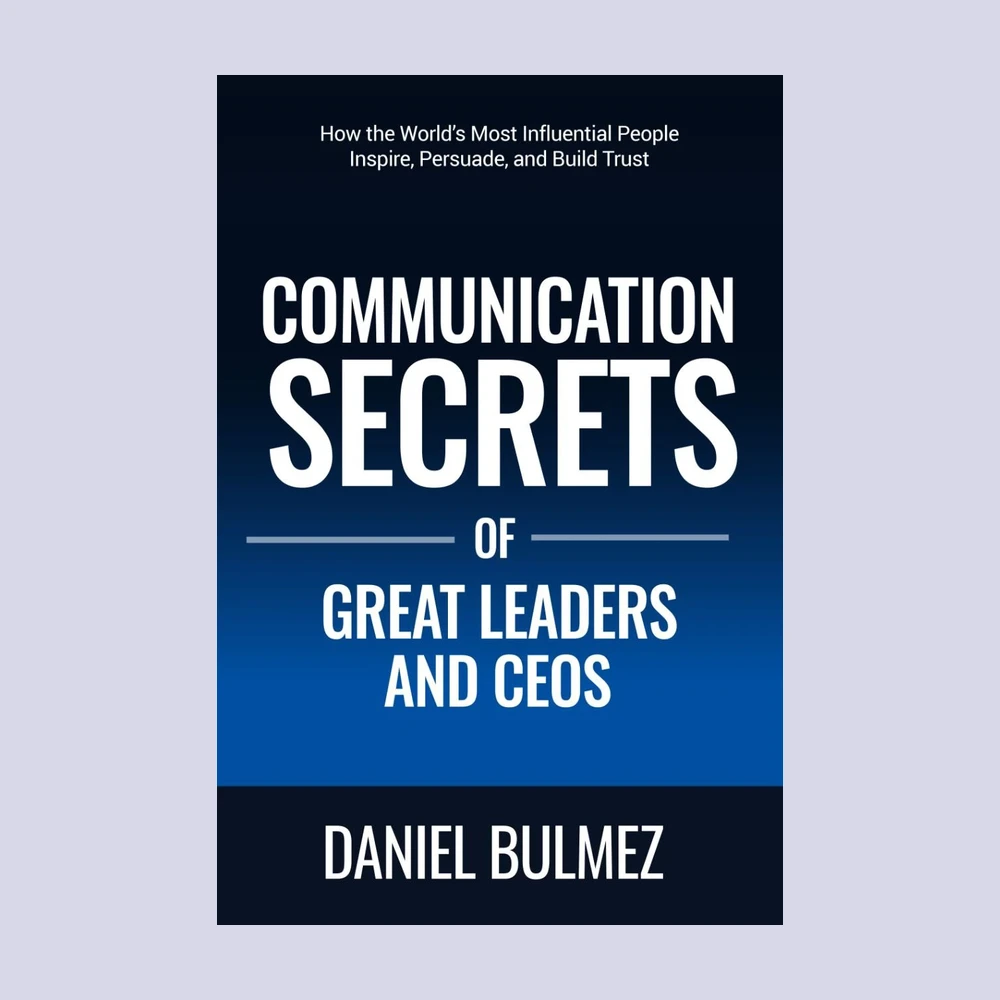
Communication Secrets of Great Leaders and CEOs looks at how top leaders handle moments like this, when they have to end a conversation without ending the relationship, keeping their time protected and their people feeling respected. If you want the deeper playbook for closing conversations in a way people remember, Communication Secrets of Great Leaders and CEOs is where to go next. And for the foundation underneath it all, start with how to be a better communicator.
Daniel Bulmez is the author of Communication Secrets of Great Leaders and CEOs, available on Amazon.