15 Leadership Qualities That Separate Great Leaders From Mediocre Ones
The 15 leadership qualities that actually separate great leaders from mediocre ones — and the communication habits that produce each one.
 Daniel
June 1, 2026
5 min read
23 views
Daniel
June 1, 2026
5 min read
23 views

Search “leadership qualities” and you’ll get the same tired list every time: vision, integrity, confidence. True, but useless — because nobody tells you what those words actually look like on a Tuesday afternoon when a project is on fire and your team is watching how you react.
Here’s the real distinction. Mediocre leaders have good intentions. Great leaders have observable habits. The gap between them isn’t character — it’s behavior you can see, hear, and copy. These are the 15 leadership qualities that show up in what great leaders do, not what they claim to be.
1. They Take Responsibility Before Anyone Asks
When something breaks, the mediocre leader looks for who to blame. The great one says “that’s on me” — and means it. Owning the failure publicly buys something money can’t: a team that tells you the truth, because they’ve watched you not punish the messenger.
2. They Make Decisions With Incomplete Information
Weak leaders wait for certainty that never arrives. Strong ones decide with 70% of the data, state their reasoning out loud, and adjust as more comes in. Speed with a willingness to course-correct beats slow perfection every time.
3. They Communicate the “Why,” Not Just the “What”
Anyone can hand out tasks. A real leader connects the task to the mission so people understand where their work fits. “Build this feature” produces compliance. “Build this feature because it’s the thing keeping our biggest customer up at night” produces ownership.
4. They Listen More Than They Talk
The higher you rise, the more your words carry — and the more people stop telling you things. Great leaders fight this by listening hard and asking real questions. They treat being the smartest voice in the room as a liability, not a goal. (It’s the same muscle behind great public speaking — presence is mostly about attention, not volume.)
5. They Stay Calm When the Stakes Are Highest
Pressure is contagious — and so is composure. When the leader keeps an even voice, slows their breathing, and asks “okay, what do we actually know?”, the whole room downshifts out of panic. Emotional steadiness under fire is one of the rarest and most valuable leadership qualities there is.
6. They Give Credit Loudly and Take Blame Quietly
Mediocre managers do the reverse — they absorb the praise and distribute the fault. Great leaders flip it. They name names when things go right and use “we” when things go wrong. People run through walls for a leader who makes them visible.
7. They Hold a Clear, Repeatable Vision
Vision isn’t a poster in the lobby. It’s a sentence every person on the team could repeat back to you without thinking. If your people can’t articulate where you’re going, you don’t have a vision problem — you have a communication problem.
8. They Develop People Instead of Hoarding Talent
Insecure leaders keep their best people small so they don’t become threats. Confident ones actively build successors, hand out stretch assignments, and celebrate when someone outgrows them. The truest measure of a leader is how many leaders they create.
9. They Say No With a Reason
The ability to decline — a request, a feature, a meeting — without burning the relationship is a core leadership skill. Great leaders don’t just refuse; they explain the trade-off. “No, because saying yes to this means saying no to the launch” turns a rejection into a shared priority.
10. They’re Consistent — Same Person on the Bad Days
The fastest way to lose a team is to be warm when things go well and cold when they don’t. People can’t follow a moving target. Great leaders are predictable in the best sense: the same values, the same tone, the same standards whether the quarter is booming or bleeding.
11. They Run Toward Hard Conversations
Mediocre leaders avoid the difficult talk, hoping the problem resolves itself. It never does — it metastasizes. Strong leaders address underperformance, conflict, and bad news early and directly, while the issue is still small. Discomfort now is the price of avoiding a crisis later.
12. They Show Genuine Humility
Not the performed kind — the real kind. They say “I don’t know” out loud. They change their mind when shown better evidence and tell you they changed it. They ask the junior person what they think. Humility isn’t weakness; it’s the operating system of people who keep learning.
13. They Set High Standards and Defend Them
Caring about people and demanding excellence aren’t opposites. The best leaders do both: they’re warm toward the person and uncompromising about the work. Low standards delivered kindly aren’t kindness — they’re a quiet way of telling your team you don’t believe they can do better.
14. They Manage Their Own Energy First
You can’t pour clarity into a team from an empty, exhausted, reactive mind. Great leaders protect their sleep, their focus, and their attention like the strategic assets they are. They know that the quality of every decision they make traces back to the state they’re in when they make it.
15. They Make Others Feel Like They Matter
Strip everything else away and this is what people remember. Not the strategy decks — the moment you noticed they were struggling, remembered their kid’s name, or thanked them when no one was watching. Maya Angelou had it right: people forget what you said, but never how you made them feel.
The Common Thread
Read that list again and you’ll notice something: almost every quality shows up in how the leader communicates. Taking responsibility, explaining the why, holding a hard conversation, making someone feel seen — these are all communication acts. You can’t separate leadership from the way it’s expressed.
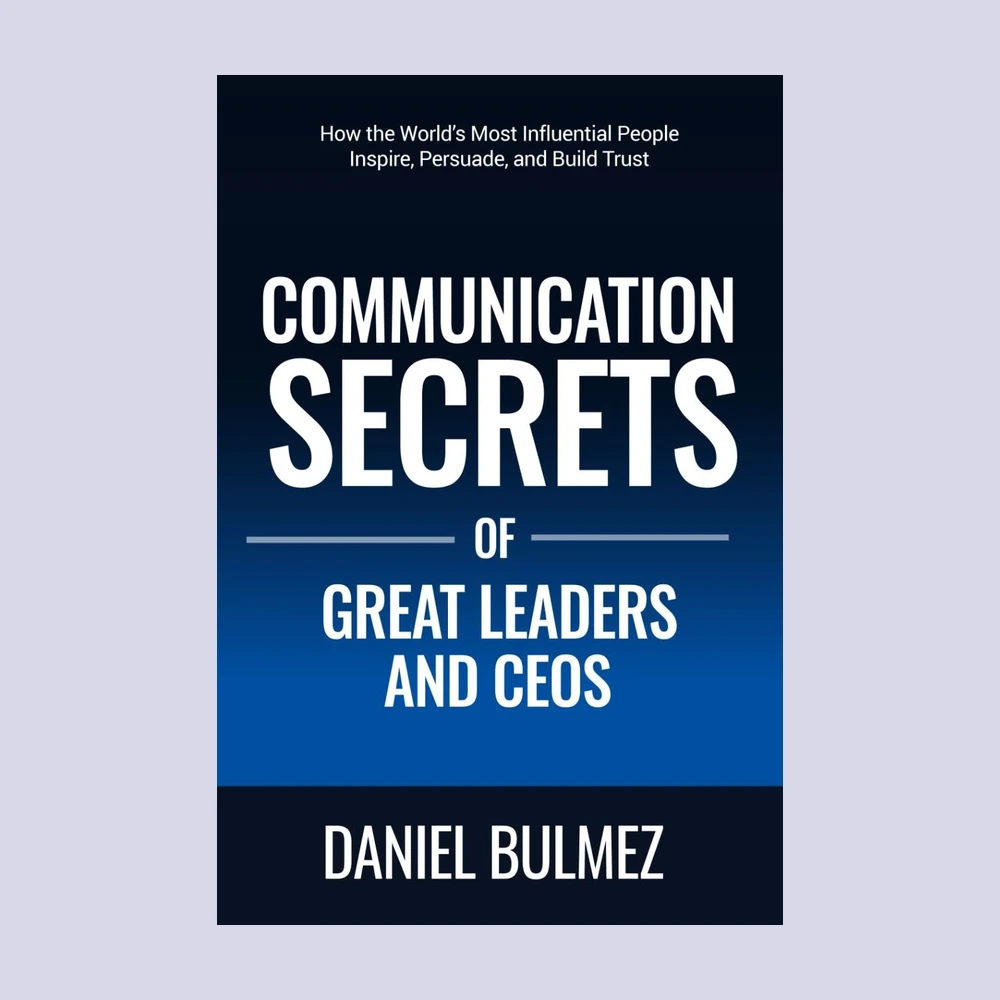
That’s the premise of Communication Secrets of Great Leaders and CEOs — it breaks down the specific verbal and non-verbal patterns that produce each of these qualities in the moment. Not abstract traits, but the actual words, pauses, and choices the best leaders use. (For the negotiation side of the same skillset, start with these negotiation patterns.)
Leadership isn’t something you’re born with. It’s a set of habits you can see, practice, and build — one conversation at a time.
Daniel Bulmez is the author of Communication Secrets of Great Leaders and CEOs, available on Amazon.