What Emotional Intelligence Actually Is (and How to Build It in Real Conversations)
Emotional intelligence isn't about being nice. It's six observable skills you can build in real conversations — here's what high-EQ people actually do.
 Daniel
June 3, 2026
5 min read
29 views
Daniel
June 3, 2026
5 min read
29 views

Ask ten people what emotional intelligence is and you’ll get ten versions of the same wrong answer: being nice. Being empathetic. Being good with people, whatever that means.
Here’s the problem with that definition — you can’t practice “being good with people.” It’s not a behavior. It’s a vibe. And vibes don’t survive a tense meeting, a defensive coworker, or a conversation where money is on the table.
Emotional intelligence is something much more concrete: it’s the ability to notice what’s happening emotionally — in you and in the other person — while the conversation is still happening, and to act on that information instead of being run by it. Low EQ isn’t coldness. It’s lag. The person who realizes in the car what they should have said, who notices they were angry only after they sent the email — that’s the gap emotional intelligence closes.
Which means it’s not a personality trait. It’s a set of skills. And skills show up in specific, observable moves. Here are the six that matter most — and how to practice each one in real conversations, starting today.
1. Name the Emotion Before It Names You
Self-awareness sounds abstract until you make it mechanical: when you feel your chest tighten or your jaw set mid-conversation, silently name what’s happening. That’s frustration. That’s embarrassment. That’s feeling dismissed.
This isn’t a wellness exercise. Naming an emotion engages the thinking brain and takes the edge off the reactive one — psychologists call it affect labeling, and it works in seconds. The moment you can say “I’m getting defensive,” you’re no longer fully defensive. You’ve stepped one foot outside the emotion, and that foot is the one that stays in control.
The practice: once per difficult conversation, name your state silently. That’s it. Do it for two weeks and the noticing starts happening on its own.
2. Use the Gap Between Trigger and Response
Every conversation has moments where something lands wrong — a dismissive comment, an interruption, a challenge to your competence. Low EQ responds in the same instant. High EQ has learned that there is a gap between the trigger and the response, and that everything valuable lives inside it.
The move is almost embarrassingly simple: when provoked, breathe once before you speak. One breath. In a real conversation that pause is barely perceptible to the other person — but it’s the difference between saying the thing that escalates and the thing that works. Slowing down reads as composure, and composure reads as authority.
The people who are most dangerous in a negotiation are never the fastest talkers. They’re the ones who can’t be rushed.
3. Listen for the Feeling Under the Words
Most listening is just waiting to talk. Even “good” listeners usually track only the content — the facts, the request, the complaint. High-EQ people track the second channel: what is this person feeling, and what do they actually need?
“This deadline is impossible” is rarely about the calendar. It’s usually I’m overwhelmed and nobody’s acknowledging it. “Fine, do it your way” is not agreement — it’s withdrawal. The words say one thing; the emotional message says another. Respond only to the words and you’ll lose the conversation while technically winning the argument.
The practice: in your next disagreement, before responding to what was said, take one guess at what was felt — and say it out loud. “Sounds like you’re getting squeezed from both sides.” Watch what happens. People soften when they feel read accurately. It’s the closest thing communication has to a cheat code, and it’s the engine behind real negotiation skill.
4. Validate First — Even When You Disagree
Here’s where most smart people fail: they think validating someone’s feeling means conceding their point. So they skip straight to the rebuttal, the other person feels dismissed, and now the conversation has two problems instead of one.
Validation isn’t agreement. “I get why that frustrated you” commits you to nothing. It simply tells the other person their emotional reality was received — and until it’s received, they cannot hear anything else you say. Not won’t. Can’t. A flooded brain doesn’t process counterarguments.
Validate first, then disagree all you want. You’ll find the disagreement goes ten times better, because you’re now arguing with a person instead of with their defenses.
5. Read the Room — Then Match Before You Lead
Every room has a temperature. High-EQ people read it in seconds — who’s tense, who’s checked out, whose silence is loud — and they calibrate before they push. If the room is anxious and you charge in with forced enthusiasm, you don’t lift the room. You lose it.
The skill is match, then lead. Meet the energy where it is — acknowledge the tension, slow your pace, lower your volume — and only then steer it where it needs to go. This is what separates leaders people actually follow from leaders people merely tolerate: the followed ones make people feel met before they ask them to move.
6. Repair Fast
You will still get it wrong. You’ll snap, interrupt, dismiss someone’s point and watch their face close. Emotional intelligence isn’t never causing damage — it’s how quickly and cleanly you repair it.
The repair is short and unqualified: “That came out sharper than I meant. Let me try again.” No “I’m sorry if you were offended.” No justification of why you said it. Ten seconds of clean repair preserves more trust than an hour of being right. The relationships that last aren’t the ones without ruptures — they’re the ones where rupture is followed by repair, every time, fast.
The Deeper Playbook
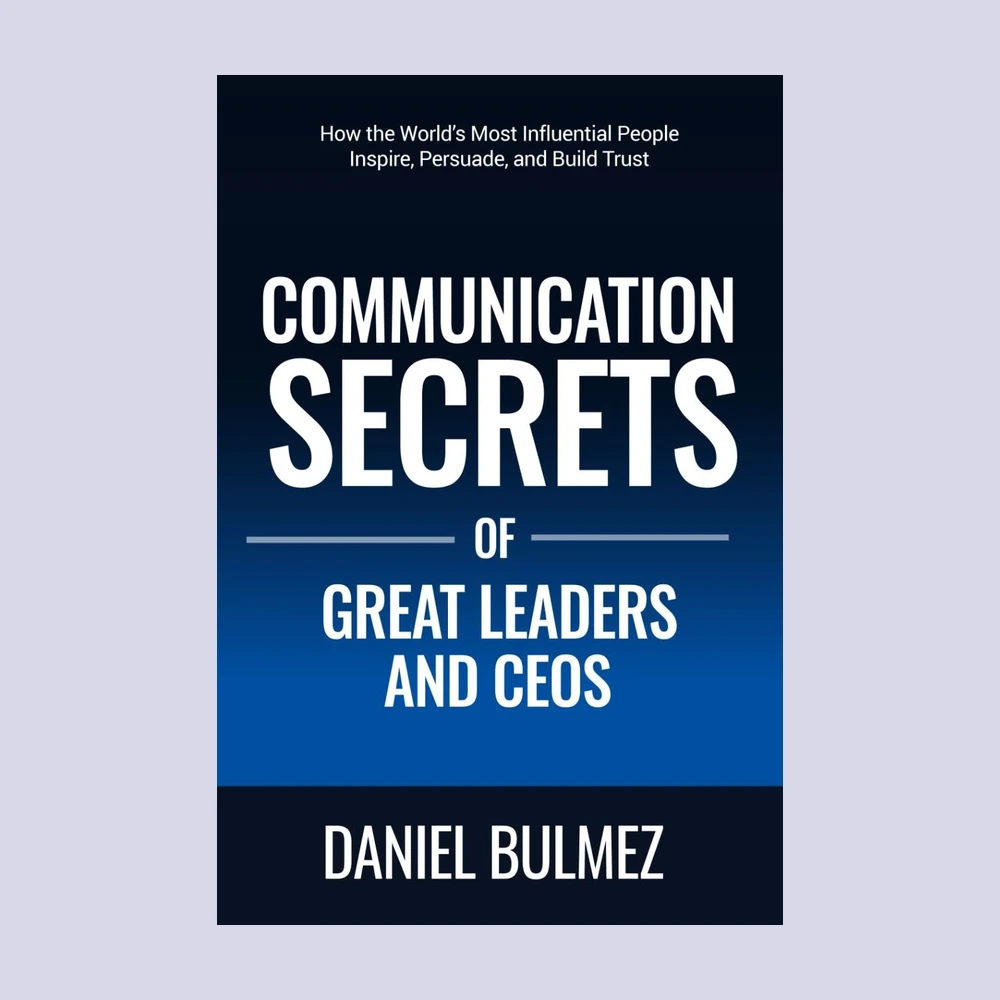
Emotional intelligence is communication intelligence — the two are inseparable in practice. Communication Secrets of Great Leaders and CEOs breaks down what high-EQ leaders actually do in the moment, line by line: how they pause, how they validate without conceding, how they read a hostile room and turn it. Not theory — the specific verbal moves, taken from people who run rooms for a living.
Emotional intelligence isn’t who you are. It’s what you practice. Pick one of the six, run it for two weeks in real conversations, and you’ll feel the lag close — the gap between what happens and when you notice it shrinking toward zero. That’s the whole game.
Daniel Bulmez is the author of Communication Secrets of Great Leaders and CEOs, available on Amazon.