The Best History Books for Kids Who Think History Is Boring
Nine real books that turn kids who say "history is boring" into history fans, from Horrible Histories to Smart Kids Ask Why: The History of the World.
 Daniel
July 30, 2026
5 min read
17 views
Daniel
July 30, 2026
5 min read
17 views
Ask most kids what they think of “history” and you’ll get a groan — it sounds like dates, dead presidents, and worksheets. Ask the same kid about ancient Egyptian mummies, castle sieges, or the moon landing, and suddenly they can’t stop talking. The gap isn’t interest, it’s packaging. Here are the best history books for kids ages 6-9 that turn “boring” history into the thing they beg to read before bed.
1. Smart Kids Ask Why: The History of the World
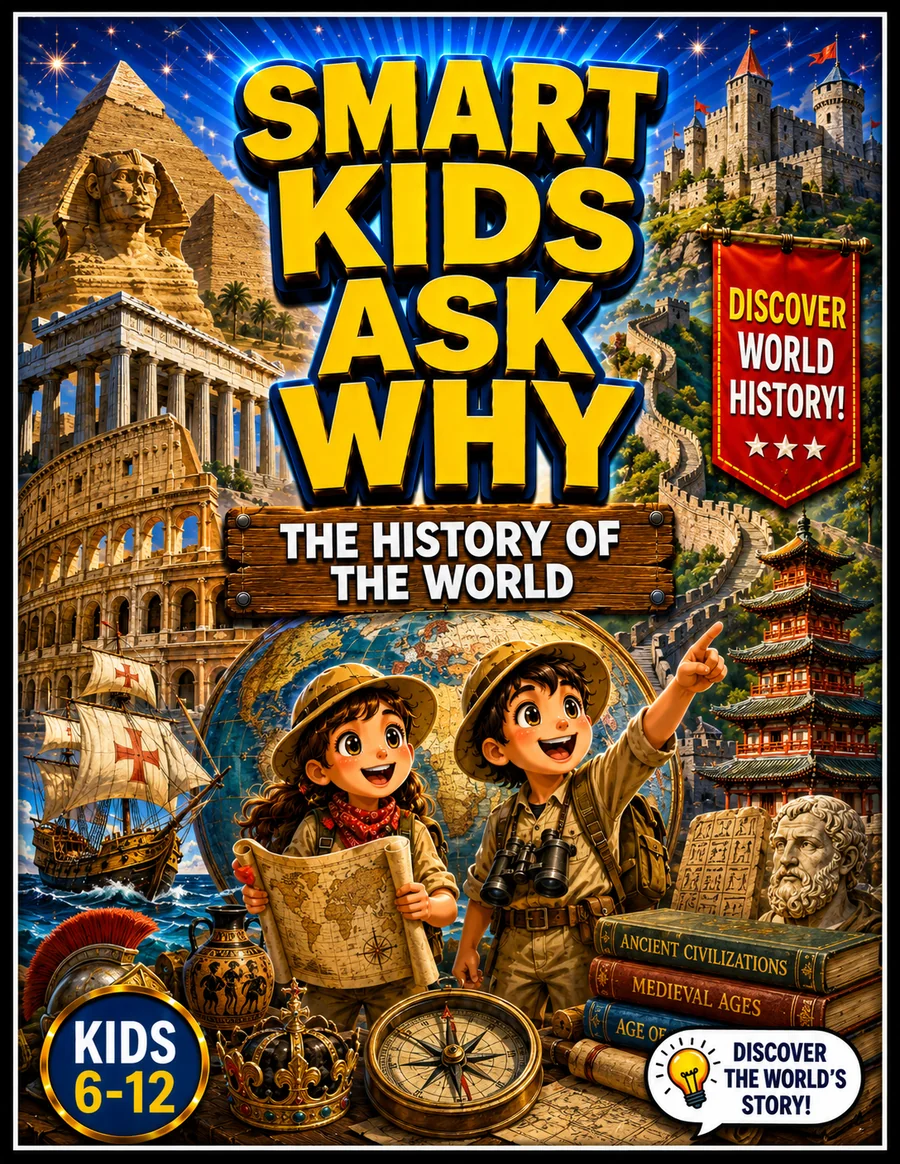
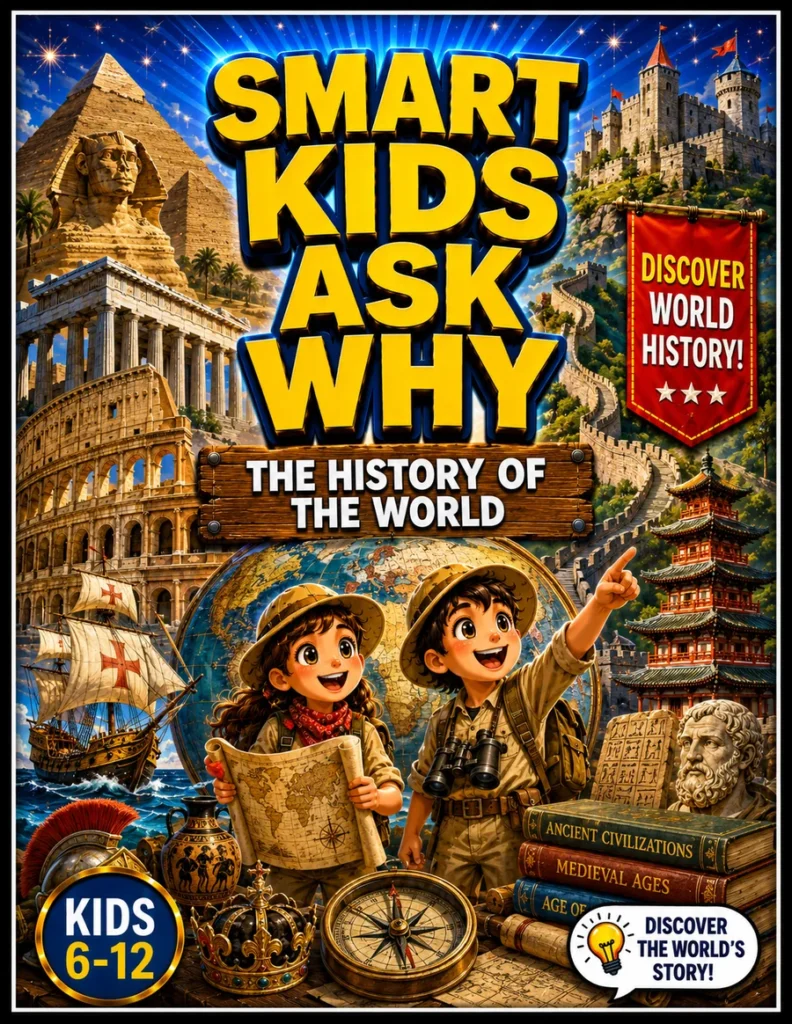
Most kids’ history books either drown young readers in dates or oversimplify everything into a single paragraph per era. Smart Kids Ask Why: The History of the World splits the difference: 17 chapters and 101 full-color pages moving from ice-age campfires all the way to the moon landing, with one big moment per page — a full-page illustration, four bite-sized facts, and a fun fact, guided by a recurring kid explorer. It’s built for a kid who wants the highlights of the whole human story without getting lost in it, which makes it a genuinely good on-ramp for a “history is boring” kid.
2. Horrible Histories (Terry Deary)
Terry Deary’s Horrible Histories series has been converting reluctant readers into history fans since the 1990s, and it works because it leans straight into the gross, funny, and strange parts most textbooks skip — plague symptoms, medieval toilets, Viking insults. Martin Brown’s cartoon illustrations keep the tone playful even when the facts get dark. It’s less a single narrative and more a grab-bag of “wait, that actually happened?” moments, which is exactly the hook a skeptical kid needs.
3. The Story of the World (Susan Wise Bauer)
Susan Wise Bauer’s four-volume Story of the World is a longtime homeschooling favorite: it tells history as one continuous, read-aloud story instead of a list of facts, starting with ancient civilizations and working forward. It asks more of a young reader’s attention span than a fact-a-page book, so it works best for kids who love being read to and want the “and then what happened?” version of history.
4. Who Was…? series (Who HQ)
The Who Was…? biography series has become the default shelf of kid-friendly history in a lot of households, with well over a hundred titles covering everyone from George Washington to Cleopatra to Amelia Earhart. Each book is a short, illustrated biography that turns one historical figure into a real story with a beginning, middle, and end — a good next step for a kid who’s ready to go deeper on the individual people behind the big historical moments.
5. History Smashers (Kate Messner)
Kate Messner’s History Smashers series takes a different angle: instead of just telling kids what happened, each book takes a popular history myth — the first Thanksgiving, Paul Revere’s ride — and shows what’s fact, what’s exaggeration, and what’s flat-out wrong. The graphic-novel-style illustrations and mystery-solving structure make it feel more like detective work than a history lesson, which is a great fit for a kid who likes to argue and ask “but how do you know that?”
6. National Geographic Kids Weird But True: History
National Geographic Kids built an entire fact-book empire on the “Weird But True” format, and the history-focused entries apply that same rapid-fire, one-fact-per-page style to the past — odd customs, strange inventions, and the kind of details that make history feel less like a subject and more like trivia night. It’s a good browsing book for a kid who doesn’t want a start-to-finish story, just something to flip open at random.
7. DK Timelines of Everything
DK’s Timelines of Everything lays out history as a giant, visual, side-by-side timeline, so kids can see what was happening in different parts of the world at the same moment. It rewards the kind of kid who likes maps, charts, and “wait, that was happening at the same time as that?” comparisons more than one who wants a story told start to finish.
8. If You… series (Scholastic)
Scholastic’s long-running If You… series — titles like If You Lived When There Was Slavery in America or If You Sailed on the Mayflower — uses a question-and-answer format to explain daily life in a specific historical period: what you’d eat, wear, and do all day. It makes a distant era feel concrete instead of abstract, especially for kids who connect better with “what would my life actually look like” than with a list of events.
9. And when history narrows down to one favorite era
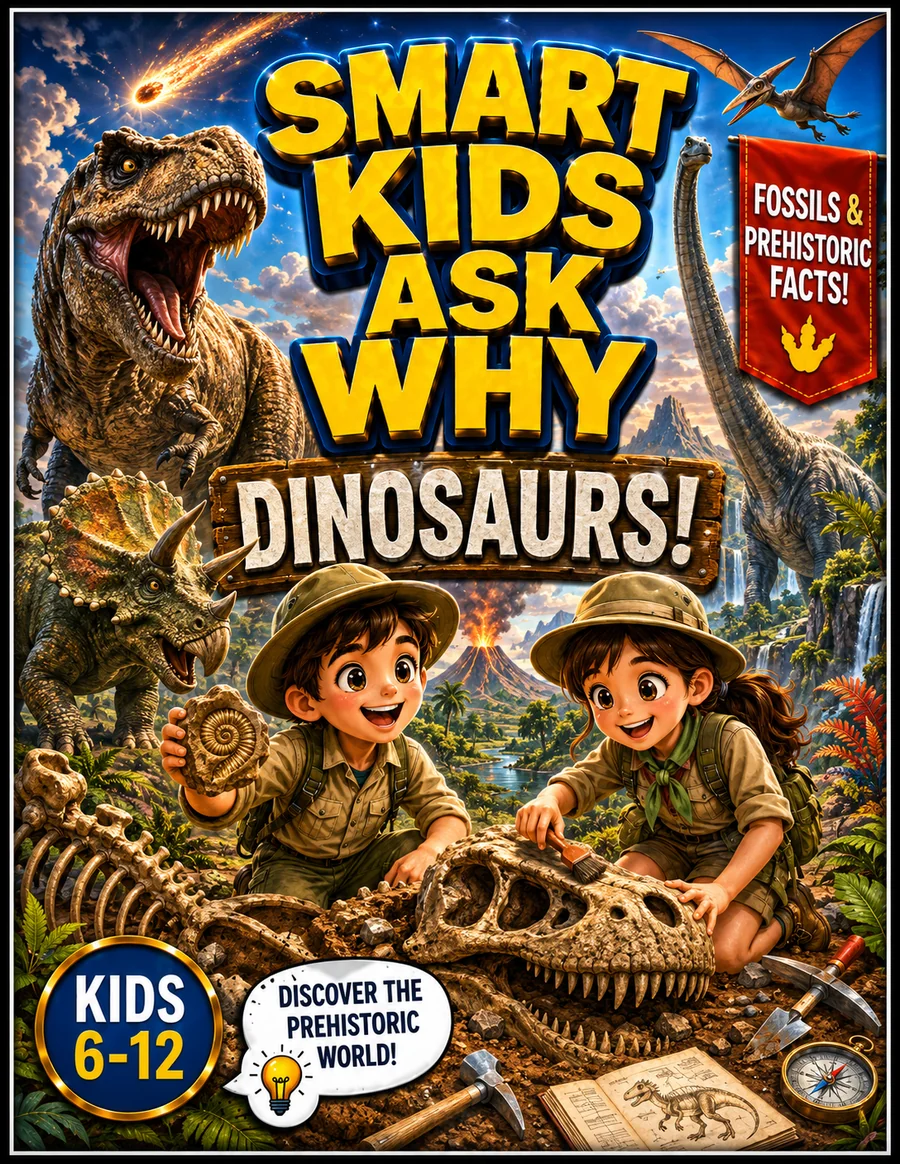
For a lot of kids, “history” narrows down fast to one obsession, and dinosaurs are usually first in line. Smart Kids Ask Why: Dinosaurs! takes the same why-first approach as the History of the World book and points it at prehistory — every spread opens with the question a curious kid would actually ask, then answers it across 112 full-color pages, including profile-card spreads on roughly 20 famous dinosaurs like T. rex and Giganotosaurus. If the “history is boring” kid in your house actually means “history before dinosaurs is boring,” this is the fix.
How to pick
If your kid needs humor to stay hooked, start with Horrible Histories or Weird But True. If they want the whole sweep of human history in one readable book, Smart Kids Ask Why: The History of the World or The Story of the World will do that job. If they’re more interested in people than events, Who Was…? is the better starting shelf. And if what they actually mean by “history is boring” is “you haven’t shown me the right part yet,” a why-first book aimed at their specific obsession — whether that’s world history or dinosaurs — is usually the fastest way to prove them wrong.
Daniel Bulmez is the author of the Smart Kids Ask Why book series, available on this store and on Amazon.