How to Influence People Without Authority — The Communication Playbook
No title, no direct reports, still need people to move. Here's the actual playbook for how to influence people without authority — not the 1936 version.
 Daniel
August 17, 2026
5 min read
8 views
Daniel
August 17, 2026
5 min read
8 views

There are two kinds of people in every organization. One has a title and still can’t get a project moving — emails go unanswered, other teams quietly deprioritize the ask, meetings end with nods and no action. The other has no formal power at all and somehow every cross-functional initiative they touch actually ships. The difference isn’t the org chart. It’s that the second person learned how to influence people without needing authority to do it — and in most modern jobs, that skill matters more than the title ever will.
Most of what gets done at work today doesn’t run through a chain of command. It runs through Slack threads, peer requests, and favors between people who don’t report to each other. You can’t order a lateral team to prioritize your project. You can’t mandate that a stakeholder two levels up take your idea seriously. You can only influence them — and influence is a different skill than authority, built and lost in completely different ways.
Authority Gets Compliance. Influence Gets Buy-In.
Authority moves people because they have to move. Influence moves people because they want to — and the difference shows up the moment you’re not in the room. Compliance evaporates the second the person with power looks away. Buy-in survives it, because the person acting on it believes it was partly their idea. If you don’t have the title, buy-in is the only lever left — which turns out to be the stronger one anyway. It’s also the one that has to be rebuilt with almost everyone you meet, on your own reputation, one interaction at a time.
The Carnegie Playbook Still Works — It Just Isn’t Enough
Dale Carnegie’s How to Win Friends and Influence People got the foundation right nearly a century ago: talk about what the other person wants, remember their name, let them feel important, never tell them they’re wrong. None of that has expired. But it was written for door-to-door salesmen and Rotary Club dinners, not for getting a skeptical VP of Engineering to greenlight your roadmap in a 20-minute meeting they almost declined. Modern influence needs the warmth Carnegie taught, plus a set of moves built for how work actually happens now — cross-functionally, asynchronously, and usually under time pressure.
1. Build the Relationship Before You Need It
The request you send a stranger and the identical request you send someone you’ve helped before land completely differently — and everyone already knows this, which is exactly why it’s so often ignored until the ask is urgent. Influence is a balance you draw down, not a switch you flip. The people who move fastest on other people’s requests are the ones who invested in the relationship long before they needed anything back.
2. Frame the Ask Around Their Problem, Not Yours
“I need this by Friday” asks someone to solve your problem. “This unblocks the release you’re already behind on” asks them to solve theirs — and just happens to also solve yours. The mechanics of the request barely change. The frame changes everything about whether it gets prioritized.
3. Give Away the Credit, Keep the Leverage
The instinct when you influence an outcome is to make sure people know it was your idea. Resist it. People who visibly let others take credit get invited back into the room next time, and the room is where influence compounds. The credit is a one-time hit. Being the person everyone wants involved is a repeatable asset.
4. Ask the Question That Leads Them to Your Conclusion
Telling someone your answer invites them to defend their own. Asking the right question lets them arrive at your answer and own it as theirs — “what happens to the timeline if we skip this step?” moves people further than “we can’t skip this step” ever will, because the second one is a fact to argue with and the first one is a conclusion they built themselves.
5. Help First, Without Announcing the Deposit
Reciprocity is real, but it only works quietly. Help someone and then remind them of it, and you’ve converted a gift into a transaction — which cancels the effect. Help without keeping score, and it becomes the reason they pick up the phone when you actually need something. The people with the most informal influence in any building are usually the ones with the longest list of favors nobody’s tracking but them.
6. Get the Small Yes Before You Need the Big One
Someone who agreed to a small request is measurably more likely to agree to a related, larger one — not because of manipulation, but because people build a self-image around their own past agreement and act to stay consistent with it. Structure the important ask as the third step, not the first. Get a small commitment early, deliver on your side of it, then bring the real request.
Why Titles Stop Working the Moment You Look Away
Authority is fear-based, and fear only functions under direct observation — which is exactly why compliance-driven teams fall apart the moment the person in charge is out of the room. Influence doesn’t have that failure mode, because it was never dependent on being watched in the first place. That’s the real argument for building it deliberately instead of waiting until you finally get the title: the skill outlasts every position you’ll ever hold, and it’s the one that was actually doing the work the whole time, title or not.
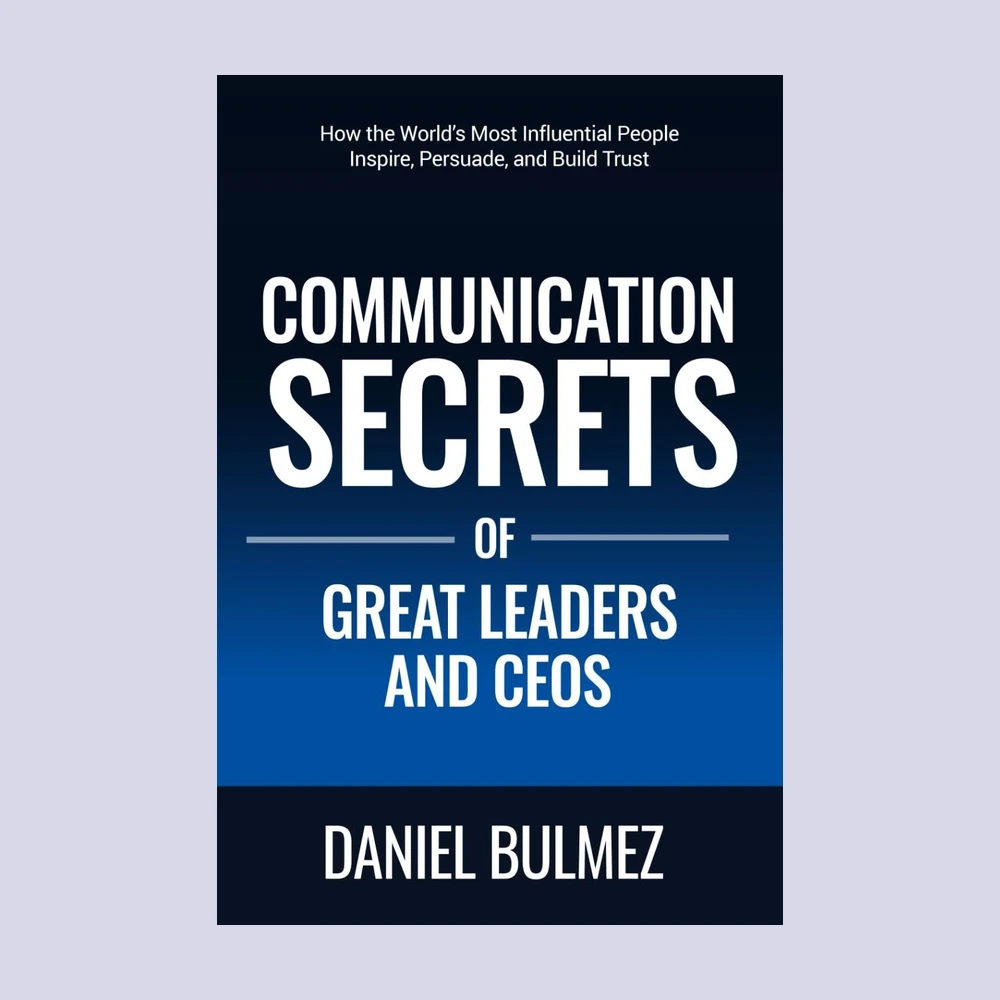
Communication Secrets of Great Leaders and CEOs built influence long before they had titles — through how they communicated, not what they were allowed to order people to do. This is that playbook. If you want the specific language they used, Communication Secrets of Great Leaders and CEOs breaks it down move by move.
If you’re building this skill set, three companion pieces worth reading next: Persuasion Techniques for the in-the-moment version of getting to yes, How to Improve Your Communication Skills at Work for the master framework this all sits inside, and What Emotional Intelligence Actually Is for the read-the-room skill that makes every move above land.
Daniel Bulmez is the author of Communication Secrets of Great Leaders and CEOs, available on Amazon.