Email Etiquette at Work: The Rules Nobody Taught You (That Everyone Judges You On)
Nobody teaches email etiquette, but everyone notices when you break it. The unwritten rules on reply-all, cc, response time, and when to stop typing and call.
 Daniel
October 1, 2026
5 min read
Daniel
October 1, 2026
5 min read

Nobody sits you down on your first day and explains email etiquette. There’s no handbook page for it, no training module worth remembering, and no one who will tell you when you’ve broken a rule. What happens instead is quieter: a colleague forms a small opinion about you, and it sticks.
That’s the uncomfortable part. Email is the one place at work where your judgment is on display in writing, permanently, to people who may never see you in a meeting. The rules are unwritten, but they’re enforced all the same, by a silent jury that never announces its verdict. Here are the ones that matter most.
Reply-All Is a Decision, Not a Default
The reply-all button is the most abused control in the workplace, and the abuse almost always comes from the same place: it’s the button already under your cursor. Before you press it, ask who in that thread actually needs your answer. If your reply is “Thanks!” or “Sounds good,” the answer is nobody but the sender. Everyone else just got an interruption with your name on it.
The reverse mistake matters too. If you’re sharing a decision that changes the plan for everyone on the thread, replying only to the sender strands people who needed to know. The rule is simple and has nothing to do with the button: send your reply to the people who need it, and no one else.
“To” Means Act, “Cc” Means Aware
Most people use the To and Cc lines interchangeably, which is why so many emails produce no action. When ten names sit in the To line, each of them assumes one of the other nine will handle it. Put the person who has to act in To, put the people who only need visibility in Cc, and say so in the first line if it isn’t obvious: “Priya, the action here is yours. Marcus and Lee, copying you for visibility.”
One more thing about Cc, and it’s the one people feel but rarely name: copying someone’s boss on a message to a peer is read as a threat, whatever you intended. If you want to escalate, escalate openly, with a conversation first. Using the Cc line as a weapon costs you the very trust you were hoping to leverage.
Response Time Is a Signal
Everyone around you is quietly reading how fast you reply. Silence is rarely interpreted as “busy.” It’s interpreted as “doesn’t care” or “avoiding this.” You don’t have to answer everything in full right away, but you do have to answer. A one-line acknowledgment, “Got it, I’ll have this to you by Thursday,” does more for your reputation than a perfect reply that arrives three days late.
The opposite habit has a cost too. If you answer at 11 p.m. every night, you teach people to expect it, and you set a standard you’ll eventually fail to keep. Pick a rhythm you can sustain and let it become your reputation. Reliable beats instant.
Know When to Stop Typing
Email is built for information and terrible at emotion. It strips out your tone of voice, your face, and your pauses, and the reader fills the gap with their own worst-case interpretation. A message you wrote as neutral can land as cold. A message you meant as a joke can land as a dig.
A useful test: if a thread has gone back and forth three times and the issue still isn’t resolved, stop. Pick up the phone or walk over. And never deliver criticism, bad news, or a disagreement that matters over email alone. Those belong in a real conversation, and the written follow-up should only confirm what was already said. If you want the framework for those moments, the piece on difficult conversations at work walks through it step by step.
Assume Everything Will Be Forwarded
The most reliable rule in email is also the simplest: whatever you write can and will end up in front of someone you didn’t write it for. Treat every message as if it could be forwarded to the person you’re describing, or to your own manager.
That doesn’t mean sanitizing everything into corporate fog. It means writing nothing you wouldn’t say to the person’s face, and not forwarding other people’s messages without thinking about whether they’d be comfortable with who sees it. If someone confides in you in writing, forwarding it on is a breach, even when there’s nothing technically in it.
The Small Tells That Get Noticed
A few habits do outsized damage precisely because they’re so small:
- “Per my last email.” However politely it’s phrased, it reads as “you didn’t read what I sent.” Restate the point instead and move the conversation forward.
- Getting names wrong. A misspelled or mispronounced name is a small insult, and the reader remembers it. Check before you send.
- Passive-aggressive punctuation. A lone “Thanks.” or a “Noted.” can land as a door closing. If you’re annoyed, deal with the annoyance somewhere other than the message.
- Ignoring the question that was asked. If someone asked three things and you answered one, you’ve created a second email you’ll have to write.
None of these will end a career. But they accumulate, and people rarely tell you about them. They just adjust how much they trust you.
Etiquette Is Just Respect in a Written Form
Every rule above comes back to the same idea: respect the other person’s time, attention, and dignity. That’s what great communicators do in a room, and it’s what separates them in writing too. If you want the wider picture, the same principles run through communication skills at work and the habits behind strong interpersonal skills. For the writing side, how to structure a message people will actually read, see how to write a professional email.
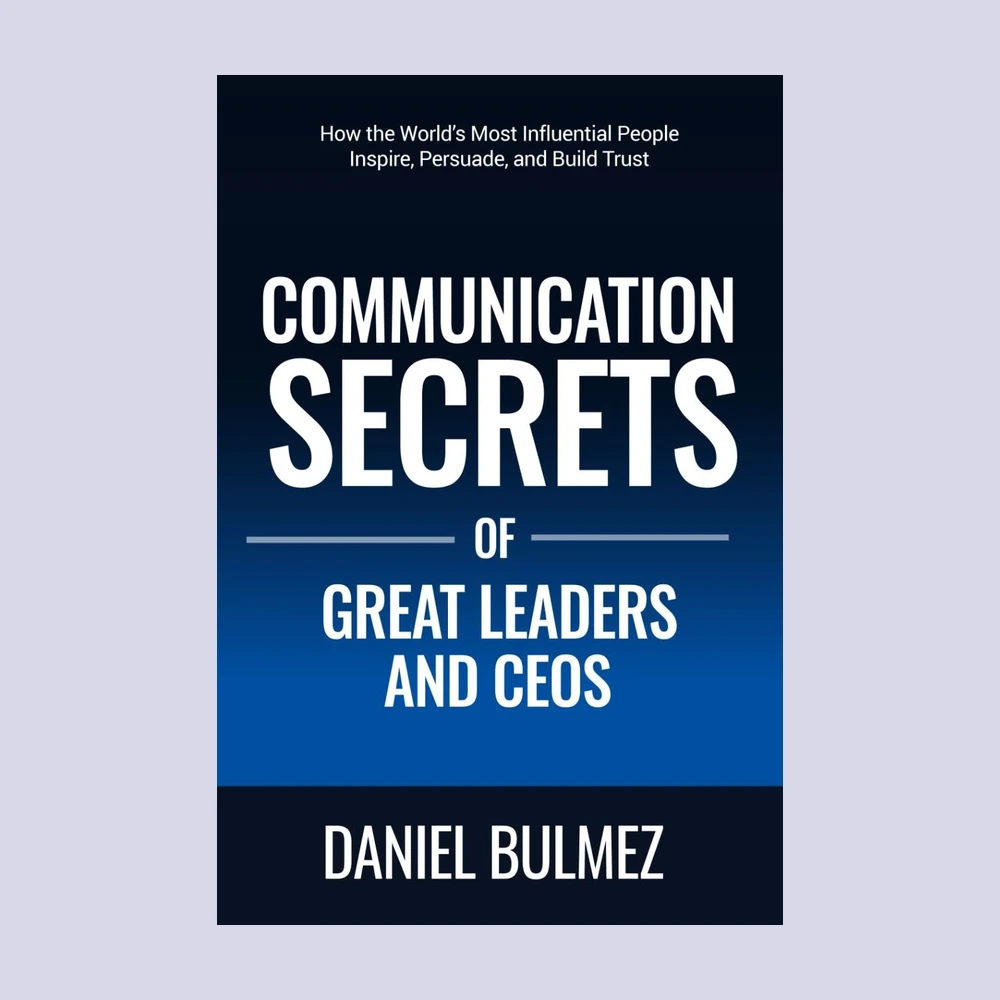
Email etiquette is communication etiquette on a smaller stage. Communication Secrets of Great Leaders and CEOs looks at how the best leaders handle exactly these moments, the ones that never show up in a job description but quietly decide who gets trusted. If you want the deeper playbook, Communication Secrets of Great Leaders and CEOs breaks it down in full.
Daniel Bulmez is the author of Communication Secrets of Great Leaders and CEOs, available on Amazon.