You Must Do the Thing You Think You Cannot Do: What Eleanor Roosevelt Really Wrote About Fear
Eleanor Roosevelt really wrote "You must do the thing you think you cannot do." Here is where it comes from, and the lookalike quote that is not hers.
 Daniel
October 10, 2026
4 min read
Daniel
October 10, 2026
4 min read

It lives on mugs, desk calendars, and graduation cards, usually in a clean serif font:
“You must do the thing you think you cannot do.” — Eleanor Roosevelt
This one is real. Roosevelt did write it. But the sentence around it is more interesting than the line on the mug, and the quote most people think she said, a close cousin of this one, is not hers at all.
Where the Line Actually Comes From
The words appear in You Learn by Living, a 1960 book of practical advice published by Harper & Brothers, in a chapter on fear. Here is the passage, in the wording given by Quote Investigator, which cites the 1960 edition:
“You gain strength, courage, and confidence by every experience in which you really stop to look fear in the face. … The danger lies in refusing to face the fear, in not daring to come to grips with it. … You must do the thing you think you cannot do.”
Notice the order. The famous line is the last sentence of an argument, not a standalone slogan. Roosevelt first says what facing fear gives you (strength, courage, confidence), then names the real danger (refusing to face it), and only then issues the instruction.
She wrote from experience. By her own account she was a frightened child, afraid, she recalled, of “practically everything,” including mice, the dark, and other children. Her advice on fear came from someone who had to learn it the slow way.
The Quote People Give Her Instead
You have probably also seen “Do one thing every day that scares you” with her name under it. It is not hers. Quote Investigator traces those exact words to Mary Schmich’s Chicago Tribune column of June 1, 1997, the one later passed around the internet as “Wear Sunscreen.” Schmich herself wrote in 2012 that she had seen no evidence Roosevelt said it and did not believe she did.
The mix-up is understandable. The two lines sound like relatives. But they ask for different things, and the difference matters.
Why the Difference Changes How You Use It
“Do one thing every day that scares you” is a frequency rule. It rewards variety: a roller coaster, a cold shower, a stranger’s phone number. Roosevelt’s line, read in context, is aimed at something narrower. It points at the thing, the specific task you have already decided you cannot do. The call you keep postponing. The conversation you rehearse in the shower and never have.
That is my reading of the passage, not a quotation, but the text supports it. Her warning is about “refusing to face the fear.” She is not warning against too little excitement. She is warning against the avoidance that quietly confirms to you that you were right to be afraid.
The payoff she describes is also specific. Every time you face the fear and get through it, you collect proof that the next hard thing is survivable. That proof is what builds confidence. Avoidance builds nothing, which is why the confident-seeming people around you are often just the ones who have a longer list of things they did while afraid.
Putting It to Work This Week
- Name the one thing. Not a vague fear of “speaking up.” The specific act: asking for the raise, giving the feedback, apologizing to a colleague, saying no to a request.
- Shrink the first rep. You do not need the full version on day one. Send the two-line email asking for the meeting. Say the first sentence of the hard conversation out loud to one trusted person.
- Do it, then write down what actually happened. One line is enough. Fear forecasts disaster; the record shows what really occurred. After a few entries you have your own evidence, which is exactly the effect Roosevelt describes.
Most of the things people think they cannot do are conversations. They are the moments where you have to find words under pressure: disagree with a senior person, deliver bad news, ask for something and sit through the silence afterward. Those are skills, and skills improve with practice.
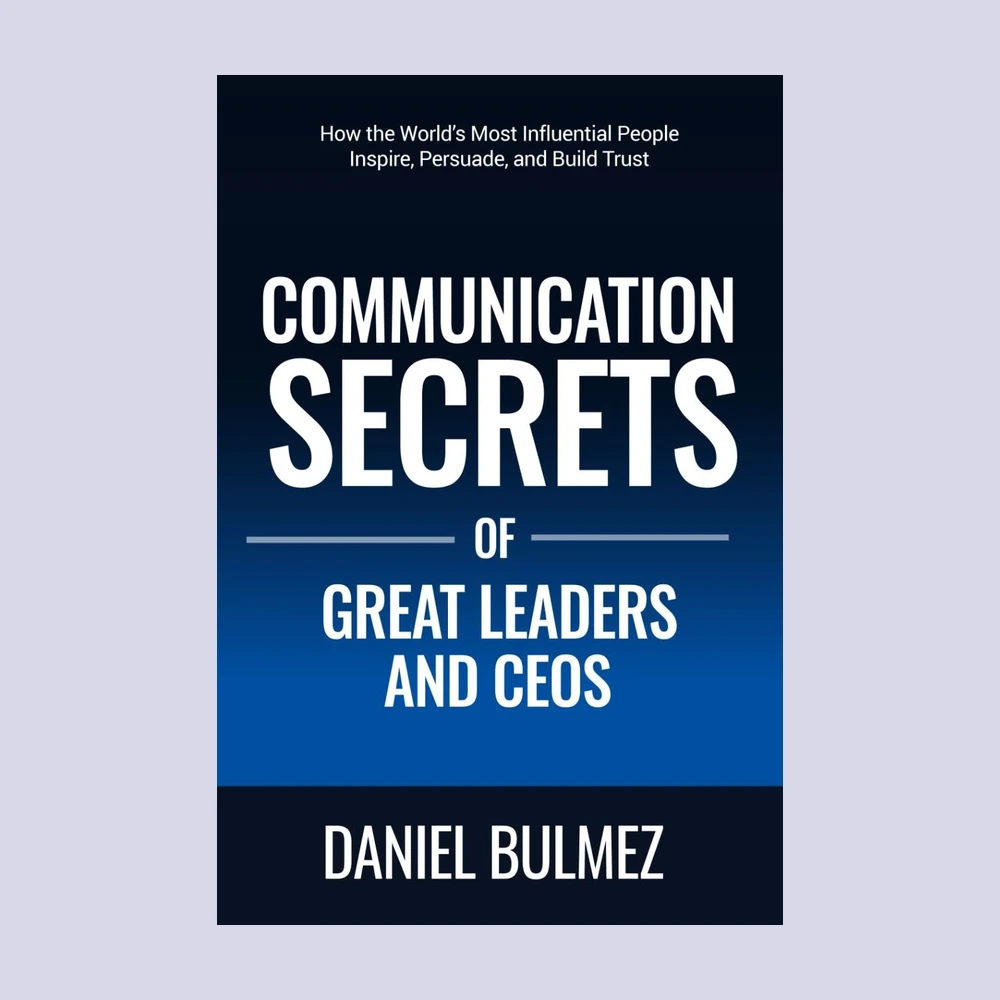
For a practical look at how effective leaders handle exactly those moments, with specific phrasing for the high-pressure ones, Daniel Bulmez’s Communication Secrets of Great Leaders and CEOs breaks down what the strongest communicators say and do when the stakes feel high.
Daniel Bulmez is the author of Communication Secrets of Great Leaders and CEOs, available on Amazon.