How to Be a Better Communicator: The Habits That Change How People Respond to You
Want to be a better communicator? Seven habits that change how people respond to you: know your point, check understanding, cut the extra, and more.
 Daniel
October 29, 2026
7 min read

In 1990, a Stanford graduate student named Elizabeth Newton ran a simple experiment. She split people into “tappers” and “listeners.” Each tapper picked a well-known song, like “Happy Birthday,” and tapped out the rhythm on a table. The listener had to name the tune.
Before the listeners guessed, the tappers predicted how often they’d get it right. Their answer: about half the time.
The real result: 3 correct out of 120. Roughly 2.5 percent.
The tappers weren’t lying or being lazy. Inside their own heads, the song was playing, so the knocking sounded obvious. The listeners heard knuckles on wood. That gap is the whole story of bad communication. What you meant and what the other person received are two different things, and you can only feel one of them.
Becoming a better communicator isn’t about a bigger vocabulary or a smoother voice. It’s about closing that gap on purpose. Here are seven habits that do it.
1. Know Your Point Before You Open Your Mouth
Most rambling isn’t a speaking problem. It’s a thinking problem. People start talking in order to find out what they think, and the listener pays for the search.
Before any meeting, message or hard conversation, finish this sentence in one line: “I want them to walk away knowing / deciding / doing ___.”
If you can’t complete it, you’re not ready to speak yet. Take two minutes. Write it down if you have to.
Once you have the sentence, lead with it. “I need a decision on the vendor by Friday” is a better opening than three minutes of background that eventually arrives at the same place. The background is still welcome, but it now has a job: supporting the point rather than hiding it.
2. Start From Their Side of the Table
The tapping experiment shows why you can’t judge your own clarity. So don’t. Before you speak, ask two questions about the person in front of you:
- What do they already know? Skip it or summarize it in a line.
- What do they care about? Connect your point to that, not to what you care about.
A finance director and a sales lead can hear the same news and need two different openings. “We’re moving the launch” means cost to one and commission timing to the other. Same fact, different door.
This is also where knowing someone’s default style helps. Our guide to the four communication styles at work shows how to adjust your approach for people who want the data, the bottom line, the story or the harmony.
3. Check for Understanding (Properly)
“Does that make sense?” is the most useless question in business. Almost everyone says yes. Nobody wants to be the person who admits they’re lost.
Replace it with something that makes the other person show what they received:
- “Just so I know I explained it well, how would you describe the plan to your team?”
- “What’s the first thing you’ll do after this call?”
- “Where do you think the biggest risk is?”
Notice that the burden sits on you, not them. You’re checking your explanation, not their intelligence. That small reframe is what makes people answer honestly.
Do this and you’ll catch misunderstandings in the room instead of three weeks later, when the wrong thing has already been built. It’s also the practical antidote to what we cover in the illusion of communication: the belief that because you said it, it landed.
4. Cut Thirty Percent
Almost every message improves when you remove a third of it.
Blaise Pascal, in one of his Provincial Letters from the 1650s, admitted he’d made it longer than usual only because he hadn’t had time to make it shorter. Brevity takes work. That’s exactly why it signals respect.
The Gettysburg Address is a useful benchmark. Lincoln’s speech ran roughly 270 words and took about two minutes. The featured speaker that day, Edward Everett, talked for around two hours. Almost nobody can quote Everett.
Try this edit on any email, update or talk:
- Delete the warm-up (“I just wanted to reach out to say…”).
- Delete the hedges (“sort of,” “I was kind of thinking,” “just”).
- Delete the second example. One strong example beats two average ones.
- Move the request to the top.
Then read it again. It will sound more confident and more senior, not less friendly.
5. Ask Better Questions Than You Answer
Great communicators spend more of their effort on questions than on statements. A good question does three things at once: it gets you information, it makes the other person feel taken seriously, and it often lets them solve their own problem.
Upgrade your questions:
- Instead of “Why did you do that?” try “What were you trying to achieve?” (The first sounds like an accusation. The second invites an explanation.)
- Instead of “Do you agree?” try “What’s your read on this?”
- Instead of a leading question that hides your opinion, try saying your opinion and then asking what you’re missing.
And then comes the part most people skip: stop talking and let the answer arrive. A pause of three or four seconds feels long to you and perfectly natural to them. Many people give their most useful answer right after the first, polite one.
The full technique is covered in our guide to active listening. If you only upgrade one thing from this list, make it this.
6. Say the Hard Thing Early and Plainly
The communicators people trust most are not the smoothest. They’re the ones who tell you the truth early enough for it to be useful.
Bad news doesn’t improve with age. A delayed project, a mistake, a concern about someone’s work: all of it costs more the longer it sits. The habit to build is simple: when you notice yourself rehearsing how to avoid saying something, that’s the thing to say.
Say it plainly, in the order the listener needs it:
- What happened or what you see.
- Why it matters.
- What you propose to do about it.
You can be kind and clear at once. Kindness lives in tone and timing; clarity lives in the content. People get into trouble when they trade one for the other. If this is where you struggle, assertiveness at work and how to give constructive feedback show the exact wording.
7. Close the Loop in Writing
Even a good conversation fades. Within a day, two people will remember two different versions of what was agreed.
The fix takes about ninety seconds: after any meeting or call that matters, send three lines.
- What we decided.
- Who is doing what, by when.
- What’s still open.
This does more for your reputation than almost anything else on the list. People notice who makes things clear. You become the person whose meetings produce results, which is the practical meaning of “a good communicator.”
How to Practice Without Taking a Course
Habits don’t come from reading. They come from repetition with feedback. A simple routine:
- Pick one habit per week. Not seven. The check-for-understanding question is a good first one.
- Use it in low-stakes moments first. A routine team call or a chat with a friend is a fine place to practice.
- Ask one person you trust: “When I explain things, where do I lose you?” Most people will answer if you make it safe.
- Review one message a day. Before you hit send on something important, read it as the recipient would. What do they need to do? Is it obvious?
Within a month, you’ll notice something. People ask fewer follow-up questions, meetings end earlier and the same people start coming to you first. If you want a wider set of everyday skills, communication skills at work covers twelve more.
What Actually Changes
Better communication shows up in how people respond to you. They answer faster, they push back more openly, they remember what you said and they act on it. The tappers in Newton’s study couldn’t see why nobody got their song. You now know the gap exists and how to close it.
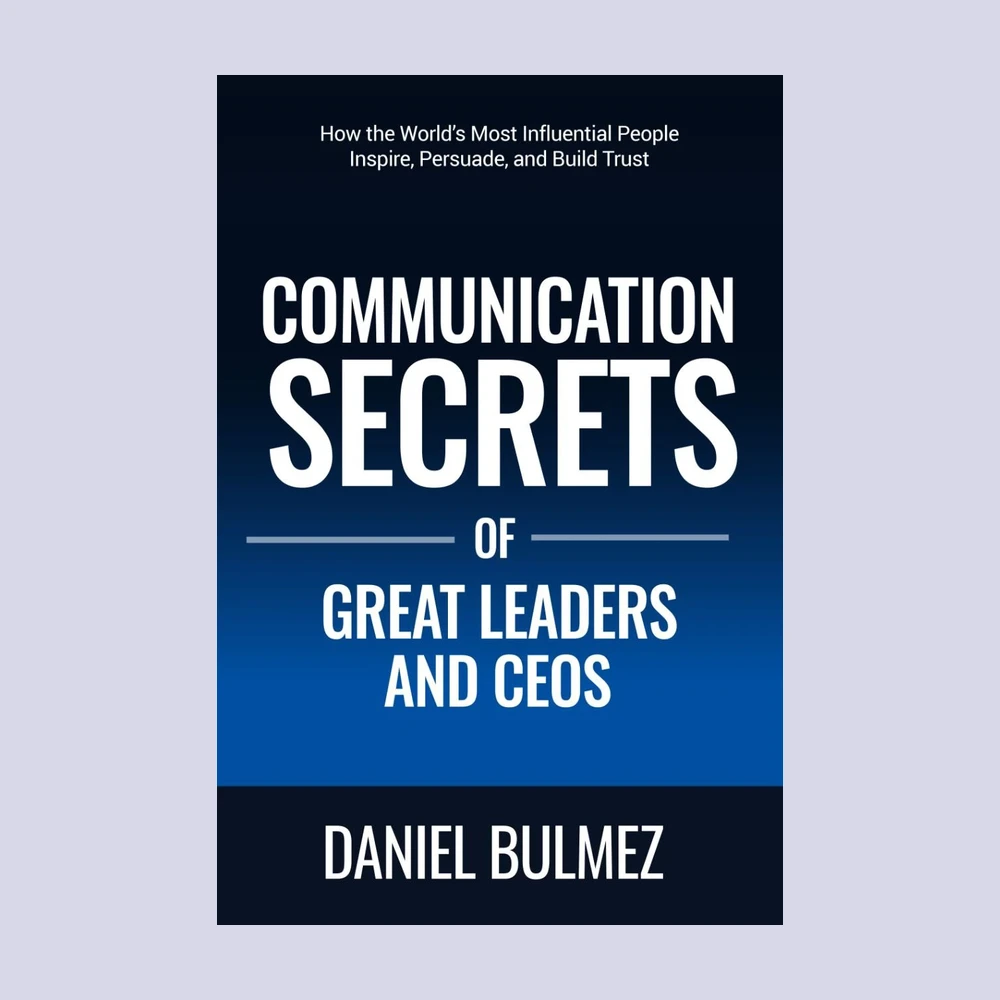
Great leaders treat this as a daily discipline rather than a talent. Communication Secrets of Great Leaders and CEOs looks at how leaders at the top frame a message, check that it landed and adjust when it didn’t. If you want the deeper playbook behind these seven habits, Communication Secrets of Great Leaders and CEOs is where to go next. And if you’re ready to build trust faster in person, start with how to build rapport.
Daniel Bulmez is the author of Communication Secrets of Great Leaders and CEOs, available on Amazon.